• Note from the Author: Years ago, I started a series called “Tactical Preschool.” The premise was simple: most people fail not because they don’t know “advanced techniques,” but because they haven’t mastered the fundamentals. Digging through my old notebooks, I found these doodles from 2009. They are as relevant today as they were then.


    Fundamentals Over “Advanced” Noise

    I have always been a believer in fundamentals over “advanced technique.” In the real world—where the lighting is bad, your heart rate is 160, and someone is actively trying to hurt you—complex motor skills disappear. What remains are the basics.

    If you apply the fundamentals consistently and accomplish them faster than your opponent can process, you will typically win. It’s about shortening your OODA loop while stretching theirs.

    The Lesson: Don’t Slug it Out

    When confronted with superior numbers, the natural (and wrong) instinct is to stay put and try to out-slug everyone simultaneously. This is a recipe for a “static” disaster.

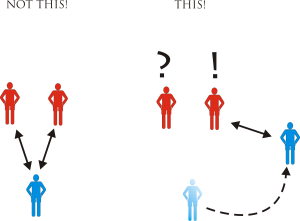
    If you have to fight because fleeing isn’t an option, you must move. These sketches illustrate the basic flanking maneuver:

    1. Displace to the Flank Do not stay in the “kill zone” where everyone can see you and hit you at once. Displace to one of the opponent’s flanks. This forces them to “re-index” on your new position.

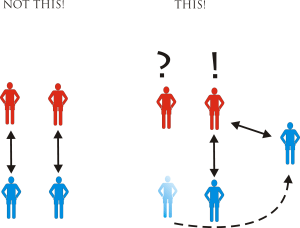
    2. The “Hombre a Hombre” Principle By moving to the flank, you isolate one opponent. You turn a “everyone vs. me” situation into a series of “one-on-one” engagements. You deal with him hombre a hombre.

    3. The Buddy Factor If you have partners, two-on-one is even better. If the opponent’s buddy tries to help, he now has his own man caught in the crossfire. If you are lucky, the second bad guy won’t even realize you’ve moved until his partner is already out of the fight.

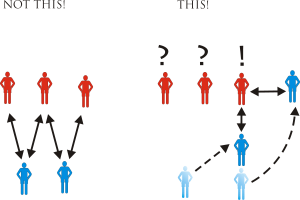
    4. Rolling up the Line If you have enough “buddies” to keep the other threats occupied, you can roll up the flank and take out the opponents one at a time. This is the essence of tactical geometry.

    The Preschool Graduation Requirement

    “Tactical Preschool” isn’t about being basic; it’s about being brilliant at the basics.

    Before you buy the latest optic, attend the “tier-one” carbine course, or learn the newest “operator” transition, ask yourself: Can I move and change the angle under stress? Do I understand the geometry of the room? Am I faster than his ability to process my movement?

    If the answer is no, stay in preschool. The fundamentals are where the lives are saved.


    The “Preschool” Checklist

    • Movement: Are you moving to cover or moving to change the angle?
    • Isolation: How are you turning a group threat into a series of individual problems?
    • Processing: Are you doing it fast enough to break the opponent’s OODA loop?
  • The Library and the Sword: A Lifelong Quest for the Standard

    As a young child, I was told I wasn’t a “reader.” It’s a label that seems impossible to me now, but at the time, it was a definition I nearly accepted. That changed in a small-town library when I pulled a copy of The Hobbit off the shelf.

    I didn’t just find a story; I found a feeling I would spend the rest of my life trying to replicate. As I matured, that feeling evolved into a deep fascination with the man behind the myth—J.R.R. Tolkien—and the profound Catholic faith that acted as the bedrock for his world.

    Tolkien didn’t just write “fantasy.” He wrote about the weight of manhood, the intoxicating nature of power, and the grueling path of redemption. I eventually carried The Lord of the Rings with me on military deployment, reading about the “Northern Courage” of men facing impossible shadows while standing in the reality of my own service.

    In that intersection of faith and duty, two characters have always stood as the ultimate study for the modern practitioner: Boromir and Faramir.

    The Two Pillars: Hardiness vs. Wisdom

    Faramir and Boromir represent the two halves of the “Protector” archetype.

    Boromir was “proud and fearless, often rash, ever anxious for the victory… and his own glory therein.” He was a man of immense “hardiness”—physical and tactical prowess that was undeniable. But his flaw was hubris. He believed his strength was a sufficient shield against the darkness. He didn’t just want Gondor to win; he wanted to be the hero who made it happen.

    Faramir, by contrast, possessed Detachment. He was “wise enough to know that there are some perils from which a man must flee.” He understood that the greatest threat wasn’t the enemy outside the walls, but the pride within them. When he said he wouldn’t take the Ring if he found it on the highway, he wasn’t boasting; he was acknowledging a vow that held him.

    The Anatomy of the Fall

    The Ring did not tempt Boromir with evil. It tempted him with his own Duty. It used his desire to save his people as a hook, then snagged his ego to set the barb.

    When Boromir attempted to take the Ring from Frodo, he experienced a total systemic failure. He violated the Code of the “Truth-speaker.” For a man of Gondor, whose word was meant to be a structural component of his soul, this wasn’t just a lapse in judgment—it was a spiritual rupture.

    The Redemptive Podvig

    The moment the “madness” passed, Boromir realized the wreckage of his honor. He was left with a choice: retreat in shame or engage in a Podvig—the spiritual struggle to “turn around” and return to the correct path.

    He chose the latter. His last stand at Amon Hen is one of the most profound moments of redemption in literature because it was solitary.

    Boromir had every reason to believe that if he died there, defending two “halflings” against an unbeatable horde, his deeds would never be known. There would be no songs for a man who died in a nameless forest. He was sacrificing the one thing he loved more than Gondor: his reputation.

    In that forest, Boromir finally triumphed over the Ring—not by his “hardiness,” but by his sacrifice. He died with a smile because he had finally conquered his hubris.

    The Lesson for the Practitioner

    From that small library in a quiet town to the dust of a deployment, Tolkien’s message has remained my North Star: We are truth-speakers. We boast seldom, and then perform, or die in the attempt.

    We live in a world that prioritizes the “Song”—the branding and the public accolades. But the true Podvig of the professional happens in the moments no one sees. It is the quiet decision to hold a line when there is no audience.

    Like Boromir, we are flawed. We will encounter our own versions of the Ring—temptations to use our power for our own glory. The question is: when the madness passes, do we have the courage to find our own Amon Hen? Do we have the strength to let the Ego die so the Soul can live?

  • The Podvig: Sunday’s Spiritual Struggle

    Note from the Author: Years ago, I came across a word that redefined how I view training and duty. Today, returning from the Latin Mass and preparing for another week of the 14-week Murph cycle, that word—Podvig—is the only one that fits.


    In David L. Robbins’ Last Citadel, he describes a night attack by the “Night Witches,” where a young pilot recalls her father’s teaching: “Once in a while your soul wants to see a podvig, a feat, to prove you’re alive.”

    The word Podvig doesn’t translate easily into English. While some render it as “glory” or “exploit,” its roots in Eastern Orthodoxy and the broader Catholic tradition run much deeper. It defines a spiritual struggle—the ascetic discipline undertaken to purify oneself from the passions that draw us away from God.

    The Internal Battle

    St. Paul captured the essence of the podvig when he wrote: “I fail to carry out the things I want to do, and I find myself doing the very things I hate.” A podvig is the intentional “turning around” to get back onto the correct path. It is the decision to oppose the body when it draws us toward sloth or ego.

    • Do I eat too much? The podvig is fasting.
    • Am I lazy? The podvig is harder labor.
    • Do I want to stay in bed? The podvig is rising early for prayer.

    The Martial Parallel

    There are undeniable parallels between the podvig and the martial lifestyle. The “Warrior Path” is not about vanity; it is about sacrifice. If a practitioner realizes they are out of shape, they must take on the podvig of physical conditioning. If they find themselves slacking in their craft, they take on the podvig of training.

    But there is a trap. The desert fathers warned that one can become “prideful and vain-glorious” over their own podvig. This is the danger for the athlete and the officer alike. Do you train for your ego, or for something deeper? Do you wear the uniform to be seen, or to serve a standard that exists outside of yourself?

    The Sunday Recalibration

    In the traditional liturgy, we see the ultimate podvig: the subjection of the self to the Divine Order. It reminds us that our training—whether it’s a weighted vest on Monday or a 46er ascent—is meaningless if it isn’t directed toward a higher purpose.

    We don’t seek the “feat” to prove we are better than others. We seek the podvig to prove to our own souls that we are still alive, still disciplined, and still under Command.

  • The Pursuits of the Mind: Why We Embrace the Suck

    Note from the Author: In 2010, I wrote about a foot pursuit that fundamentally changed how I viewed fitness. Today, as I grind through my 14-week Murph cycle in my 50s, those lessons are more relevant than ever. This is a reflection on the intersection of the body and the mind—and why the hardest workouts aren’t about the muscles, but the will.


    The Reality of the Street

    Before I became a police officer, I used to watch reality TV shows and wonder why so many cops seemed out of shape. I’d watch a suspect vault a fence like it wasn’t there while the officer struggled to keep up.

    A few months after finishing field training, reality hit me. My partner and I located a stolen car in a housing complex, and the chase was on. After a 100-yard sprint and two 6-foot chain-link fences, I was bleeding from both palms and had sliced the back of my leg. My legs felt like rubber.

    I learned two things that day that aren’t taught in a standard gym:

    1. Gear changes everything: Running in boots, a vest, and a duty belt is a different world than “jogging” in shorts.
    2. Energy systems matter: The sprint-and-climb exertion of a pursuit taps into different systems than a steady 5K.

    I caught my guy—mostly because my “wind” lasted one second longer than his—but I didn’t “win” the fight as much as I just fell on him and got the cuffs on. My fitness goals changed that afternoon. I realized I didn’t need a beach body; I needed a stress-inoculated body.

    Beyond the Physical: Embracing the Suck

    There is a term used by soldiers to describe dealing with a nightmare situation: “Embrace the Suck.” It means the situation is bad, but you put your head down and drive on.

    As Mark Rippetoe famously said, “Strong people are harder to kill than weak people and more useful in general.” I agree 100%, but I believe the real benefit of intense exercise is mental development rather than physical results. Size and genetics have limits, but the space between your ears is a level playing field.

    Intense exercise—the type that makes your internal dialogue scream, “This sucks, just stop, just quit”—is where you sow the seeds you will reap later when you are fighting for your life. When both you and your opponent approach the “quitting point,” the one who has practiced pushing through that threshold in training is the one who goes home.

    The Standard of 2026

    Military trainers have known this forever. Basic training isn’t just about “whipping recruits into shape”; it’s about showing them they can push beyond self-imposed limitations.

    This is why I gravitate toward high-intensity protocols like CrossFit, maximal effort lifts (squats, deadlifts, presses), and the grueling 14-week Murph cycle I am currently executing. It’s why I pushed for my Adirondack 46er status. Whether it’s 100 burpees or a 4,000-foot ascent, the goal is the same: Stress Inoculation.

    If you are comfortable in your workout, you are likely coasting. To truly benefit, you have to find that “lungs burning, gonna die” moment on occasion. You have to change things up. If you hate running, run. If you hate lifting, lift.

    The Bottom Line

    Training hard isn’t about cosmetic improvements. It’s about building a mental toughness that translates directly to the street, the trail, and the challenges of leadership.

    Get out there and embrace the suck. It might be the best decision of your life. It could also be the one that saves it.


    Questions for the Practitioner

    1. The Threshold: When was the last time your internal dialogue told you to quit, and you chose to ignore it?
    2. The Gear: Do you ever train with the weight you actually carry in the field?
    3. The Comfort Trap: What part of your current fitness program have you put on “autopilot,” and how will you disrupt it this week?
  • The Narrative vs. The Reality: A 26-Year Perspective

    Note from the Author: I first drafted these thoughts in 2016 and revisited them in 2019. Looking back in 2026, as I prepare to conclude nearly 26 years of service, it is striking how little the “narrative” has changed, even as the “reality” of the street becomes more complex. I’m dusting this off because the distinction between the national headlines and the local professional remains the most critical conversation in our craft.


    This week marks the anniversary of the day I was sworn in as a police officer. I managed to work one year before the world changed in 2001, and almost fourteen years before the events in Ferguson ignited the social and media narrative that my profession still navigates today.

    In that time, I’ve seen, experienced, and done enough to have at least a small amount of insight into the law enforcement side of the current “conversation.” Unfortunately, the dominant voices usually belong to the media and politicians, while the perspective of the practitioner is often drowned out.

    The Spectrum of Service

    Let me be unequivocal: there are “bad cops” out there. There are inept cops, poorly trained cops, and those who simply don’t take their oath or their training seriously. Anyone who has served in the military or worked in any large organization knows that no profession is immune to the “screw-ups.”

    But the current trend of using universal adjectives—”The Police”—is a logical fallacy.

    In any other context, using broad-brush terms like “those people” based on race or identity would be rightfully condemned. Yet, there is a pervasive willingness to hold “The Police” universally responsible for the actions of individuals in departments thousands of miles away. It is a bizarre logic that leads people to “understand” how an officer in one city can be targeted for the actions of an agency they don’t work for, in a state they’ve never visited.

    The Myth of the Nationalized Force

    The public often speaks as if we are a uniform, nationalized force. In reality, police service is intensely local. Large metropolitan agencies operate in a different universe than a mid-size department, and both are worlds apart from an eight-person village PD.

    However, we do share a common language of experience. Taking an armed person into custody “is what it is.” Walking up to a car occupied by a suspect you believe is armed feels the same to an officer in Anchorage as it does to one in Miami.

    The “Knee-Jerk” Trap

    This shared experience is why most veteran officers won’t “knee-jerk” declare a high-profile incident as “bad” based on a ten-second viral clip. We know that what appears on a phone screen—often fueled by an initial, incomplete media narrative—is rarely the whole story.

    Practitioners can often see how a situation that appears unjustified to the uninitiated could, based on the totality of circumstances, be legally and tactically justified. We aren’t defending “bad” actions; we are defending the right to a full investigation before a verdict is rendered by the court of public opinion.


    Questions for the Field

    1. The Scale of Context: How do we balance the need for immediate transparency with the professional requirement for a complete, evidence-based investigation?
    2. Local vs. National: In an age of viral media, how can local departments better communicate their unique “local reality” to a public that is being fed a “nationalized” narrative?
    3. The Practitioner’s Burden: For those who serve, how do you maintain your dedication to the craft when it feels like the “The Police” umbrella covers the actions of people you’ve never met?

  • The Pedigree of the Protector: Defining Chivalry

    The term “chivalry” is well-known, but its historical meaning is a moving target. It has been a company of mounted knights, a social class, a legal term for land ownership, and—in texts like The Song of Roland—a shorthand for worthy action on the battlefield.

    The Power of the Horse

    The Age of Chivalry was, fundamentally, the age of the horse. The Knight was a mounted warrior, and his power on the battlefield was derived from the speed and crushing weight of his charger. It is etymologically appropriate that the word chivalry stems from the Latin caballus (“horse”).

    This is an important distinction for the modern practitioner: Chivalry began not as a polite gesture, but as the management of superior power.

    The Evolution of the Code

    From the 12th century onward, chivalry shifted from a tactical description to a moral, religious, and social code. While the particulars varied by region, they centered on three pillars: Courage, Honor, and Service.

    In his work Chivalry, Leon Gautier identified ten “commandments” of the code. While some are products of their time, several remain the bedrock of the modern protector:

    • Thou shalt respect all weaknesses, and shalt constitute thyself the defender of them.
    • Thou shalt never lie, and shall remain faithful to thy pledged word.
    • Thou shalt be everywhere and always the champion of the Right and the Good against Injustice and Evil.

    Ideal vs. Reality

    In practice, chivalry was never free from corruption. By the late Middle Ages, courtly love often devolved into promiscuity, and pious militance into barbarous warfare. Eventually, the outward trappings of knighthood declined as wars were fought for cold victory rather than individual valor.

    The Practitioner’s Takeaway

    As I have noted before, historical failures do not invalidate the worth of the code. The value of chivalry isn’t found in a perfect historical record, but in the effort to live up to an honorable ideal. We study these ancient codes because they remind us that power without a standard is merely thuggery. We aren’t looking to play-act as medieval knights; we are looking to carry their highest aspirations into the modern world. In the end, we can only do the best we can where the rubber meets the road.

  • Tactical Translation: A Field Guide to the Language of the Street

    With the rise of “reality” police media, the public is being exposed to more “street language” than ever before. To the uninitiated, some of these interactions can seem confusing. Why does an officer look skeptical when a subject sounds perfectly reasonable?

    As a public service, I am providing this easy-to-understand translation guide. Rest assured, in most cases, both the officer and the “customer” know exactly what is being said.

    When they say…They actually mean…
    “That’s not mine!”“That’s mine.”
    “I didn’t do anything!”“I did it.”
    “I don’t have my ID on me.”“I’m going to lie about my identity.”
    “I swear to God!”“I’m about to lie.”
    “That’s not my purse.”“I have drugs in my purse.”
    “I know him as…”“I’m lying about my friend’s identity because he has a warrant.”
    “I swear on my child’s life!”“I’m about to lie.”
    “I’m just driving around.”“I just came from a drug house / a crime scene.”
    “I don’t have my license on me.”“My license is suspended or revoked.”
    “I’m not going to lie to you, Officer!”“I’m about to lie.”
    “I did what? What did you say?”“I’m trying to think up a lie.”
    “These aren’t my pants!”“That’s my dope in the pocket.”
    “As far as I know…”“I don’t know if the warrant/suspension has hit yet.”
    “I swear on my mother’s grave!”“I’m about to lie.”
    “I paid for that!”“I stole that.”
    “I won it at the casino.”“That’s my drug sales money.”
    “Why are you hasslin’ me?”“Why do I keep getting caught?”
    “This is bullshit!”“I hate getting caught.”
    “You only stopped me because…”“I know I committed a violation, but I’m deflecting.”
    “I only had 2 or 3 beers.”“I’m drunk.”
    “I was driving to the store when…”“I am a ‘verbal diarrhea’ liar.”
    “People are killing each other…”“I did it, but I want you to feel guilty for catching me.”
    “This car belongs to a friend…”“This car is a ‘crack rental’.”
    “I think I’m having a heart attack!”“I want a hospital bed instead of a cell.”
    “You didn’t read me my rights!”“I believe TV procedure is actual law.”

    The Practitioner’s Note

    While this list is meant to be humorous, it highlights a fundamental truth of the job: The Gap between Words and Reality. In the precinct, we often deal with the “Transactional Lie”—words used as a tool to avoid a consequence. On this site, we focus on the opposite: The Code, where words are an extension of internal honor. Understanding one helps you appreciate the other.

  • The Legal Edge: Navigating New York’s Knife Laws

    “Is your pocket knife a tool or a felony? In NY, the line between utility and Criminal Possession of a Weapon 4th is thinner than you think. Updated for the 2019 Gravity Knife repeal.”

    I frequently get asked about the legality of carrying a knife in New York. While the law has evolved since I first addressed this, the fundamental philosophy of “Tools vs. Weapons” remains the same. Here is the breakdown of the current Penal Law and how it impacts the practitioner.

    1. The Prohibited List (Per Se Weapons)

    Under NY Penal Law § 265.01 (Criminal Possession of a Weapon 4th), certain items are illegal to possess simply by existing. You cannot carry these, regardless of your intent:

    • Switchblades and Pilum ballistic knives
    • Metal knuckle knives
    • Cane swords
    • Shirken or “Kung Fu stars”

    Note: In 2019, New York repealed the ban on “Gravity Knives.” The common folding pocket knife is no longer a per se weapon under State law.

    2. The “Dangerous Knife” & Intent

    The law also covers items that aren’t on the “illegal” list but become illegal based on how they are used or perceived:

    (2) He possesses any dagger, dangerous knife, dirk, razor, stiletto, or any other dangerous or deadly instrument or weapon with intent to use the same unlawfully against another.

    3. What Defines a “Dangerous Knife”?

    The courts (Matter of Jamie D.) have established three ways a tool becomes a “dangerous knife”:

    1. Characteristics: Is it designed primarily as a weapon (e.g., a double-edged boot knife)?
    2. Modification: Have you ground down a kitchen utensil into a shank?
    3. Circumstances: Do the facts of the encounter reveal that the possessor considers it a weapon and not a utilitarian tool?

    4. The Presumption of Intent

    This is the thorny part. PL 265.15(4) dictates that simple possession of a dagger, dirk, stiletto, or dangerous knife is presumptive evidence of intent to use it unlawfully.

    In plain English: If you are carrying a blade designed for combat and you find yourself in a police encounter, the law allows the officer to “presume” your intent is unlawful. This is circular reasoning—the knife is only illegal if you have intent, but carrying it proves the intent.

    The Practitioner’s Takeaway

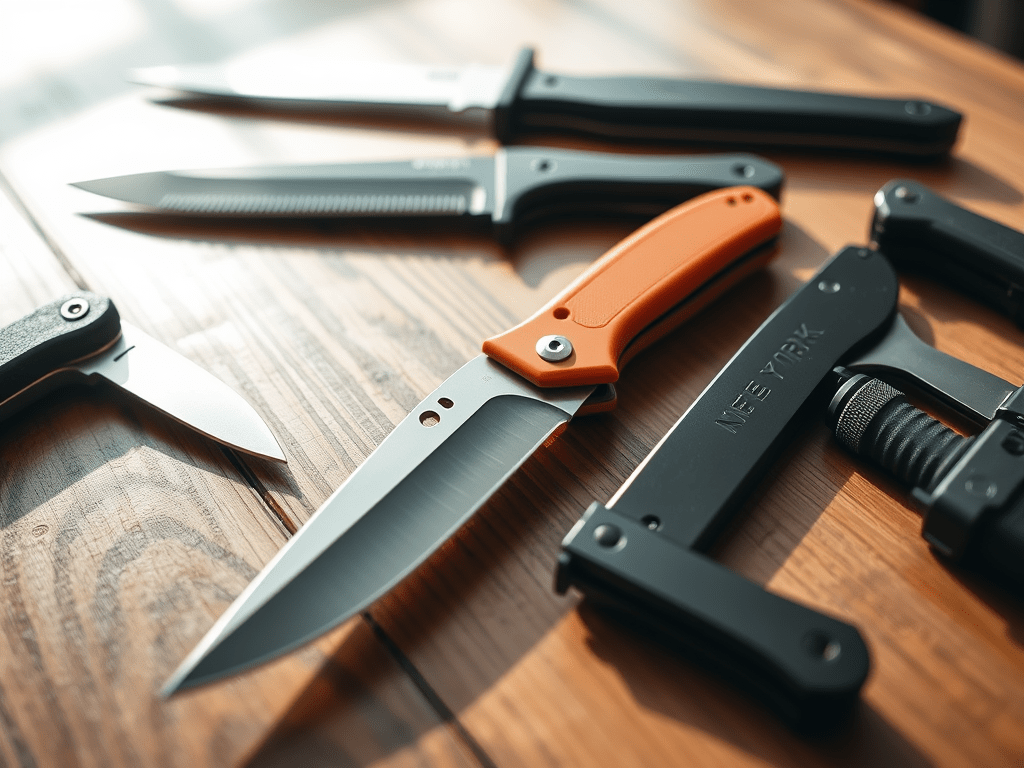
    If you carry a knife for utility, choose a tool that looks like a tool. A bright-colored folding knife used for work is viewed differently than a blacked-out tactical dagger.

    As a professional, my advice remains the same as it was a decade ago: Stay out of trouble. If you stay away from the people, places, and situations that attract police attention, your pocket tool remains exactly that—a tool. If you are looking for a fight, the law is designed to give the police the tools to stop you before it starts.

  • The Transactional Trap: Why Honor Isn’t for Sale

    Editorial Note: As we rebuild the “Way of the Pen and Sword,” we must address not just how we train, but how we think. This post deconstructs a modern sickness: the idea that virtue is only worth practicing if it’s “profitable.”

    The modern discourse surrounding masculinity, particularly within “manosphere” circles, has increasingly framed chivalry as a failed social contract. The common refrain is that chivalry is dead because it has been “killed” through ingratitude or social change. The conclusion? Treating others with traditional courtesy is now a pointless endeavor.

    This perspective reveals a profound misunderstanding of what a code of ethics actually is. By treating chivalry as a conditional favor, these critics have mistaken a foundational virtue for a transactional commodity. In doing so, they have effectively surrendered their own moral agency to the reactions of others.

    Honor is Not a Trade

    The first and most significant error in this line of thinking is the assumption that honor is a trade. When a man argues that he will only be chivalrous if he receives a specific “return on investment”—whether that be a smile, a thank you, or romantic interest—he is not practicing a code of conduct; he is practicing customer service. True masculinity is not a performance intended to elicit a reward. It is a set of internal principles that a man adheres to because he believes they are right, regardless of how they are received. To abandon one’s standards because they aren’t “profitable” is to admit that those standards were never part of one’s character to begin with; they were merely tactics used to manipulate a social outcome.

    Reactive vs. Proactive Masculinity

    This transactional view results in a reactive form of masculinity that is inherently weak. If a man’s politeness or demeanor can be shattered by a stranger’s dirty look or an uncharitable comment, then that stranger is the one in control of the interaction.

    A man with a true internal compass does not require external validation to maintain his integrity. He opens a door or offers assistance not because of who the recipient is, but because of who he is. The act is a reflection of his own identity and the type of society he wishes to uphold. By allowing the perceived “unworthiness” of others to dictate his behavior, he is allowing the world to change him, rather than being the man who changes the world through his own consistency.

    The Confession of the Brittle

    Ultimately, the “gurus” who encourage men to drop their standards of conduct are espousing a philosophy of bitterness rather than strength. They teach men to be brittle and to base their self-worth on the fluctuating whims of social approval.

    Real honor is unshakeable; it is a covenant a man makes with himself to move through the world with dignity, even when the world is indifferent or hostile. Giving up on chivalry because it isn’t “rewarded” isn’t an act of empowerment—it is a confession that one’s ethics were always for sale.

    A man’s code is only as strong as his willingness to follow it when there is nothing to be gained.

  • The Tax of the Practitioner: Murph at 58

    I have often said that being a “Warrior” comes with a hefty price tag. You don’t get to buy the title; you have to lease it every single day. As I move through my 57th year and look toward 58 in April, that lease is getting more expensive.

    Currently, I am in the middle of a 14-week conditioning cycle leading up to the “Murph” on Memorial Day. For the uninitiated, that is:

    1 Mile Run

    100 Pull-ups

    200 Push-ups

    300 Squats

    1 Mile Run

    (All performed while wearing a 20lb weighted vest)

    Leading from the Front
    In my professional life as a Captain, I spend a significant amount of time evaluating performance, analyzing data, and demanding excellence from those under my command. But there is a inherent danger in leadership: the higher you climb, the easier it is to become a “theorist.” It is easy to talk about discipline from behind a desk or a podium.

    I choose to undergo this training because I refuse to be a leader who asks for a level of output I am no longer willing to provide myself. If I am going to write about the “Way of the Warrior” and the necessity of “putting it on the line,” then I have a moral obligation to put my money where my mouth is.

    The Reality of 58
    Let’s be honest: at nearly 58, the “90-degree” pushups feel deeper, the recovery takes longer, and the weighted vest feels a little heavier than it did a decade ago. There is a temptation to scale back, to lean on my rank, or to say “I’ve done my time.”

    But the “Way” isn’t something you finish. It’s a process of maintenance.

    Training at this age isn’t about chasing the PRs of a 25-year-old; it’s about preventing the rot. It’s about ensuring that if the moment ever arises where my skills are needed in service to my community, the “instrument” (my body) isn’t the reason the mission fails.

    The 14-Week Grind
    We are currently focusing on high-volume bodyweight progressions. The goal isn’t just to finish; it’s to finish with the integrity of the movements intact.

    The Pull-ups: Strict, no kipping.

    The Push-ups: Chest to deck, elbows tucked.

    The Squats: Full depth, every rep.

    If you are following this blog, I challenge you to look at your own “tax.” What are you doing today to ensure you are capable of the service you claim to value?

    Character is forged in the repetitions no one sees. See you on the pavement.