• This viral clip from Hurst, Texas, is a textbook example of what happens when a “courtesy” is mistaken for a weakness. It starts with a 40 mph violation in an active school zone [04:16]—a situation where any officer worth their salt is going to write a ticket because child safety isn’t up for debate.

    What the 22-second viral snippet won’t show you is the five minutes of professionalism that preceded the “drama.” The officer, Corporal Morgan, followed the standard procedure: identify the violation, ask for credentials, and offer the citation.

    The Ticket is a Courtesy

    As I’ve often said, a traffic ticket is a Summons in Lieu of Arrest. It is a legal contract where the officer agrees not to take you to the station for processing in exchange for your promise to appear in court.

    In the footage, the officer explicitly explains that a signature is not an admission of guilt [06:07]. When the driver refused to sign and then threw the ticket out the window [06:33], she effectively rejected that contract. At that point, the officer’s only legal recourse to ensure she answers for the violation is a custodial arrest. It’s no longer about the 15 mph over the limit; it’s about the refusal to cooperate with the legal process of the summons.

    The “Hard Way” vs. The “Easy Way”

    Once the officer gave the order to step out of the vehicle [07:14]—a lawful order backed by decades of case law (Pennsylvania v. Mims)—the interaction shifted from a “negotiation” to a “command.”

    People often think they can argue their way out of a ticket on the shoulder of the road. You can’t. You fight the ticket in court; you fight the arrest with a lawyer later. Trying to litigate the Fourth Amendment while sitting in the driver’s seat is how you turn a $200 fine into a resisting arrest charge and a trip to the precinct in handcuffs.

    The Context Gap

    The viral version of this story focuses on the “power-tripping” arrest in front of a child. However, the full body camera footage shows a supervisor who tried every possible verbal avenue to get compliance [08:59] before he was forced to go hands-on.

    For those who think the officer was “doing too much,” remember:

    • The Violation: 40 in a 25 school zone [05:40]. That’s a high-risk safety issue for every child in that district.
    • The Escalation: The driver threw the ticket [07:42] and refused a lawful order to exit multiple times over several minutes.
    • The Outcome: The officer didn’t “choose” the hard way; the driver did. By the time she decided she “wanted to sign the ticket” [10:17], the window for that courtesy had already slammed shut.

    The Captain’s AAR

    In 26 years, I’ve seen this play out a thousand times. The uniform doesn’t come with a desire to “ruin someone’s day,” but it does come with a requirement to enforce the law when someone refuses the courtesy of a signature.

    Bottom line: If you play games with the summons process, you are essentially asking for the station-house version of the interaction. Don’t be surprised when the officer obliges.


  • The Glass House Paradox: Sanctuary, Discretion, and the “Silent Contract”

    I’ve lived in this neighborhood through a lot of turnover. New faces, new cars, and inevitably, new problems. As a Captain with 26 years on the job, I’ve learned that the most difficult “beat” I’ve ever walked is my own sidewalk.

    When you live where you work, you live in a glass house. There is a Silent Contract between a career practitioner and his neighbors—a social currency that is spent or saved every time you pull out of your driveway.

    The Invisible Badge & The Silent Contract

    In the neighborhood, your uniform is invisible, but it never really comes off. You are constantly trading the enforcement of petty violations for residential peace.

    • The Risk: If you’re the guy calling in every wrong-way parker or every overgrown lawn, you become the “jerk cop” neighbor. You lose the social capital you need when a real issue arises.
    • The Reward: By overlooking the small stuff, you buy the “neighborhood credit” needed to shut down a 2:00 AM rager with a single look over the fence, rather than a formal complaint that lands on your own desk Monday morning.

    The Danger of “Line Drift”

    However, there is a significant danger in the “Go Along to Get Along” philosophy: Encroachment. In tactics, we call this “Line Drift”—the slow, uncorrected deviation from a standard that eventually becomes the new baseline.

    If you overlook the trash cans left out for three days or the dog barking at midnight too often, some neighbors will mistake your kindness for weakness. They start to believe the Invisible Badge has been turned off. They think that because you haven’t “policed” them yet, the rules simply don’t apply to their street.

    The Domestic Triage

    The ultimate test of this boundary is the “Domestic at the Window.” We’ve all heard it: the slammed door, the raised voices, the unmistakable cadence of a heated argument. For the practitioner, this requires a tactical and ethical triage.

    1. The Professional Standard: My threshold is “life and death.” If I hear the frequency of violence or the sound of a struggle—the “Real Thing”—I am in the fight.
    2. The Neighbor Reality: Stepping in for anything less usually results in both parties turning their resentment toward you. If you call it in for a verbal-only squabble, you’re the “snitch” neighbor; if you handle it yourself, you’re “working off the clock” without a radio or a partner.

    The “Corrective Tap”

    When you feel the boundary being pushed, you can’t go from “Zero to Captain” in one leap. You need the Corrective Tap. This is a light touch to re-establish the line without burning the bridge.

    Catch the neighbor while you’re both getting the mail. “Hey, I noticed the car’s been over the sidewalk a few times. I don’t personally care, but the town’s been a bit of a stickler lately—just wanted to give you a heads-up so you don’t get hit with a ticket.” You are framing it as a favor, but the subtext is clear: I see everything. The Badge is still in the room.

    The Burden of Example

    Because of this Glass House, I cannot let my grass get too high. I can’t have a visitor’s tire on the sidewalk or a trash can left out a day late. The “he thinks he’s above the law” narrative is always simmering just below the surface in any community.

    My lawn, my house, and my conduct must be as disciplined as my fitness award streak. It isn’t about vanity; it’s about removing any “evidence” that could be used against the profession I represent. If you want the moral authority to maintain the perimeter of your home, you must first be the Standard.

    The Long Haul Rule: Your home must be a sanctuary, not a sub-station. Trust the officers you’ve trained to handle the sector. Keep your feathers lowered, stay alert, and pray the “Real Thing” never crosses your property line. But if it does, make sure you have a plan.

  • The Bulletproof Mind or the Brittle Theory? A 17-Year AAR

    Back in 2009, I sat through Lt. Col. David Grossman’s “The Bulletproof Mind” presentation. At the time, he was the primary voice on the psychology of killing and the “Sheepdog” concept. Seventeen years later, as I look back at my notes and incorporate the perspective of legendary operators like Major Dick Winters, I find that while Grossman’s “Hooyah” energy is infectious, his scientific foundation requires a serious reality check.

    The Hook: The Sheepdog and the “Screw Golf” Philosophy

    Grossman is a master of the motivational send-off. His core message—that we are warriors expected to move toward the sound of the guns—is something every practitioner can get behind. I particularly appreciated his take on “Warrior Hobbies.”

    He famously said, “Screw Golf… a golf course is a waste of a good rifle range.” His point was that those of us holding the line shouldn’t waste our time on frivolous activities. Our “fun” should be hunting, fitness, martial arts, and training. As someone who spends his free time in the Adirondacks, at the archery range, or training for the Murph, I’m with him 100%. We rise and fall to our level of training, and “force-on-force” with Simunitions is indeed the gold standard.

    The Crack in the Foundation: S.L.A. Marshall

    However, as a Captain and a student of history, I have to look at the “evidence” Grossman uses to support his theories in On Killing. Much of his work relies on the WWII-era research of S.L.A. Marshall, who claimed that only 15–25% of soldiers actually fired their weapons at the enemy.

    The problem? Marshall’s “ratio of fire” statistics have been largely discredited by historians and veterans alike. In the biography of Major Dick Winters (The Biggest Brother), Winters recounts meeting Marshall after the Brecourt Manor operation. Winters complained that Marshall completely misrepresented the fight in his writing. Marshall didn’t seem to care about the actual facts; he already had a preconceived narrative he wanted to fit the soldiers into.

    If the “innate aversion to killing” theory is built on Marshall’s faulty data, the whole structure starts to lean.

    Muskets and Misinterpretations

    Grossman points to the “multiple loading” of Civil War muskets—rifles found with two or three rounds rammed down the barrel—as “proof” that soldiers were pretending to fire because they didn’t want to kill.

    As a hunter and a shooter, I see a much simpler, tactical explanation: The fog of war. A scared-to-death 19-year-old in a cloud of black powder smoke forgets to put a cap on the nipple, pulls the trigger, hears a “click” he can’t distinguish from a “bang” in the chaos, and thinks he fired. So, he loads again. This isn’t “psychological inhibition”; it’s a failure of the “Tactical Preschool” fundamentals under extreme stress.

    Preparation vs. Paranoia

    There is a fine line between situational awareness and fear-mongering.

    Grossman’s presentation often drifted into the “IT IS GOING TO HAPPEN!!” territory. While the “It won’t happen here” mindset is a dangerous trap, living in a state of constant, unwarranted fear is equally destructive to the “Long Haul.”

    I prefer Gavin DeBecker’s approach in The Gift of Fear. DeBecker teaches us to listen to our intuition and be prepared, but not to sacrifice our “stomach lining” to a statistical anomaly. We should treat active shooter prep like we treat fire safety: we have the alarms, the drills, and the extinguishers, but we don’t spend every waking hour terrified that the toaster is going to explode.

    The Verdict

    Grossman has done a lot of good by getting the “Warrior” conversation into the mainstream and promoting force-on-force training. But we must be careful not to mistake a “motivational speaker” for a “peer-reviewed scientist.”

    We don’t need “evidence” manufactured to fit a concept. We need the truth of the street. Being a “Sheepdog” isn’t about being paranoid or believing in debunked WWII statistics; it’s about the quiet, disciplined pursuit of competence. It’s about being a good person with a skill—and having the “guts” to use that skill when the “Dragon” actually shows up at the window.

  • The Physics of Grace: A Catholic Reflection on Project Hail Mary

    Preface: The Accidental Apostle

    It is a curious paradox of modern storytelling that some of our most profound theological reflections arrive via secular authors. Andy Weir, the creator of Project Hail Mary, identifies as an agnostic and a “science nerd” driven by logic and orbital mechanics. Yet, in crafting a story about the survival of the human race, he has inadvertently authored a contemporary parable of the Gospel. By naming his protagonist Grace and his vessel the Hail Mary, Weir utilizes the vocabulary of faith to describe a “last-ditch effort” for salvation. This essay explores how, despite its secular origins, the film serves as a profound meditation on the “Incarnational” nature of love and the universal necessity of sacrifice.

    Introduction: The Universal Constant of Caritas

    In the vast, mathematical silence of the cosmos, the human mind often expects to find only the cold laws of entropy. Yet, in Project Hail Mary, we encounter a truth far more ancient than the stars: the universality of sacrificial love. For a Catholic viewer, the relationship between Ryland Grace and the Eridian “Rocky” suggests that if God is the Architect of the universe, then Caritas—the selfless love of the Other—is a physical constant as reliable as gravity.

    The Nomenclature of Salvation: Ryland “Grace” and the “Rock”

    In Catholic tradition, Grace is the unmerited favor of God—the supernatural life that allows us to do what we cannot do by our own nature. For the people of Erid, Ryland is Grace personified. They did not seek him out; he arrived from the heavens at their moment of total helplessness. The linguistic play of the title and the protagonist’s name creates a literal, interstellar prayer: “Hail Mary, full of Grace.”

    Furthermore, the name creates a beautiful symmetry with his companion. Just as Christ built His Church upon Peter, the “Rock” (Petra), the mission’s success is built upon the character Rocky. Together, they represent the Catholic harmony of Nature and Grace. Nature (the Rock) provides the physical foundation and the capacity for friendship, while Grace (Ryland) provides the intellectual light and the final act of self-giving mission.

    The Ammonia Passion: An Incarnational Sacrifice

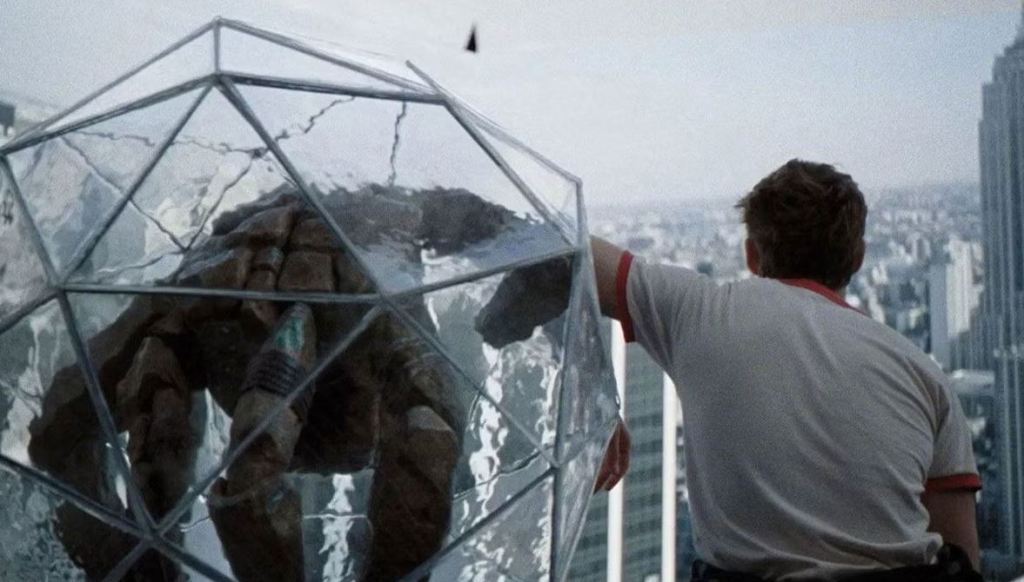
    The spiritual heart of the story is the harrowing moment Rocky leaves the safety of his sphere to save Ryland. In Catholic theology, the Incarnation represents God entering a world fundamentally hostile to His divine nature to rescue His creation. Rocky performs a secular act of kenosis, or self-emptying.

    To rescue his friend, Rocky must exit his pressurized, superheated environment and enter Ryland’s oxygen-rich, low-pressure world. This is not a simple crossing of a threshold; it is a “Passion.” As Rocky’s biology fails and his shell cracks in the alien atmosphere, he endures a literal “breaking open” so that another might live. This mirrors the Crucifixion, where Christ entered our fragile human condition to pull us from the brink of death. As Isaiah 53:5 reminds us, “By his stripes we are healed.”

    The Theology of the “Greater Love”

    The Gospel of John provides the definitive metric for such an act: “Greater love has no person than this: to lay down one’s life for one’s friends” (John 15:13). Initially, Ryland and Rocky are separated by biology and light-years, yet they discover a common “soul” in their mutual willingness to suffer. Their physical contact through the divider—a digital-age “Creation of Adam”—asserts that “neighbor” is not a biological category, but a moral one. A neighbor is anyone for whom we are willing to bleed.

    The Great Turnaround: From Survival to Mission

    The story concludes with a final act of “Resurrection.” When Ryland realizes that Rocky’s home planet remains doomed, he faces his own Gethsemane. He can return to Earth—his “Heaven”—or he can “die” to his own desires and head toward Erid.

    By turning the ship around, Ryland undergoes a total metanoia—a fundamental change of heart. He chooses to become the “alien” in a distant land so that an entire race might live. He becomes a missionary in the truest sense. Just as Christ remains with His Church, Ryland remains with the Eridians, sharing the “Bread of Knowledge” that ensures their survival.

    Conclusion: The Law of the Grain of Wheat

    Project Hail Mary serves as a modern parable for the law of the Gospel: “Unless a grain of wheat falls into the earth and dies, it remains alone; but if it dies, it bears much fruit” (John 12:24). Ryland finds his true life only after he is willing to lose it. In the end, we see the Communion of Saints: two vastly different beings bound forever by a history of mutual sacrifice. It is a reminder that in any corner of the universe, the path of life always leads through the act of laying it down for a friend.

  • We are taught that success is the ultimate disinfectant. The logic is simple: if a man “levels up” his bank account, his physique, and his social circle, his old insecurities will evaporate.

    But Jerry O’Connell provides a visceral case study in the Persistence of the Underdog. Despite the leading-man jawline and a marriage to a global icon like Rebecca Romijn, O’Connell often projects the energy of a man waiting for the “real” winners to show up and ask for their life back.

    It’s a warning to every practitioner: You can bench press 400 pounds or wear Captain’s bars, but if you don’t perform a “software update” on your self-image, you are just a high-status imposter.

    1. The Architecture of the “Husky Kid” Mindset

    Psychologists point to “Early Life Social Rank” as the blueprint for adult self-worth. Whether you were the “fat kid” (like O’Connell in Stand By Me), the scrawny geek, or the invisible kid at the back of the bus, that early rejection creates a baseline.

    When the physical “glow-up” happens later in life, the internal architecture often remains the same. You are living a life that your 12-year-old self hasn’t authorized. Every win feels like a clerical error. You aren’t “the man”; you’re just the guy who successfully snuck into the VIP lounge, terrified that security is going to check your ID and toss you out.

    2. The “Stamos Shadow” and the Beta-Comparison Trap

    In the hierarchy of Hollywood archetypes, John Stamos represents “Gold Standard” alpha-cool. By marrying Stamos’s ex-wife, O’Connell didn’t just win a “prize”—he entered into a permanent, silent comparison with a legend.

    • The Peer-Group Tax: When friends or the public use a predecessor as a punchline, they are reinforcing a social hierarchy. They are reminding you that you are the “successor,” not the “original.”
    • The Domestic Gut-Punch: When even the people who love you most—like your own children—comment on how good the “other guy” looks, it shatters the Hero archetype. It reinforces a brutal message: Even here, you’re the runner-up.

    3. The “Out-Kicked My Coverage” Curse

    When a man believes he has “out-kicked his coverage,” his relationship or his career stops being a partnership and starts being a defensive performance. This leads to destructive “High-Status Imposter” behaviors:

    • The “Stepped-On” Effect: You subconsciously hand over all the power. You stop setting boundaries because you’re terrified that any friction will cause people to “realize” they can do better than you.
    • Humor as a Survival Mechanism: Like the “Class Clown” in school, self-deprecating humor is a way to stay “useful” and “likable” to compensate for a perceived lack of inherent value.
    • Hyper-Agreeability: You work 10x harder to “earn” your spot at the table every single day because you don’t believe you belong there by right.

    4. The Biological Toll of Permanent Alert

    Living in a state of “out of my league” is psychologically exhausting. It is a state of Permanent Alert. You view every other high-status man not as a peer, but as a potential replacement.

    This anxiety eventually leaks out. People—especially those we lead or those we love—are wired to sense “frame.” When a man lacks the conviction that he is the prize, he projects the very insecurity that devalues him.

    The Takeaway: The Gym Cannot Fix the Ghost

    The O’Connell Paradox is a reminder that external wins are hollow if the internal compass is broken.

    You can achieve all manner of material/status achievements in your life, but if you are still answering to that “Husky Kid” from thirty years ago, you will never truly own it.

    True status isn’t about who you are with or what’s on your collar; it’s about the absolute, unshakable conviction that you belong in the room. Until you kill the “out of my league” demon, you’re just a fan who got lucky—and luck always runs out.

  • “That’s Entrapment!” (No, It’s Actually Not)

    If I had a dollar for every time someone yelled, “That’s entrapment!” during an arrest, I could have retired a decade ago. It’s a favorite line of the “jailhouse lawyer,” and while they might actually be back on the street tomorrow, it won’t be because the police “entrapped” them.

    In the age of viral videos and armchair legal experts, the word “entrapment” has been twisted to mean “the police tricked me into getting caught.” But in the eyes of the law, being duped and being entrapped are two very different things.

    The Legal Definition

    While every state has slightly different statutes, the general definition is this: Entrapment is a practice whereby a law enforcement agent induces a person to commit a criminal offense that the person would have otherwise been unlikely or unwilling to commit.

    The key word there is induces.

    The “Bike” Test: Opportunity vs. Persuasion

    Let’s look at a simple example to illustrate the difference:

    • Scenario A (Opportunity): I lean an unlocked, expensive mountain bike against a street corner and sit in an unmarked car across the street. You walk by, see the bike, and decide to swipe it. I arrest you. Verdict: Not Entrapment. I provided the opportunity, but the intent was entirely yours.
    • Scenario B (Inducement): I point at that same bike and say to a passerby, “Hey, I’ll give you $200 right now if you just grab that bike and bring it to me. It belongs to a guy who owes me money.” If you take the bike and I arrest you… Verdict: Entrapment. I persuaded or coerced you into committing a crime you had no prior intention of committing.

    The “Undercover” Myth

    One of the most persistent myths—likely fueled by bad TV—is that an undercover cop must identify themselves as law enforcement if asked.

    Let’s be clear: That is 100% false. If you ask an undercover officer, “Are you a cop?” and they say “No,” they aren’t entrapping you. They are performing their duties. Entrapment does not mean you were tricked into getting caught committing a crime you wanted to commit; it means you were forced or convinced to commit a crime you didn’t want to commit.

    Speed Traps and “Dukes of Hazzard” Tactics

    People often call a hidden patrol car a “speed trap” and claim entrapment. It isn’t. The speed limit sign is the warning, and your foot on the gas is the intent.

    Unless I’m pulling a Dukes of Hazzard move—where I have a motorized speed limit sign that flips from 70 MPH to 30 MPH the second you drive past—you aren’t being entrapped. You’re just speeding.

    The Vice Perspective: Intent vs. Opportunity

    In the world of Narcotics and Vice, the line is very clear. If you walk into a room intended to buy drugs or exchange sex for money, you aren’t being entrapped. You just didn’t intend to get caught.

    You have no Constitutional right to not get caught.

    When the police run an undercover operation, we are providing the “opportunity” for a criminal act to take place. We are not convincing a law-abiding citizen to suddenly become a drug dealer. If the “criminal design” originated in your head before we ever spoke to you, you’re going to have a very hard time winning an entrapment defense in court.

    The Takeaway

    Don’t confuse “good police work” with “illegal inducement.” If you choose to break the law, the police are allowed to be clever, they are allowed to be undercover, and they are allowed to wait for you to make your move.

    Stay on the right side of the line, and you won’t have to worry about the definition.

  • The Tueller Drill: Math, Myth, and the Reality of the Reactionary Gap

    In the world of law enforcement training, few concepts are as widely cited—and as frequently misunderstood—as the “21-Foot Rule.”

    Most of us first encountered this through the late-1980s training film Surviving Edged Weapons. It’s a classic for a reason, featuring legendary practitioners like Dan Inosanto demonstrating just how quickly an officer can be overwhelmed by a knife-wielding subject. Over the decades, this film has often been used in martial arts and tactical circles as “proof” of the knife’s supremacy over the handgun at close range.

    However, viewing the Tueller Drill as a “weapon vs. weapon” competition misses the mark. It isn’t about which tool is “better”; it’s about the physics of the Reactionary Gap.

    The Origins of the Drill

    The drill is named after Sgt. Dennis Tueller of the Salt Lake City Police Department. In 1983, he published a seminal article in SWAT Magazine titled “How Close Is Too Close?” Tueller’s research was based on a simple series of tests: he found that the average healthy adult could close a distance of 21 feet in approximately 1.5 seconds. He concluded that an individual armed with an edged weapon, a club, or any lethal object at this “intermediate range” represented a potentially deadly threat.

    Tueller was not arguing that the knife was superior to the gun. From a police perspective, he was establishing the legal and tactical justification for displaying or using deadly force against non-firearm threats from distances previously thought to be “safe.”

    In his original article, Tueller provided a blueprint for tactical survival that many people skip over in favor of the “quick-draw” narrative:

    “First, develop and maintain a healthy level of tactical alertness. If you spot the danger signs early enough, you can probably avoid the confrontation altogether. A tactical withdrawal… may be your best bet…

    Next, if your ‘Early Warning System’ tells you that a possible lethal confrontation is imminent… move to cover, draw your weapon, and start to plan your next move. Why use cover… if your attacker is using only a knife? Because you want to make it hard for him to get to you. Anything between you and your attacker (trash cans, vehicles, furniture, etc.) that slows him down buys you more time…

    I suggest you draw your weapon as soon as the danger clearly exists. There is no point in waiting until the last possible second to play ‘Quick-Draw McGraw.’ The sight of your ‘Equalizer’ may be sufficient to terminate the action then and there.”

    Tactics vs. The “Quick-Draw” Trap

    Tueller’s point wasn’t about the “inherent deadliness of the blade”; it was about range awareness, tactical positioning, and the use of force. As practitioners, we must constantly analyze our approach: looking for non-verbal cues, watching hands, and utilizing environmental obstacles. We must maintain a healthy reactionary gap, but we also have a duty to act. Unlike a civilian, we cannot always conduct business from 21 feet behind a ballistic shield. We have to engage. The key is ensuring that when we do, we aren’t “in the hole” before the interaction even begins.

    The Worst-Case Scenario: “In the Hole”

    Tueller acknowledged that sometimes, despite your best efforts, you find yourself at close quarters with a “lunatic slasher.”

    In training scenarios, the lesson is often framed as: “You must use empty-hand techniques.” While that is true, the ultimate lesson shouldn’t just be “learn martial arts”—as beneficial as that is—it should be “use better tactics.” If you walk blindly into a dark warehouse to “check things out” and get ambushed, you’ve already failed the tactical check.

    When it comes to close-range mechanics, backpedaling while trying to draw against a charging knife is a losing game. But focusing purely on disarms is also a “break glass in case of emergency” strategy. The goal is to avoid being in that hole to begin with.

    If you are unlucky enough to be in that position, the gold standard for “hard, fast, and ugly” survival involves three priorities:

    1. Solve the positional problem first: You must move off the line of force or go hands-on to create the time and space needed to draw.
    2. Weapon Retention: Utilize techniques like the SouthNarc high “two” position—pistol tucked close to the body, firing thumb indexed on the pectoral muscle, with a support-side “elbow shield” to create space.
    3. Flank and Engage: Movement, strikes, and working to the flank to gain a dominant position before delivering deadly force.

    The Power of Intent and the OODA Loop

    The Tueller Drill has become a set-piece exercise that often misses the power of initiative and intent. In the classic drill, the “attacker” knows exactly when they are going to move. The “defender” stands still, holstered, and waits for a signal. This is pure physics, but it isn’t reality. It ignores obstacles, preemptive commands, and tactical initiative.

    On the street, this is about the OODA Loop (Observe, Orient, Decide, Act). In the static drill, the knife-wielder is already inside the defender’s loop. They have already Decided and are ready to Act before the defender can even Observe.

    If I am asked to participate in a Tueller Drill and told, “He has a knife,” I’m going to “cheat.” I’m going to draw, move to cover, and issue commands before he even thinks about moving. By doing so, I’m “breaking” the drill, but I’m following the combative truth. ### The Takeaway The Tueller Drill is a mathematical example of a reactionary gap, not a definitive ranking of weapons. Who decides to attack, who is first aware of the threat, and who has a weapon already in hand is far more important than whether the weapon is a blade or a firearm.

    If an enemy is within 21 feet with any weapon—a knife, a gun, a bottle, or a rock—and they get to make the first move while you wait to respond, you are in a fight for your life.

    Stay Alert. Stay Aware. Stay Alive.

  • Tactical Preschool: The Bolt Catch Upgrade

    The AR platform is arguably the most modular long gun in existence. There is no end to the “do-dads” and upgrades available, but there’s often a gap between buying a part and actually having the confidence to install it.

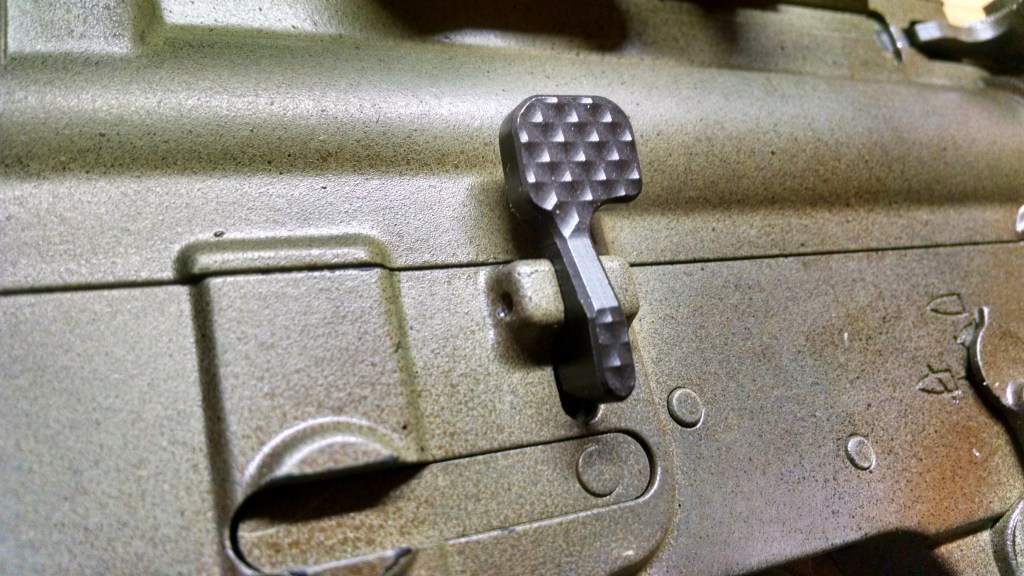
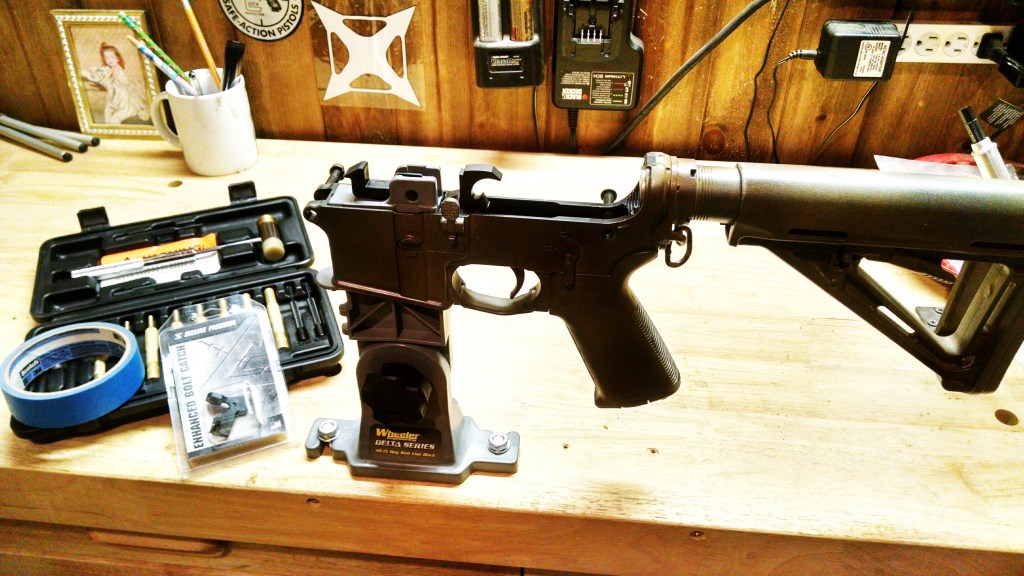
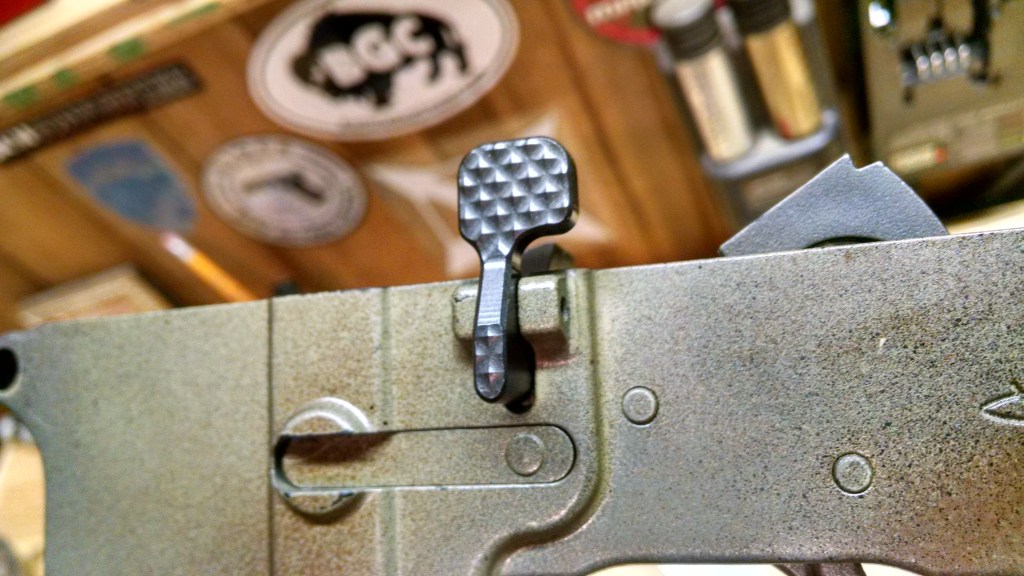
    Many owners are hesitant to take a punch and hammer to their “baby.” This post is a quick AAR on replacing a bolt catch—specifically, the Seekins Precision Enhanced Bolt Catch. It offers a larger paddle for better manipulation and a textured pattern for positive control. If it works as well as (or better than) OEM, there’s no harm in it looking better, too.

    The Tool List

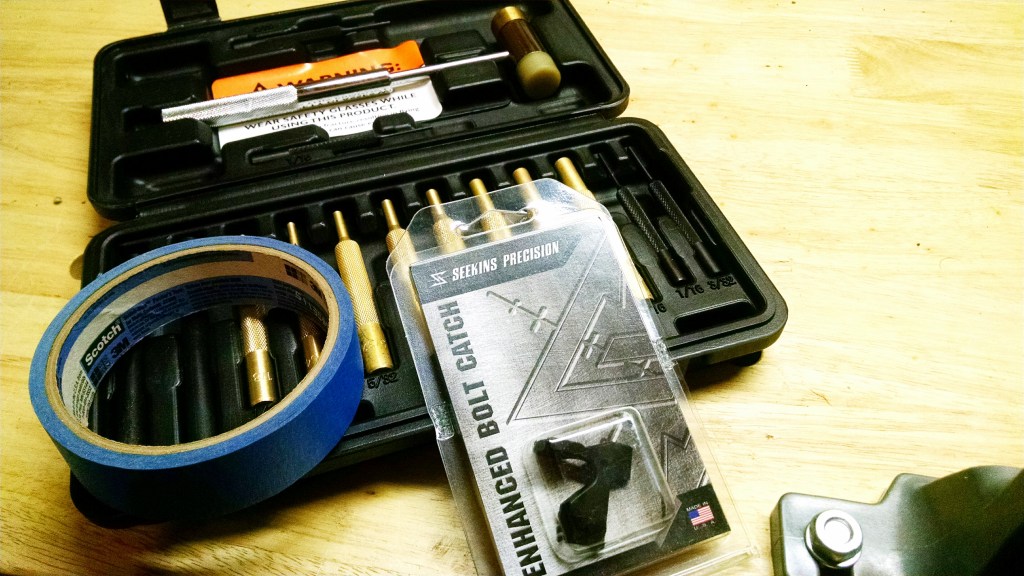
    You don’t need a full armorer’s bench for this. You just need the right basics:

    • Two 3/32″ punches
    • A small hammer (brass or nylon preferred)
    • Non-marring tape (Painter’s tape works well)

    The Process

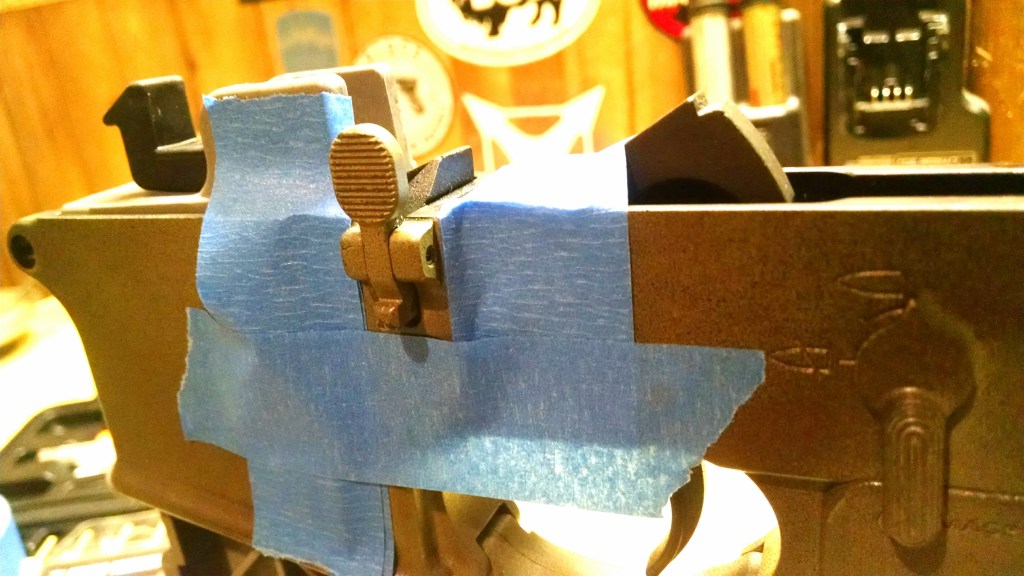
    1. Prep the Workspace Secure your lower in a vice block. I highly suggest a layer or two of tape around the bolt catch “ears” on the receiver. One slipped punch can mar a finish instantly. Protect the gear.

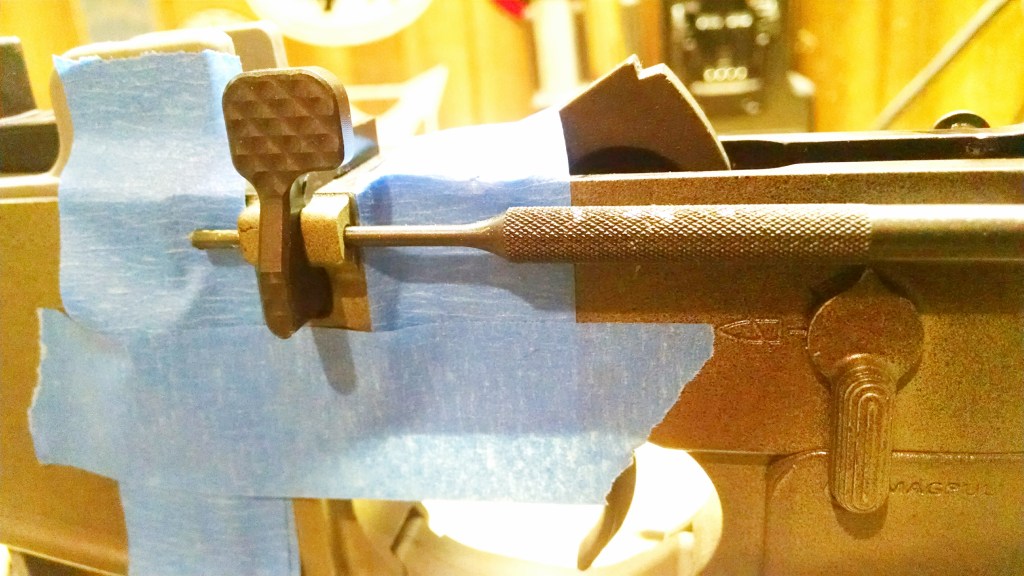
    2. The Initial Drive Using your 3/32″ punch, slowly tap the roll pin out.

    • Pro Tip: Do not drive the pin all the way out of the rear ear. Tap it just far enough so the old catch can be removed. This saves you the headache of trying to restart a roll pin later.

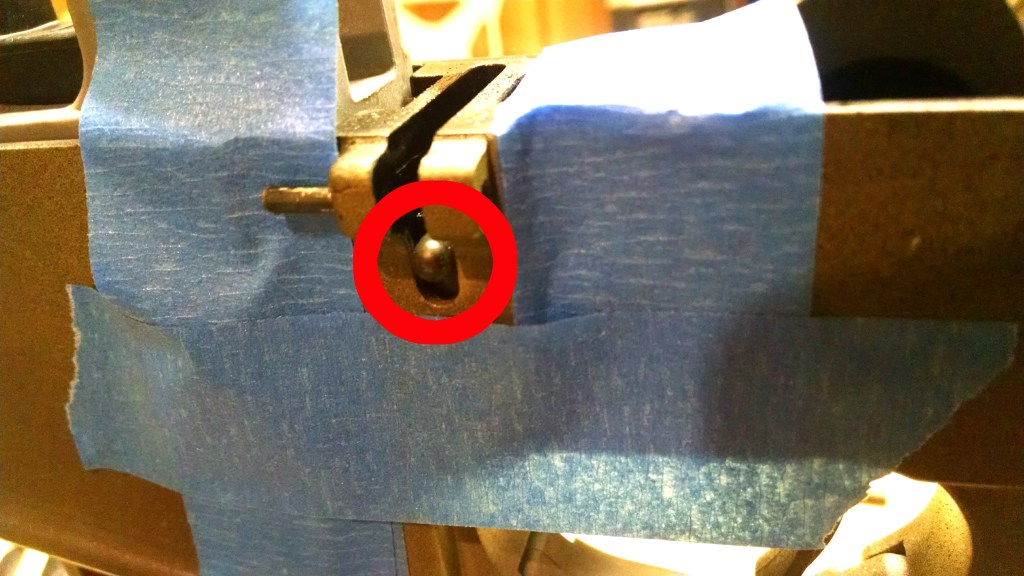
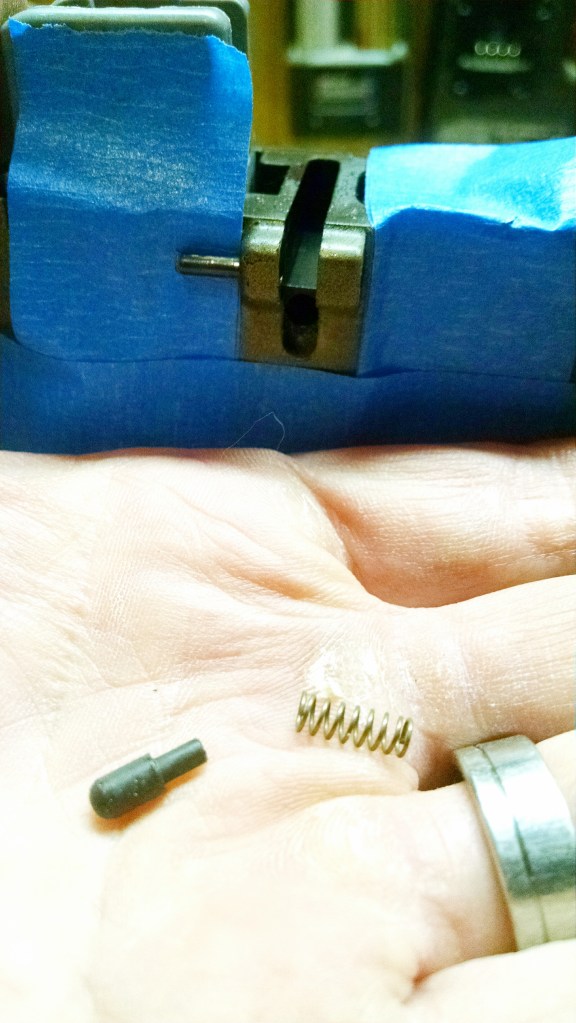
    3. Capture the Internals Remove the old catch, but be careful to retain the bolt catch spring and plunger. If these fly across the garage, your “Tactical Preschool” session just became a search-and-rescue mission.

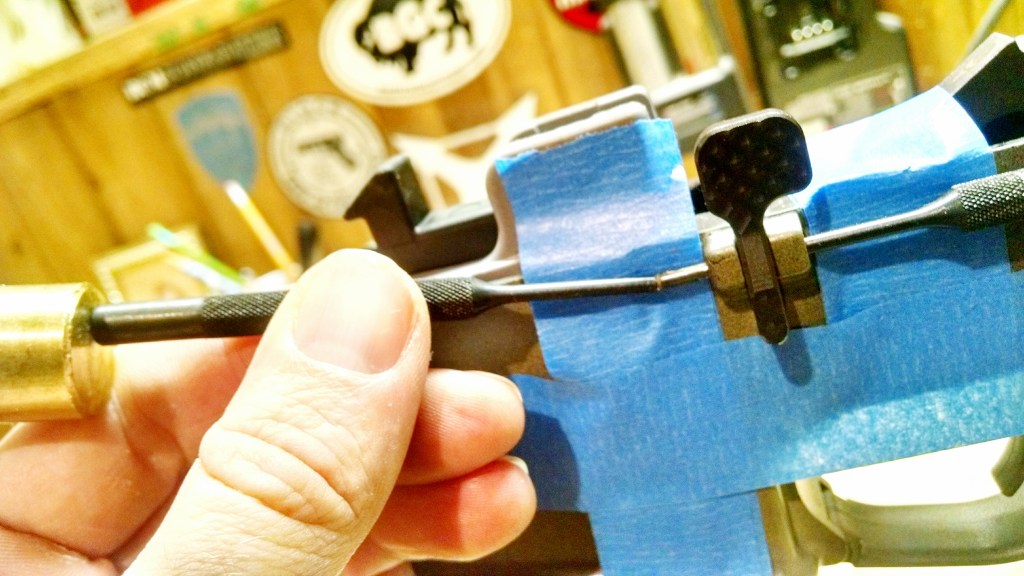
    4. The “Second Punch” Trick This is the key to a stress-free install. Put your spring and plunger back into the receiver. Set the new Seekins catch in place, and temporarily secure it by pushing your second 3/32″ punch through from the opposite side. This holds everything in alignment while your hands are busy with the hammer.

    5. Seat the Pin Now, simply tap the original roll pin back into place. As the pin moves forward, it will push your “alignment punch” out the other side.

    Voila. You’ve upgraded your ergonomics without a single scratch on the lower.

    The Takeaway

    Maintenance and minor armoring are part of “The Standard.” Knowing how your weapon functions—and how to repair it—is just as important as knowing how to shoot it. Don’t be afraid of the punches; just be methodical.

  • The Lens of Belief: Choosing Meaning Over Cynicism

    Seeking “truth” is often framed as a purely intellectual or scientific pursuit—a hunt for facts, data, and evidence. But in the spiritual and human sense, I’ve found that truth is as much about faith as it is about fact.

    I have seen many bitter, sour people who spent too much of themselves worrying about what is “objectively” true. Having seen what people are capable of doing to one another over a long career, I am far from naive. I’m not preaching “sunshine and daisies.” However, reality and “truth” in human terms are fundamentally different from scientific “evidence.”

    The Unquantifiable Truths

    When we discuss policy, law, or tactics, we absolutely need to consider scientific facts. But on an individual level—the level where we actually live our lives—happiness is about what we choose to believe.

    The “Things Worth Believing In” are the ones you can’t put under a microscope:

    • Love
    • Courage
    • Freedom
    • Justice
    • Good prevailing over evil

    If someone wants to view life as nothing more than a series of chemical reactions and electrical impulses, they are welcome to it. But I choose to believe otherwise. No triumph of the human spirit was ever founded in cynicism.

    The Lens of the Long Haul

    We all believe in something. Those beliefs, whether rightly or wrongly held, are the lens through which we view every call, every interaction, and every struggle.

    Cynicism is easy. It’s a defense mechanism that feels like “realism,” but it’s actually a slow-acting poison. It tells you that because you saw something ugly today, everything is ugly. It tells you that justice is a myth because you saw a “bad guy” get off on a technicality.

    Choosing to believe in justice and the inherent “good” of the mission isn’t being blind to the facts; it is a conscious decision to maintain a lens that allows for hope. It’s about recognizing the “dust and dung” of the world while refusing to let it dim your view of the stars.

    The Choice

    At the end of the day, your mindset is the only thing the job can’t take from you unless you give it away. You can be a practitioner who sees the world as a series of cold equations, or you can be one who believes that what we do matters on a scale that isn’t always measurable.

    I know which one makes for a better life. I’ll take faith over “pure” facts any day of the week.

  • The Dragon at the Window: Trappings vs. Truth

    When we talk about “The Standard” in this profession, we often focus on the gear we carry or the certifications on our wall. But the Hagakure offers a sobering reminder that the “trappings” of the warrior are not the “doings” of the warrior.

    “In China there was once a man who liked pictures of dragons, and his clothing and furnishings were all designed accordingly. His deep affection for dragons was brought to the attention of the dragon god, and one day a real dragon appeared before his window. It is said that he died of fright. He was probably a man who always spoke big words but acted differently when facing the real thing.”

    The “Tactical Dragon” Collector

    This passage highlights a common human tendency: confusing the appearance of a thing with the substance of it.

    You see it everywhere today. There’s the IT or web professional who spends thousands on high-cut helmets, plate carriers, and custom carbines. He attends three or four “advanced” tactical courses a year and can recite every acronym in the book. There is absolutely nothing wrong with having a tactical hobby or buying quality gear—until you start to confuse those trappings with the doings.

    The web-dude with the tactical firearms hobby who “dies of fright” when the Tactical Gods drop him into a real firefight illustrates that skills and mindset are two different things. One can be purchased; the other must be forged.

    The Black Belt Ego

    We see the same thing in martial arts. Strutting around like you are “SOMEBODY” because you tied a black belt around your waist is usually a sign of a self-esteem problem.

    At the end of the day, a black belt just means you are a person with a specific skill. That skill is no more or less important than the skills of a master carpenter, an accountant, or an electrical engineer. Those people keep the world turning.

    Show me what kind of person you are by what you do in the world—not by what you wear or what you say.

    Guts Over Appearance

    The “Dragon at the Window” is the moment of truth. It is the split second where the “appearance” is stripped away and only the “guts” remain.

    You don’t have to be a SEAL or a tactical guru to be “someone.” In fact, the most capable people I’ve worked with in my 26 years on the job often look like the most ordinary. They don’t need dragon-patterned wallpaper because they’ve already reconciled themselves with the dragon.

    The type of person you are will always be more important than the skills you acquire. Carry yourself with the humility of a practitioner, not the arrogance of a collector.