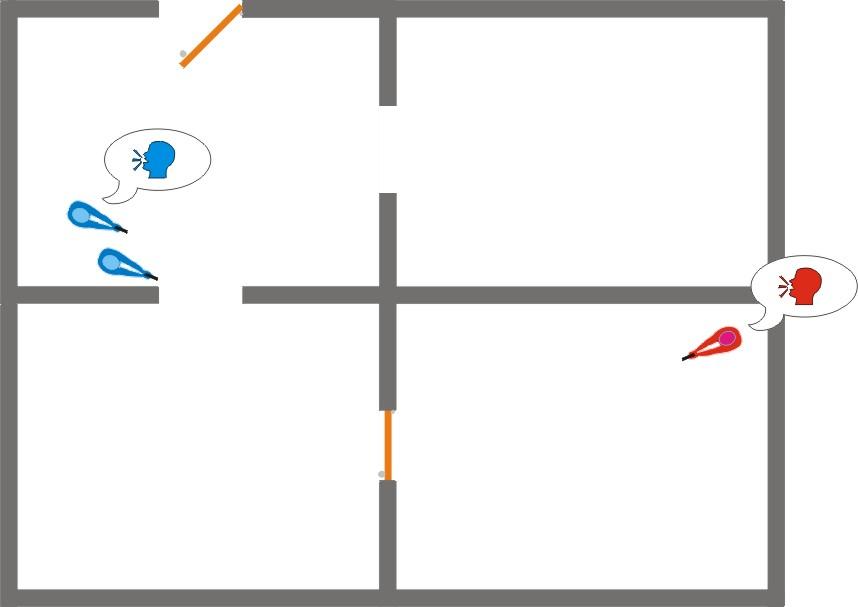
• The Tueller Drill: Math, Myth, and the Reality of the Reactionary Gap

    In the world of law enforcement training, few concepts are as widely cited—and as frequently misunderstood—as the “21-Foot Rule.”

    Most of us first encountered this through the late-1980s training film Surviving Edged Weapons. It’s a classic for a reason, featuring legendary practitioners like Dan Inosanto demonstrating just how quickly an officer can be overwhelmed by a knife-wielding subject. Over the decades, this film has often been used in martial arts and tactical circles as “proof” of the knife’s supremacy over the handgun at close range.

    However, viewing the Tueller Drill as a “weapon vs. weapon” competition misses the mark. It isn’t about which tool is “better”; it’s about the physics of the Reactionary Gap.

    The Origins of the Drill

    The drill is named after Sgt. Dennis Tueller of the Salt Lake City Police Department. In 1983, he published a seminal article in SWAT Magazine titled “How Close Is Too Close?” Tueller’s research was based on a simple series of tests: he found that the average healthy adult could close a distance of 21 feet in approximately 1.5 seconds. He concluded that an individual armed with an edged weapon, a club, or any lethal object at this “intermediate range” represented a potentially deadly threat.

    Tueller was not arguing that the knife was superior to the gun. From a police perspective, he was establishing the legal and tactical justification for displaying or using deadly force against non-firearm threats from distances previously thought to be “safe.”

    In his original article, Tueller provided a blueprint for tactical survival that many people skip over in favor of the “quick-draw” narrative:

    “First, develop and maintain a healthy level of tactical alertness. If you spot the danger signs early enough, you can probably avoid the confrontation altogether. A tactical withdrawal… may be your best bet…

    Next, if your ‘Early Warning System’ tells you that a possible lethal confrontation is imminent… move to cover, draw your weapon, and start to plan your next move. Why use cover… if your attacker is using only a knife? Because you want to make it hard for him to get to you. Anything between you and your attacker (trash cans, vehicles, furniture, etc.) that slows him down buys you more time…

    I suggest you draw your weapon as soon as the danger clearly exists. There is no point in waiting until the last possible second to play ‘Quick-Draw McGraw.’ The sight of your ‘Equalizer’ may be sufficient to terminate the action then and there.”

    Tactics vs. The “Quick-Draw” Trap

    Tueller’s point wasn’t about the “inherent deadliness of the blade”; it was about range awareness, tactical positioning, and the use of force. As practitioners, we must constantly analyze our approach: looking for non-verbal cues, watching hands, and utilizing environmental obstacles. We must maintain a healthy reactionary gap, but we also have a duty to act. Unlike a civilian, we cannot always conduct business from 21 feet behind a ballistic shield. We have to engage. The key is ensuring that when we do, we aren’t “in the hole” before the interaction even begins.

    The Worst-Case Scenario: “In the Hole”

    Tueller acknowledged that sometimes, despite your best efforts, you find yourself at close quarters with a “lunatic slasher.”

    In training scenarios, the lesson is often framed as: “You must use empty-hand techniques.” While that is true, the ultimate lesson shouldn’t just be “learn martial arts”—as beneficial as that is—it should be “use better tactics.” If you walk blindly into a dark warehouse to “check things out” and get ambushed, you’ve already failed the tactical check.

    When it comes to close-range mechanics, backpedaling while trying to draw against a charging knife is a losing game. But focusing purely on disarms is also a “break glass in case of emergency” strategy. The goal is to avoid being in that hole to begin with.

    If you are unlucky enough to be in that position, the gold standard for “hard, fast, and ugly” survival involves three priorities:

    1. Solve the positional problem first: You must move off the line of force or go hands-on to create the time and space needed to draw.
    2. Weapon Retention: Utilize techniques like the SouthNarc high “two” position—pistol tucked close to the body, firing thumb indexed on the pectoral muscle, with a support-side “elbow shield” to create space.
    3. Flank and Engage: Movement, strikes, and working to the flank to gain a dominant position before delivering deadly force.

    The Power of Intent and the OODA Loop

    The Tueller Drill has become a set-piece exercise that often misses the power of initiative and intent. In the classic drill, the “attacker” knows exactly when they are going to move. The “defender” stands still, holstered, and waits for a signal. This is pure physics, but it isn’t reality. It ignores obstacles, preemptive commands, and tactical initiative.

    On the street, this is about the OODA Loop (Observe, Orient, Decide, Act). In the static drill, the knife-wielder is already inside the defender’s loop. They have already Decided and are ready to Act before the defender can even Observe.

    If I am asked to participate in a Tueller Drill and told, “He has a knife,” I’m going to “cheat.” I’m going to draw, move to cover, and issue commands before he even thinks about moving. By doing so, I’m “breaking” the drill, but I’m following the combative truth. ### The Takeaway The Tueller Drill is a mathematical example of a reactionary gap, not a definitive ranking of weapons. Who decides to attack, who is first aware of the threat, and who has a weapon already in hand is far more important than whether the weapon is a blade or a firearm.

    If an enemy is within 21 feet with any weapon—a knife, a gun, a bottle, or a rock—and they get to make the first move while you wait to respond, you are in a fight for your life.

    Stay Alert. Stay Aware. Stay Alive.

  • Tactical Preschool: The Bolt Catch Upgrade

    The AR platform is arguably the most modular long gun in existence. There is no end to the “do-dads” and upgrades available, but there’s often a gap between buying a part and actually having the confidence to install it.

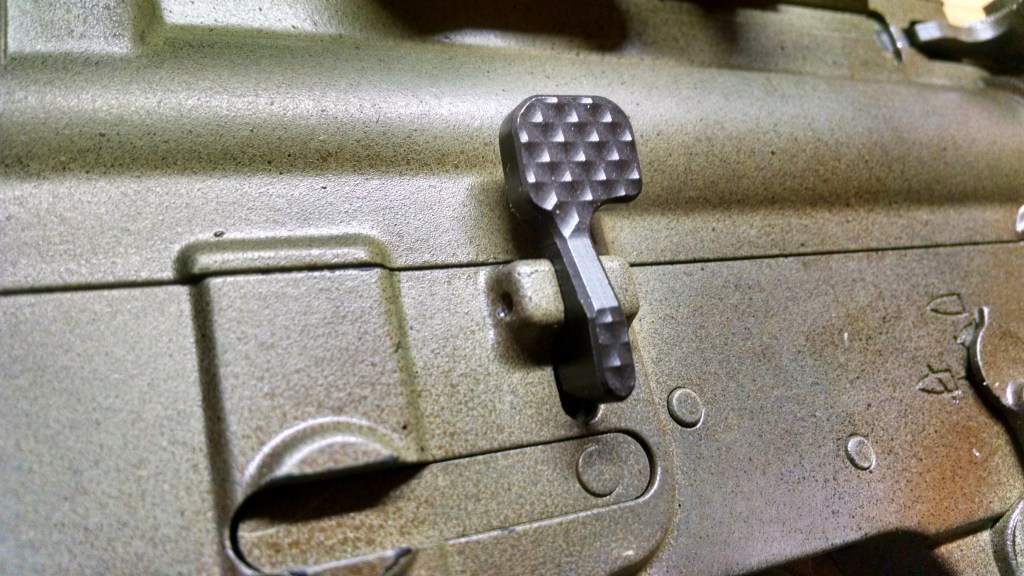
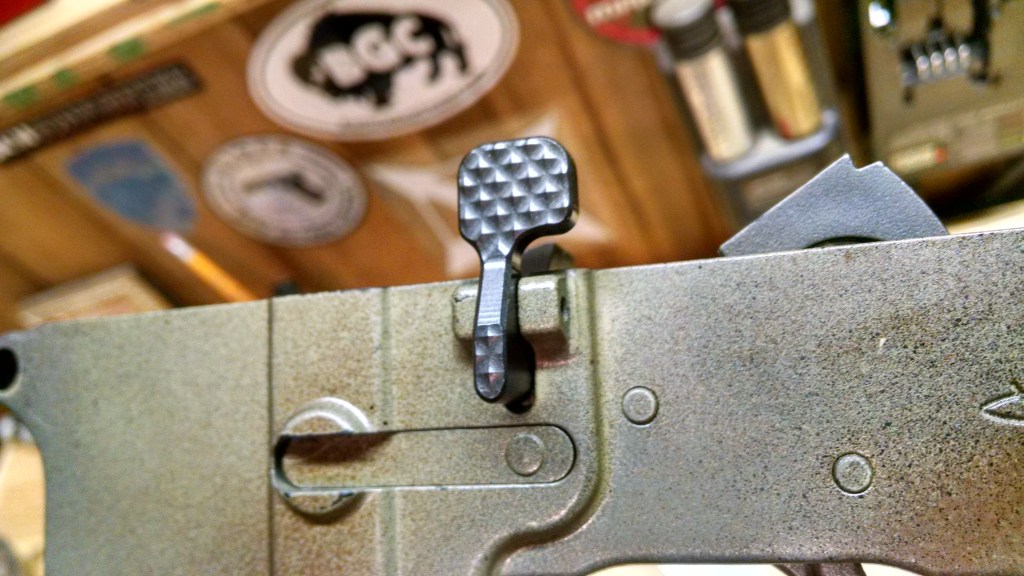
    Many owners are hesitant to take a punch and hammer to their “baby.” This post is a quick AAR on replacing a bolt catch—specifically, the Seekins Precision Enhanced Bolt Catch. It offers a larger paddle for better manipulation and a textured pattern for positive control. If it works as well as (or better than) OEM, there’s no harm in it looking better, too.

    The Tool List

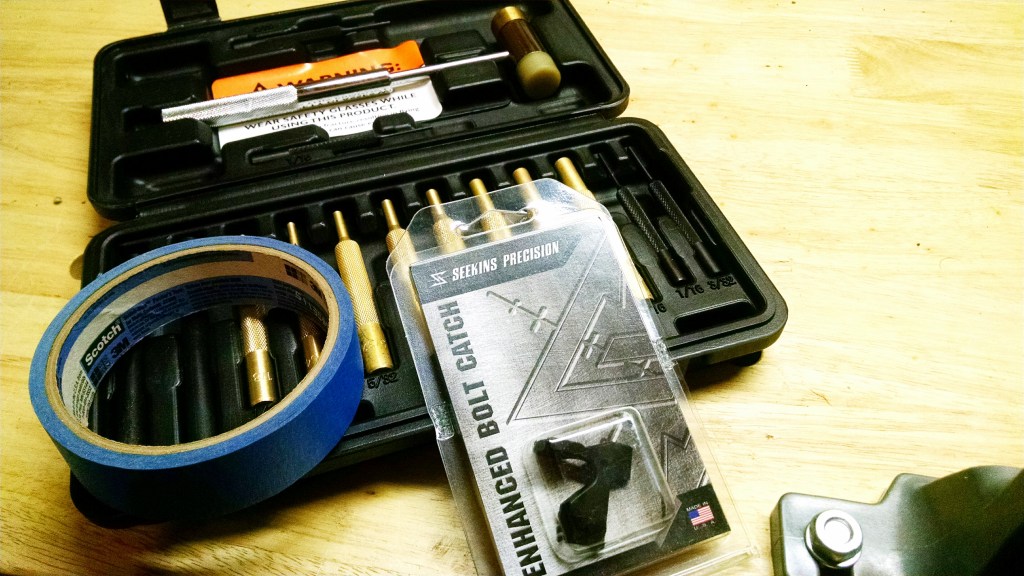
    You don’t need a full armorer’s bench for this. You just need the right basics:

    • Two 3/32″ punches
    • A small hammer (brass or nylon preferred)
    • Non-marring tape (Painter’s tape works well)

    The Process

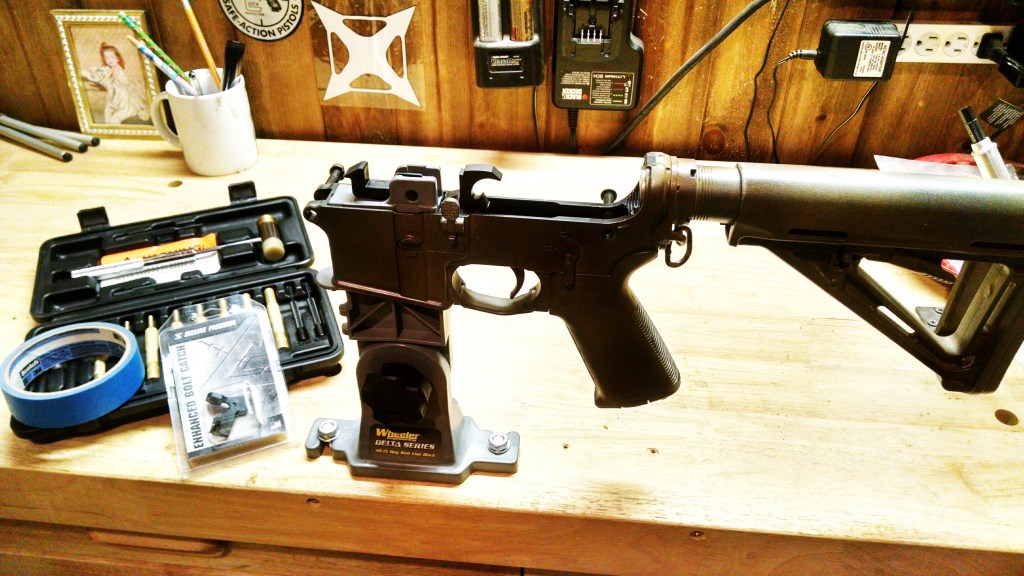
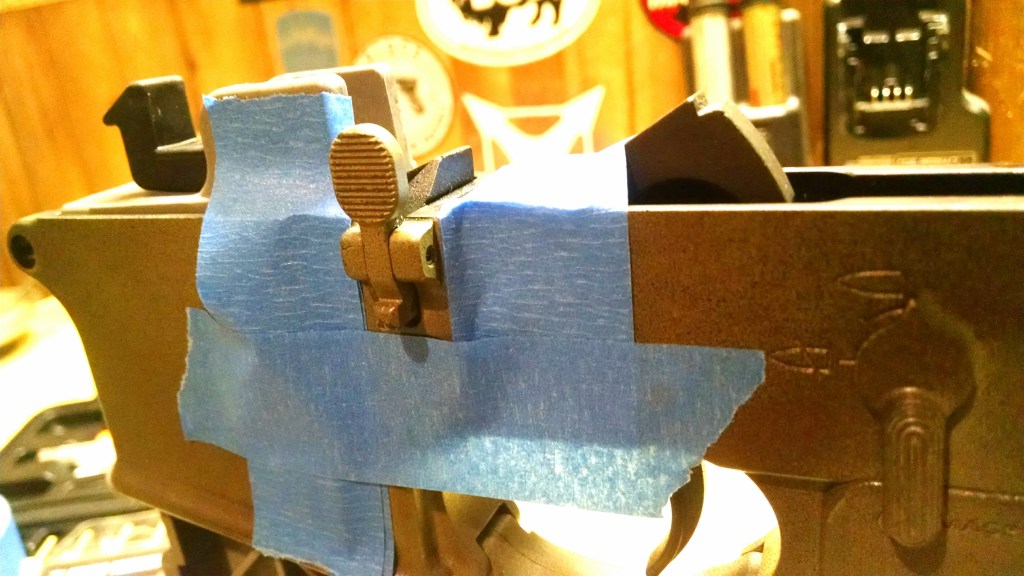
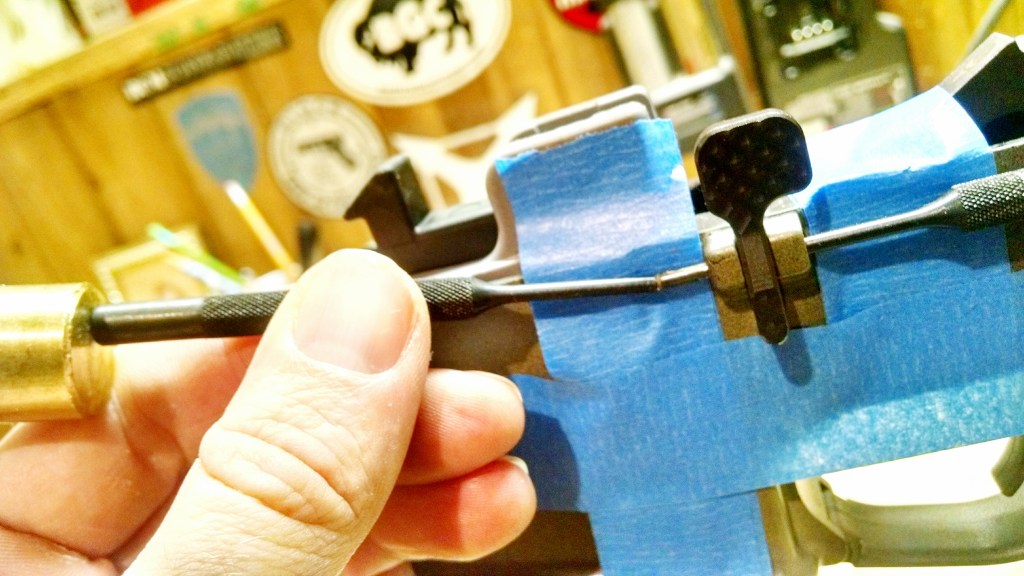
    1. Prep the Workspace Secure your lower in a vice block. I highly suggest a layer or two of tape around the bolt catch “ears” on the receiver. One slipped punch can mar a finish instantly. Protect the gear.

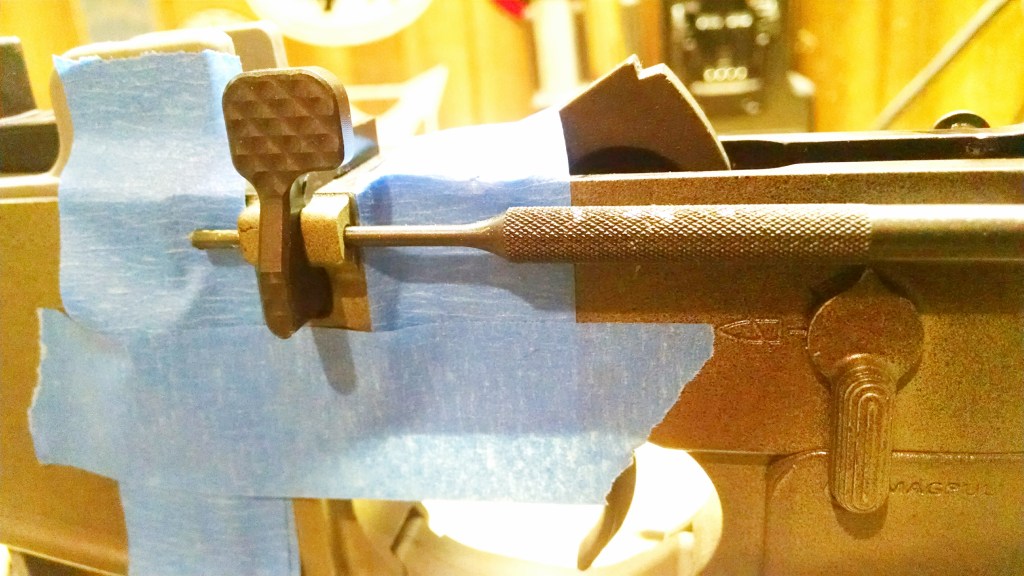
    2. The Initial Drive Using your 3/32″ punch, slowly tap the roll pin out.

    • Pro Tip: Do not drive the pin all the way out of the rear ear. Tap it just far enough so the old catch can be removed. This saves you the headache of trying to restart a roll pin later.

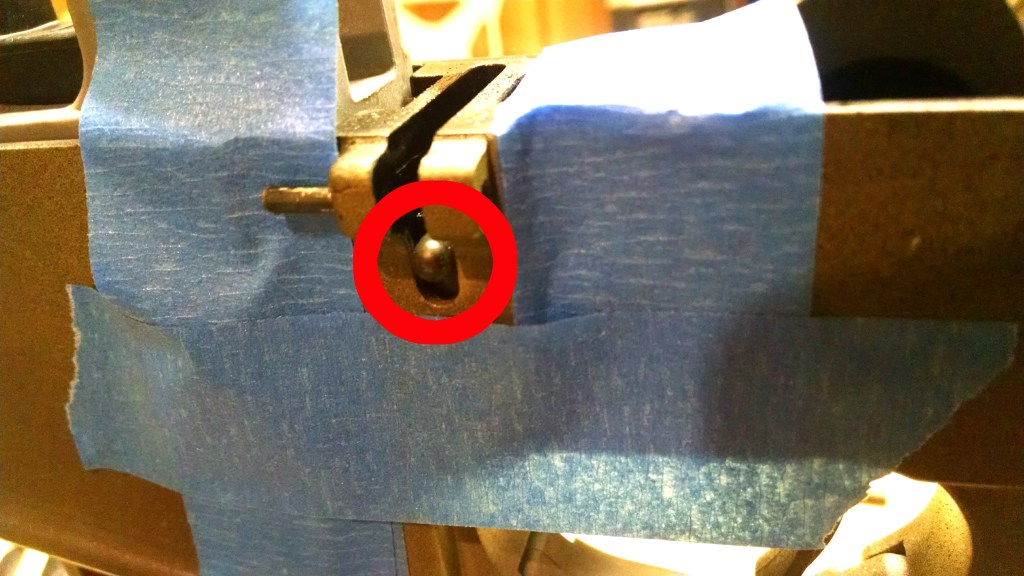
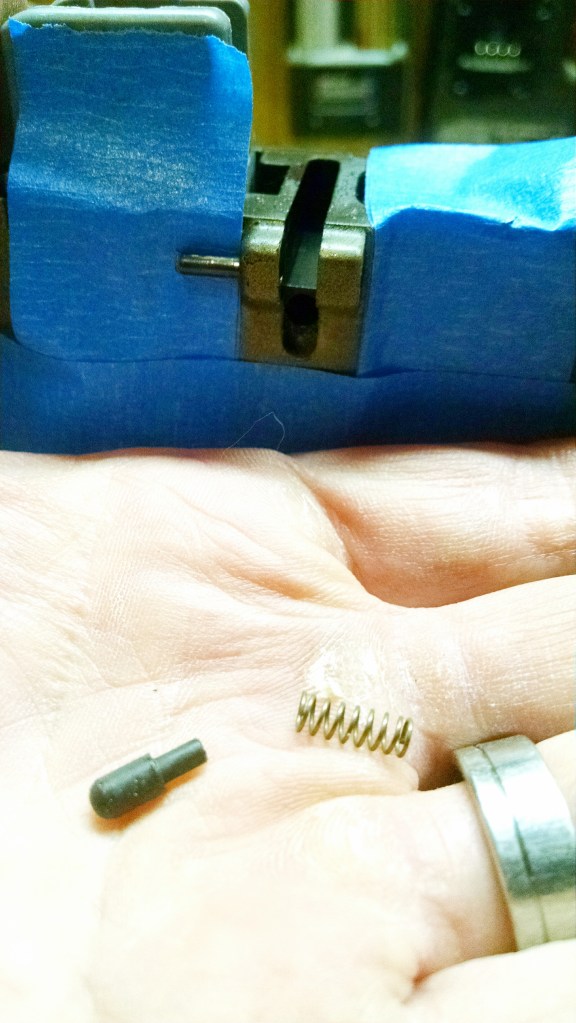
    3. Capture the Internals Remove the old catch, but be careful to retain the bolt catch spring and plunger. If these fly across the garage, your “Tactical Preschool” session just became a search-and-rescue mission.

    4. The “Second Punch” Trick This is the key to a stress-free install. Put your spring and plunger back into the receiver. Set the new Seekins catch in place, and temporarily secure it by pushing your second 3/32″ punch through from the opposite side. This holds everything in alignment while your hands are busy with the hammer.

    5. Seat the Pin Now, simply tap the original roll pin back into place. As the pin moves forward, it will push your “alignment punch” out the other side.

    Voila. You’ve upgraded your ergonomics without a single scratch on the lower.

    The Takeaway

    Maintenance and minor armoring are part of “The Standard.” Knowing how your weapon functions—and how to repair it—is just as important as knowing how to shoot it. Don’t be afraid of the punches; just be methodical.

  • The Lens of Belief: Choosing Meaning Over Cynicism

    Seeking “truth” is often framed as a purely intellectual or scientific pursuit—a hunt for facts, data, and evidence. But in the spiritual and human sense, I’ve found that truth is as much about faith as it is about fact.

    I have seen many bitter, sour people who spent too much of themselves worrying about what is “objectively” true. Having seen what people are capable of doing to one another over a long career, I am far from naive. I’m not preaching “sunshine and daisies.” However, reality and “truth” in human terms are fundamentally different from scientific “evidence.”

    The Unquantifiable Truths

    When we discuss policy, law, or tactics, we absolutely need to consider scientific facts. But on an individual level—the level where we actually live our lives—happiness is about what we choose to believe.

    The “Things Worth Believing In” are the ones you can’t put under a microscope:

    • Love
    • Courage
    • Freedom
    • Justice
    • Good prevailing over evil

    If someone wants to view life as nothing more than a series of chemical reactions and electrical impulses, they are welcome to it. But I choose to believe otherwise. No triumph of the human spirit was ever founded in cynicism.

    The Lens of the Long Haul

    We all believe in something. Those beliefs, whether rightly or wrongly held, are the lens through which we view every call, every interaction, and every struggle.

    Cynicism is easy. It’s a defense mechanism that feels like “realism,” but it’s actually a slow-acting poison. It tells you that because you saw something ugly today, everything is ugly. It tells you that justice is a myth because you saw a “bad guy” get off on a technicality.

    Choosing to believe in justice and the inherent “good” of the mission isn’t being blind to the facts; it is a conscious decision to maintain a lens that allows for hope. It’s about recognizing the “dust and dung” of the world while refusing to let it dim your view of the stars.

    The Choice

    At the end of the day, your mindset is the only thing the job can’t take from you unless you give it away. You can be a practitioner who sees the world as a series of cold equations, or you can be one who believes that what we do matters on a scale that isn’t always measurable.

    I know which one makes for a better life. I’ll take faith over “pure” facts any day of the week.

  • The Dragon at the Window: Trappings vs. Truth

    When we talk about “The Standard” in this profession, we often focus on the gear we carry or the certifications on our wall. But the Hagakure offers a sobering reminder that the “trappings” of the warrior are not the “doings” of the warrior.

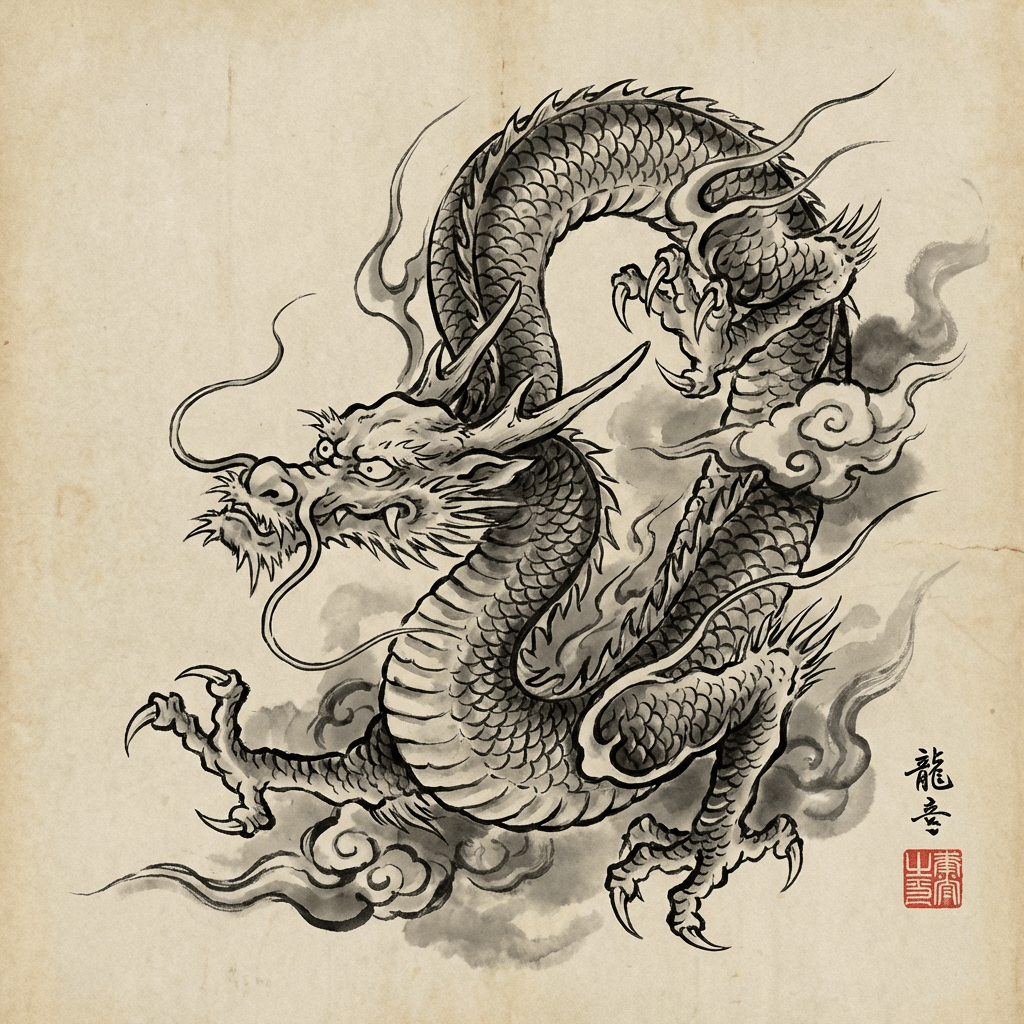
    “In China there was once a man who liked pictures of dragons, and his clothing and furnishings were all designed accordingly. His deep affection for dragons was brought to the attention of the dragon god, and one day a real dragon appeared before his window. It is said that he died of fright. He was probably a man who always spoke big words but acted differently when facing the real thing.”

    The “Tactical Dragon” Collector

    This passage highlights a common human tendency: confusing the appearance of a thing with the substance of it.

    You see it everywhere today. There’s the IT or web professional who spends thousands on high-cut helmets, plate carriers, and custom carbines. He attends three or four “advanced” tactical courses a year and can recite every acronym in the book. There is absolutely nothing wrong with having a tactical hobby or buying quality gear—until you start to confuse those trappings with the doings.

    The web-dude with the tactical firearms hobby who “dies of fright” when the Tactical Gods drop him into a real firefight illustrates that skills and mindset are two different things. One can be purchased; the other must be forged.

    The Black Belt Ego

    We see the same thing in martial arts. Strutting around like you are “SOMEBODY” because you tied a black belt around your waist is usually a sign of a self-esteem problem.

    At the end of the day, a black belt just means you are a person with a specific skill. That skill is no more or less important than the skills of a master carpenter, an accountant, or an electrical engineer. Those people keep the world turning.

    Show me what kind of person you are by what you do in the world—not by what you wear or what you say.

    Guts Over Appearance

    The “Dragon at the Window” is the moment of truth. It is the split second where the “appearance” is stripped away and only the “guts” remain.

    You don’t have to be a SEAL or a tactical guru to be “someone.” In fact, the most capable people I’ve worked with in my 26 years on the job often look like the most ordinary. They don’t need dragon-patterned wallpaper because they’ve already reconciled themselves with the dragon.

    The type of person you are will always be more important than the skills you acquire. Carry yourself with the humility of a practitioner, not the arrogance of a collector.

  • The Fountain of Forgetfulness: Avoiding the Command Trap

    In the professional world—especially in high-stakes fields like law enforcement, the military, or corporate leadership—there is a phenomenon we often see but rarely name. It’s the “stiffening” of the soul that happens when someone moves from the street to the office. We’ve seen solid operators get their gold bars or their corner offices, only to suddenly develop a strange case of amnesia.

    The 17th-century philosopher Balthazar Gracian captured this perfectly:

    “As you climb toward the throne of Command, on the very first step of success, you will come to a strange fountain where people try to slake the thirst of ambition. One of that fountain’s strange, contrary effects is that it makes us forget the past. I saw people drink from it and forget their former friends and acquaintances: witnesses to their former lowliness. They forgot even their brothers and sisters, and one drinker was such an arrogant barbarian that he did not recognize the father who engendered him, deleting from his memory all obligations, all favors received, wanting to be a creditor, not a debtor.

    Those who drank wanted to borrow, not to return. They forgot even themselves, and now that they were on the high seas, could barely remember that they had been spawned in puddles. They forgot all that could remind them of their dust and dung, all that would make them lower their feathers. They drank up ingratitude and affected gravity and remoteness, and wafted up strangely to their thrones, unable to recognize others, or recognize themselves. That is the way that honors change customs.”

    The Debt of Success

    Gracian points out that the ambitious person wants to be a “creditor, not a debtor.” They want to believe they reached the top entirely on their own merit. To admit they owe a debt to their former partners, their mentors, or even their “former lowliness” is a blow to their new, inflated sense of self.

    But the Long Haul isn’t a solo achievement. It’s a marathon run on the backs of those who helped us along the way. When a leader “deletes from his memory all obligations,” he loses the very thing that made him a leader in the first place: trust.

    “Spawned in Puddles”

    There is a specific type of arrogance that comes with rank—the belief that you were always meant for the “high seas” and that the “puddles” of the entry-level grind were beneath you.

    Gracian’s use of “dust and dung” is intentional. It’s the grit. It’s the messy, unglamorous reality of the job. If you forget the dust and dung, you lose the ability to lead the people who are currently standing in it. You become a leader who is always asking for more from your subordinates while offering nothing in return, because you no longer recognize their struggle as your own.

    The “Affected Gravity”

    The goal of this blog is to document the journey without losing the man. If “honors change customs,” then the challenge for the veteran practitioner is to remain unchanged by the trappings of status.

    • Recognize yourself: Don’t let the title define your character.
    • Recognize others: Remember that the person in the “puddle” today is the witness to who you used to be.
    • Lower your feathers: Stay humble enough to remember that you are made of the same “dust” as everyone else on the roster.

    Command is a duty to be performed, not a transformation into a “barbarian” who forgets his roots. The moment you stop recognizing the “father who engendered you”—the experiences and people that built you—is the moment you have failed the mission.

  • The Cinematic Myth: The Dirty Reality of Human Trafficking

    If you spend any time on social media or in certain “self-defense” circles, you’ve seen the alerts. Viral posts about “suspicious white vans” in Target parking lots, or warnings that middle-class girls are being snatched on their way to Starbucks to be shipped overseas in containers. It’s a scene straight out of the movie Taken.

    But having worked these cases—some of them alongside Federal agents from HSI—I can tell you that the cinematic version of trafficking is a distraction. It’s fear-mongering founded on an inaccurate portrayal of how this social epidemic actually functions.

    The “Taken” Fallacy

    In his book Protecting the Gift, Gavin De Becker notes that compared to a stranger kidnapping, a child is vastly more likely to have a heart attack—and child heart attacks are so rare most parents never even consider the risk.

    The “average woman” in a suburban parking lot is almost never the target of a sex slavery syndicate. Abduction is real, but it doesn’t look like Liam Neeson’s nightmares. When the media flashes statistics about “300,000 children at risk,” they often fail to mention that a massive percentage of that number involves non-custodial parent abductions—a tragedy, certainly, but a world away from the international sex trade.

    The Vulnerable, Not the “Likable”

    Real trafficking is uglier, more complicated, and far more heartbreaking than the movies. The victims don’t usually come from the “movie set” of suburbia. They come from an entirely different set of life circumstances: foster care, runaways, broken homes, and long histories of neglect or substance abuse.

    I’ve been in physical struggles with teenage girls picked up during prostitution stings—yelling, swearing, and fighting—when all we wanted was for them to talk to an agent. These aren’t always “sympathetic” or “likable” victims when you first encounter them. They are often dealing with behavioral issues and mental health struggles that make them incredibly difficult to help.

    The Illusion of Choice

    One of the hardest parts of these cases is that many victims will insist they are there “by choice.”

    By the time law enforcement encounters them, they have often been groomed and exploited for years. They’ve been conditioned so thoroughly that they truly believe they chose this path, without understanding what was actually done to them. It isn’t a simple “good guy vs. bad guy” story. It’s a slow-motion wreck where the victim has been taught to love the wreck.

    This is why these cases are a nightmare to prosecute. It takes long-term counseling with trained professionals just for a young woman to recognize she was victimized, let alone find the strength to testify against her trafficker.

    The Practitioner’s Responsibility

    We should be alert, prepared, and trained for any circumstance—absolutely. But we shouldn’t sell training or “safety” based on fear-mongering myths.

    Real trafficking isn’t cinematic. There are no SWAT raids at the end of the episode where everyone runs into each other’s arms. It’s a grind. It’s slow. And social media myths about white vans don’t help the people actually trapped in the cycle.

    If you want to protect your community, focus on the vulnerable, not the spectacle.

  • Something unfortunately tends to fly out the window the second stress enters the equation: clear thinking.

    It seems like everyone in this industry studies, practices, and frankly, sometimes fantasizes about “dynamic entry” and building clearing. But often, the best tactical decision you can make is to slow the hell down and ask one simple question: Is this actually necessary?

    The Danger of the “Hunt”

    Going into a building after an armed, barricaded subject—or clearing your own home in the middle of the night—is arguably the most dangerous thing you will ever do. Before you cross that threshold, you need to articulate the necessity.

    • Is someone in immediate danger inside?
    • Is there a life-safety reason to move now?

    If the subject is armed, alone, and not ready to surrender, what is the hurry? If you “go dynamic” and someone gets killed, how are you going to explain that decision? “I wanted to get it over with” isn’t an entry in the playbook of a professional.

    The Home Defense Blueprint

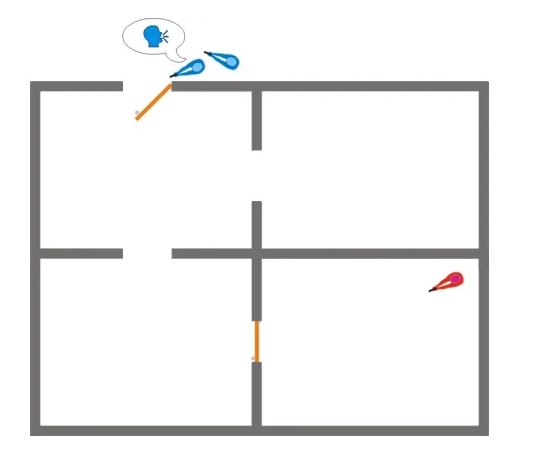
    This applies to the “Domestic Arena” too. If you and your wife are in the bedroom and you know an intruder is in the house, there is almost zero reason to go out looking for them.

    The Strategy:

    1. Arm yourself.
    2. Call 911.
    3. Bunker down in a defensible position.
    4. Announce loudly that you are armed and the police are on the way.

    Hunting a shadow in your hallway is a coin toss where the stakes are your life. Don’t take the bet if you don’t have to.

    Limited Entry and Communication

    In a lone-gunman barricade, the goal is contact and negotiation. If that fails, you don’t have to go “full SWAT” immediately. You can utilize Limited Entry.

    Limited entry allows you to clear what you can see without committing your entire body to a room you haven’t “vetted” yet. You aren’t clearing the structure; you are locating the subject.

    Furthermore, “stealth” is often overvalued. I’ve seen officers try to “stealth clear” when the better option was to stand in a covered position outside and call the subject out. Even if the reply is a “F#$K YOU!”, you’ve achieved a tactical win: you now know exactly where he is without putting a single boot inside the kill zone.

    Flexibility is the Standard

    If a subject manages to wound a good guy, “going dynamic” to finish the fight isn’t always the answer—often, it just results in more casualties. Evacuate the wounded and reset the situation.

    Every incident is different. You have to be flexible. Don’t let a “cool” tactic you saw in a movie dictate a response that gets you or your partners killed.

    Slow down. Think. Articulate the necessity. Then move—if you have to.

  • The Paradox of the Pedestal: The “Catch-22” of the Badge

    I was scrolling through the local news recently and saw a familiar headline: an off-duty officer arrested by another agency for a DWI. As expected, the comment section was an immediate dumpster fire.

    “Bet he gets off.” “Good. They should be treated like everybody else.” “They should be held to a higher standard.”

    It’s a classic Catch-22. The public wants us to be “treated just like anybody else” while simultaneously demanding we be treated differently—held to a “higher standard”—because of the job. You can’t have it both ways.

    The News Cycle Spectacle

    Let’s be clear: anyone who breaks the law should face the consequences. That is the only way the system works. But if you think every doctor, lawyer, or nurse who gets a DWI has their name and profession paraded through the local news, you’re mistaken.

    When a cop gets arrested, it isn’t just news; it’s a spectacle. Unless a department or a disgruntled party has a specific interest in calling the press, 99% of arrests never hit a major outlet. But for the LEO, “transparency” often becomes a euphemism for public shaming. If we are truly being treated “like anyone else,” why does the badge make the mugshot front-page news?

    The Discretion Dilemma

    Discretion is the grease in the gears of the justice system. I’ve let plenty of people go with warnings for minor V&T stuff. I’ve allowed that joint to get ground up and tossed in the gutter rather than making an arrest—all within the bounds of the law.

    Should we treat cops with the same discretion we show your daughter or the local factory worker? That’s a sticky question.

    • If I give a pass to a civilian, it’s “community policing.”
    • If I give a pass to a peer, it’s “The Blue Wall.”

    If I can give your kid a break for a one-day expired registration, I shouldn’t be given grief for giving an officer the same warning. However, if you find yourself giving passes for things you would never overlook for a non-LEO, that’s a sign of a deep-seated problem.

    “Bet He Gets Off”

    This is the most common refrain, and it usually stems from a misunderstanding of how the machine works. When a first-time offender (who happens to be a cop) gets a standard plea deal—like probation or a reduction to an impaired charge—the public screams “Cover-up!”

    In reality, that is being treated like everyone else. If a plumber gets that deal, it’s standard procedure. The “Higher Standard” crowd often isn’t asking for equality; they are asking for the cop to be hit harder by the legal system specifically because of the badge.

    The Internal Standard

    As LEOs, we must hold ourselves to a higher standard. We are representatives of the system, and the public trust is the only currency we have. But we need to separate the Legal System from the Professional Code.

    1. Legally: An officer should be treated exactly like the plumber. No better, no worse.
    2. Professionally: This is where the higher standard lives. The plumber keeps his wrench; the cop might lose his badge.

    If we are going to be consistent, we should stop airing non-felony arrests simply because it looks “transparent.” Fairness isn’t about being hit harder by the courts; it’s about the law being applied blindly, while the Department handles the “honor” side of the house.

    Let’s set aside the personal grudges and the “I remember when I was stopped” stories. If we want a professional force, we have to treat them like professionals—and that means consistent expectations, not a moving target.

  • The Deployment Without End: The Myth of the “Poorly Trained” Cop

    A common refrain from critics of American policing is how “poorly trained” we are. They point at European academies that last years or compare us to elite military units. They see a six-month academy and assume that’s the end of the road.

    As someone who has spent 26 years in the job—and managed the logistics of those resources—I can tell you that these comparisons miss the entire landscape of operational reality.

    The Military Model vs. the 24/7 Deployment

    People love the Tier-1 military model as a benchmark. But they forget how the military operates: Training is the job until you are deployed. You train, you prep, you deploy for a window, and then you rotate back to the states to train again.

    Law Enforcement is a deployment that never ends. We are “deployed” 24/7/365. There is no rotation back to a training base. In LE, it’s work, work, work—and then you try to squeeze in training without shattering the overtime budget or leaving the streets so thin that nobody is left to answer the radio. We are like a unit in the field trying to conduct “field training” between missions that never stop.

    The Professional Double Standard

    Consider the analogies people use for other high-stakes professions:

    • The NFL: Do we expect football players to go through an “academy,” then play at NFL standards for the rest of their careers with no physical conditioning or practice? Of course not. They spend the vast majority of their time practicing for a sixty-minute game.
    • The Military: Do soldiers have to pay for their own ammunition to stay proficient? No. The taxpayer understands that lethality requires funded repetition.
    • Medical Professionals: We respect nurses for their education, but does a nurse have to know how to shoot, drive an emergency vehicle at high speeds, and wrestle a violent subject into handcuffs—all while staying current on the latest ever-changing case law—based solely on their initial schooling?

    The expectation of “perfection” placed on an officer is absolute, yet the resources provided to maintain that perfection are often an afterthought.

    The “Total Officer” Skill Set

    The public often fixates on “unarmed combatives” or Jiu-Jitsu as the magic fix. While those are vital, they are a fraction of the requirement. An officer must be proficient in:

    • Emergency Vehicle Operations: Statistically the most dangerous part of the job for us—and for you. It is also the most expensive and time-consuming to train.
    • First Aid/Trauma Care: Being a first-responder often means being a medic before the ambulance arrives.
    • Legal Updates: Navigating the minefield of civil rights and changing legislation in real-time.
    • Firearms and Fitness: Perishable skills that degrade the moment they aren’t practiced.

    The Real Solution (and the Real Bill)

    If the public actually wanted “elite” policing, the solution is manpower. We should be treated like the military: officers should be training at least one-quarter of the year to maintain the standards expected of them.

    But here is the hard truth: You all expect professional performance at a cut-rate tax payment. It’s easy to demand a higher caliber of officer; it’s much harder to vote for the tax bill required to pull a third of your police force off the road for constant, high-level training. Until the public is willing to fund the “Practice,” they are essentially asking us to maintain a “Storybook” standard in a “Paperback” reality.

  • The Company You Keep: Tactical Social Geometry

    “A person’s good and evil are dependent on his companions. When three people are together there will always be an exemplary person among them… choice the good person and follow his example.” — Hojo Nagauji (1432-1519 A.D.)

    Hojo Nagauji was a “Fighting Samurai” and a general who helped lay the foundations of what we now call Bushido. In his Twenty-One Precepts, he warned his retainers to be surgical about their associations. He wasn’t just being a prude; he was talking about survivability.

    The “Screw Golf” Mentality

    Nagauji’s advice to avoid “gaming and carousing” in favor of study and calligraphy echoes a sentiment I’ve long admired from Col. Dave Grossman: “Screw golf.” If you claim to be a “professional” or a “warrior,” yet you spend more heart and mind on idle drinking, gaming, or status-seeking than on your skills and your soul, you are living in a fantasy. You are choosing to say you are something rather than actually being it.

    The Perimeter of Reputation

    We’ve all been there—out with friends, one too many drinks, acting in a way that doesn’t align with the weight of the badge or the belt. While “playing” is better than wasting time completely, it must be done intentionally. As George Washington famously noted: “Associate yourself with men of good quality if you esteem your own reputation. It is better to be alone than in bad company.”

    In the “Domestic Arena,” I recently wrote about protecting the marriage from the “poison” of bitter influences. The same applies to your professional and martial life. If you associate with people who consistently act in an undignified manner, you are debasing yourself. You are asking for trouble that “The Way” is designed to help you avoid.

    The Exemplary Person

    Nagauji suggests a simple exercise in situational awareness: In any group of three, find the “good example” and emulate him. Look at the “bad example” and use him as a mirror to correct your own faults.

    This is Tactical Social Geometry. You are positioning yourself to inherit the virtues of those around you, rather than being dragged down by their gravity.

    Are You Worthy of Respect?

    If you find yourself getting “wasted” as routine entertainment or associating with those who have no respect for the Standard, you are moving away from the path. A warrior is mindful. He doesn’t stumble into trouble; he sees it coming and chooses a different route—or he meets it on his own terms.

    Mindfulness is the fundamental. Consider the people you associate with today:

    • Are they examples you wish to emulate?
    • Do you want others to think of you the way they think of them?
    • Are they worthy of respect?
    • Are you?