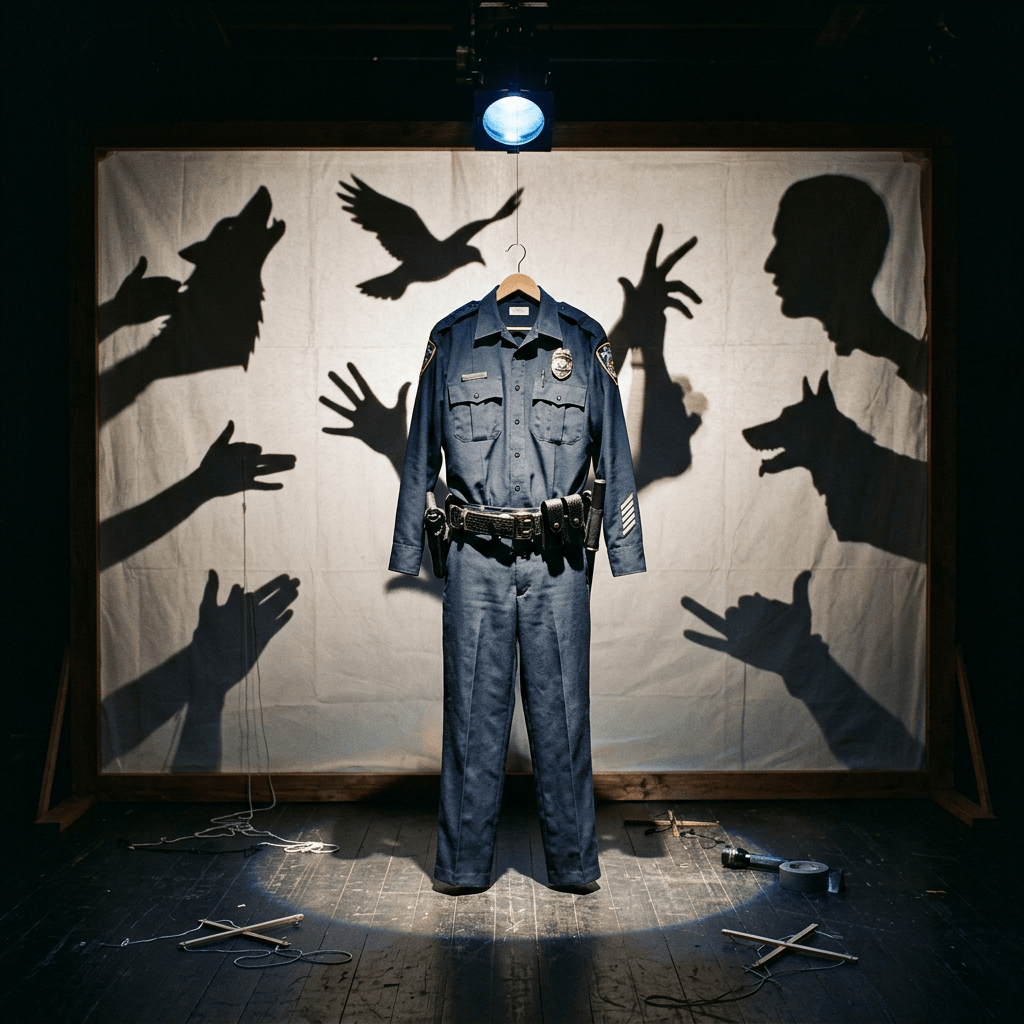
• “Self-Defense Magic Formula”

    As a career LEO with over three decades in the hopper, people often ask me for the “secret” to staying safe. They want to hear about the latest gear, the “deadly” pressure point, or the “perfect” holster.

    They’re usually disappointed when I give them the actual Magic Formula. This formula will avoid 99% of “street attacks” before they even begin. It isn’t flashy, and it isn’t “tactical” in the Hollywood sense, but it is the absolute Standard.

    The 99% Solution: Avoiding the High Seas

    If you want to stay safe, you have to stop volunteering for the fight. Most “victimization” is actually a failure of basic life discipline.

    • Avoid the Dark Sectors: Don’t participate in illegal activity. It sounds simple, but you’d be amazed how many “innocent victims” were actually trying to buy something they shouldn’t have been buying when things went south.
    • Curate Your Circle: Don’t hang out with people who attract trouble. If your “buddy” has a knack for getting into bar fights or “misunderstandings” with the law, he is an anchor that will pull you into the depths.
    • The Geography of Trouble: Don’t hang out in places that attract trouble. If a gas station has bulletproof glass and a dedicated “loitering” problem at 2:00 AM, don’t be there.
    • Maintain Your “Internal Compass”: Limit how often, where, and with whom you get drunk or high. Nature gave you a survival mechanism; don’t chemically disable it.
    • The Domestic Perimeter: Don’t tolerate domestic violence. Call the police and/or leave the abuser. The most dangerous “High Seas” are often inside your own front door.
    • Trust the “Gift of Fear”: Be alert to your surroundings. If something “feels” wrong, it is wrong. Many people stay in a dangerous situation because they’re afraid of being “impolite” or “paranoid.” In my world, paranoia is just another word for “advanced situational awareness.”

    The 1% Solution: The Practitioner’s Grind

    For that remaining 1% of instances where you are attacked while truly “minding your own business,” you cannot rely on a “magic formula.” You have to rely on The Standard.

    1. Pressure Testing: Study an art that involves striking, grappling, and fighting against a resisting opponent. If your “self-defense” class doesn’t involve you getting hit or working through total exhaustion, it’s just “Dragon Wallpaper.”
    2. The Second Fight: Be aware of your state’s self-defense laws. The “first fight” is on the sidewalk; the “second fight” is in the courtroom. Have a plan for “post-incident” procedures (calling 911, what to say, and when to stop talking) already burned into your brain.
    3. The Daily Maintenance: Practice your skill sets every day. Fitness, mindset, and technique are perishable.

    The Captain’s AAR

    Self-defense isn’t a “one and done” seminar. It’s a lifestyle of The Long Haul. It’s about making the boring, disciplined choices at 10:00 PM so you don’t have to make the life-or-death choices at 2:00 AM.

    Stay alert, stay sober, and stay out of the “High Seas.” But if the “Dragon” finds you anyway, make sure you’re the most disciplined person in the room.

  • The Ego Trap: Authority, “Newjacks,” and the “Almost Joined” Crowd

    I’ve dealt with two types of people over the years: those who respect the mission and those who are looking for a reason to tear it down. The outright haters—the ones yelling “jackboot” or “pig”—are at least honest about where they stand. It’s the “I respect you, BUT…” crowd that really gets in my craw.

    These are the folks who corner you to tell stories of “rude” cops, why a 7-11 clerk has a “more dangerous” job than a soldier, or how they once got a ticket while an officer didn’t.

    The “Big Man” Syndrome

    I’ve noticed a pattern: this behavior is almost exclusively male. There is an inherent friction when a man with authority he didn’t grant walks into a room. We all want to be the “Big Man.” When a guy sees the badge or the uniform, his ego often takes it as a personal challenge.

    • The Segue: Pay attention next time. The moment LEO or military topics come up, certain guys will immediately pivot to why “they were going to join, but…” (usually followed by some political excuse).
    • The Macho Redirect: Or, they’ll immediately pivot to a topic where they are the authority—martial arts, weightlifting, bar fights, or racing. It’s a defense mechanism. They are trying to tell you: “I might not have the badge, but I could still kick your ass.”

    The “Newjack” and the Mirror

    I won’t deny that some guys over-appreciate themselves once they get in uniform. We call them “Newjacks.” They’re the ones still “pissing on trees” to assert authority because they haven’t lived long enough to realize that the Badge is a burden, not a throne.

    But for the rest of us? We’re just normal guys trying to live up to a set of heavy responsibilities. I don’t think I’m “better” than you. I don’t know you. You might be faster, stronger, or a better shot. I’m just a man doing a job that requires me to maintain The Standard.

    The “Rude Cop” Paradox

    Then there’s the “Rude Cop” narrative. In the Tactical Preschool, we teach that every interaction is a mirror.

    • The “Hard Way” Starter: If you start a traffic stop with “Why are you stopping me?!” or “I’m calling my attorney!” over a seatbelt violation, you are choosing the “High Seas” over a “Puddle.”
    • The Frivolous Complaint: I’ve heard it all. I once had a woman complain that an officer was “shining a flashlight into her car” at night.

    The Captain’s Take: The unmitigated gall of an officer using a tool to see in the dark during a high-risk roadside interaction. [Sarcasm intended.]

    The Danger Metric

    To the people who say being a cab driver or a clerk is “more dangerous” based on a spreadsheet: you’re missing the Intent. * A clerk faces danger as a byproduct of their environment.

    • A practitioner faces danger as the objective of their mission.

    A soldier or a cop is the only person in society who is required to move toward the sound of the guns while everyone else is running away. That is the difference between a “job” and a “vocation.”


    The “Long Haul” Conclusion

    Any human endeavor is subject to human frailty. Yes, there are bad cops and bad soldiers. But by and large, the people I’ve served with are the best you will ever meet. They are men who have mastered their egos enough to submit to a Chain of Command and a Code.

    If you have a beef with the uniform, ask yourself: Is it because of the “Standard,” or is it because you can’t stand not being the biggest man in the room?

  • Hollywood’s “Dragon Wallpaper”: A Practitioner’s Guide to TV Bullshit

    Ask my wife and she will tell you: I am a nightmare to watch movies with. If there is a badge or a plate carrier on screen, I am likely seconds away from yelling “BULLSHIT!!” at the TV. It makes me wonder—don’t these shows have technical advisers? If they do, what the hell are they getting paid for? Or is it that directors think their “creative vision” trumps 34 years of operational reality?

    Here are the 11 topics at the top of my WTF?!?! list:

    1. “Give Me That Before You Hurt Yourself” (The Rack)

    Cops and soldiers are constantly “racking” their weapons. I carry with a round in the chamber 100% of the time. If I had to rack my weapon every time I drew it, there would be brass flying everywhere and my co-workers would think I’d lost my mind. SWAT teams don’t stack on a door and then load. Racking a shotgun just before you kick a door is F#$%ING STUPID!! * The Glock Myth: There is no external “safety” on a Glock. If a character says, “Turn off your safety,” they’ve already failed the course.

    • The Infinite Click: A striker-fired pistol goes click once when empty. It doesn’t go click-click-click like a cinematic revolver. If you’re pulling the trigger three times on an empty Glock, you aren’t a hero; you’re an idiot.

    2. “Oh What the Hell, Why Not?” (The Stack)

    Every Tom, Dick, and Harry seems to stack up with the SWAT team. If I saw a “CSI,” “FBI Profiler,” or some “Detective” with no tactical training trying to get in my stack, they’d get a boot up their ass. SWAT goes in ALONE. When it’s secure, then we call in the eggheads. Seeing Horatio Caine lead a stack in designer shades isn’t “cool”—it’s a safety violation that would get a real Team Leader fired.

    3. Uniformed Cops as Props

    In Hollywood, if you’re wearing a uniform, you’re either a moron who “screwed up the perimeter” or a glorified valet who magically appears just in time to slap cuffs on the guy the “Crime Lab Dweeb” just ran down. The “Dumbass Uniform” is the backbone of this profession. They are the ones holding the line while the “Star” is off having a dramatic epiphany in a dimly lit bar.

    4. “Hello, I’m with the Gov’t and I’m Here to Help”

    CSI and Criminal Minds always start with “we’re just here to help,” yet somehow the profiler always takes over and ends up in the shooting. In the real world, FBI agents are mostly investigators, accountants, and lawyers. They sit in offices. Local cops make the arrests. That’s the “Long Haul” reality.

    5. Kill ‘Em and Leave ‘Em

    The “profilers” arrive like the cavalry, light up a scumbag, and then hop back on their jet and fly off into the sunset. In the real world, an Officer-Involved Shooting (OIS) involves internal affairs, lawsuits, psychological evaluations, and endless paperwork. You don’t “holster up and walk away.” You go to a windowless room and talk to a lawyer.

    6. Nuclear Grenades

    Some Delta Operator tosses a fragmentation grenade into a window and the whole floor erupts into a raging inferno fireball. Uhhhh… no. A loud BOOM, a puff of smoke, and a lot of little bits of metal flying about is about it. If you want a fireball, call an air strike, not a frag.

    7. Crappy Salutes

    Need I elaborate? Some of these actors’ salutes would make a Drill Sergeant break out in hives. It’s a basic sign of respect and discipline—if you can’t get the hand-to-brow right, you shouldn’t be wearing the uniform.

    8. Weird Science (The CSI Effect)

    No, we don’t have databases of every matchbook in the tri-state area. No, we can’t piece a bottle together and get a fingerprint in 20 seconds. DNA IS NOT A “WHILE YOU WAIT” PROCESS. This “stretching” of science has led to the “CSI Effect,” where juries clear criminals because the real-world proof wasn’t as “conclusive” as what they saw on TV last night.

    9. “Tuck That Thing In”

    Military movies where everyone walks around with dog tags outside their shirts, or dress uniforms with improper ribbons… come on, guys. There are books on this! Then there are the “hot women detectives” in clothes so tight I can count the change in their pockets. If a subordinate came to my briefing with her cleavage and belly button showing, she’d be going home for a wardrobe change immediately.

    10. “Cover Me, I’m Going In”

    In movies, nobody ever waits for backup, sets up a perimeter, or gets on the radio. They just head into the basement alone to find the serial killer. In the real world, only someone with a death wish (or a “puddle” ego) ignores the radio and the perimeter.

    11. Tin Cans and Strings (Comms)

    The lack of realism in movie communications is reaching WTF?? proportions.

    • Frequencies: A police portable radio cannot talk to a tank radio just because the plot needs it to (The Walking Dead, I’m looking at you).
    • The Rolex Radio: Talking to your wrist without an earpiece? Unless you’re James Bond, you aren’t hearing a reply through your watchband. Even a Bluetooth earbud would give the scene a scintilla of possibility.

    The Captain’s Bottom Line

    I know, I know… “it’s just entertainment.” But for those of us who live in the High Seas of the real world, these “creative decisions” are just Dragon Wallpaper. They mask the grit, the boredom, the tragedy, and the extreme discipline required to actually do the job.

    Deal with it! This is just me warming up.

  • The Code of the Cross: Beyond the “Soft” Gospel

    Like many who grew up during the “Ninja Craze” of the 1980s, I spent my youth fascinated by the warrior codes of the East. I devoured the Hagakure, Miyamoto Musashi’s The Book of Five Rings, and Sun Tzu’s The Art of War. There is an undeniable pull toward the esoteric—the “foreign” often feels deeper simply because it isn’t familiar.

    As the saying goes, familiarity breeds contempt—or at least a profound disregard. We look for “meaning” in the mountains of Japan or the scrolls of ancient China, while the most robust warrior code ever written sits on the nightstand in a language we already speak.

    The Diluted Message

    As I’ve aged, I’ve started to reflect on why Catholicism—my own faith—often fails to appeal to men as a “Code.”

    Don’t misunderstand me: the messages of love for one’s neighbor, forgiveness, and “turning the other cheek” are vital tenets of the faith. But they have been so poorly understood—and so poorly preached—that they now feel antithetical to the life of a warrior or a person of service. We’ve turned the “Lion of Judah” into a “Lamb” that lacks teeth, and in doing so, we’ve done a massive disservice to both Catholic men and the Faith itself.

    The Ancient Standard

    This “softness” is a modern invention. The Crusaders and the Knights of old didn’t view the Gospels as antithetical to manly pursuits; they viewed them as the justification for them.

    Christ was not a “soft” figure. Consider the tactical and physical reality of His life:

    • Endurance: He survived 40 days in the high desert without food.
    • The Grind: He walked thousands of miles, lived out-of-doors, and possessed the physical stamina of a man who worked with his hands in a brutal era.
    • The Guts: He was never afraid to confront corruption or look “the dragon” in the eye when people were doing wrong.

    In the end, He endured a level of physical agony and psychological pressure that would break the strongest operator. He had the power to end His suffering at any moment, yet He willingly stayed on the Cross. Why? Because the Mission came before the Self. There is nothing more masculine, more “tough,” or more warrior-like than that.

    The Easter AAR

    As we approach Easter, I want to remind the “sheepdogs” and the practitioners that the path to Heaven was never described as a “walk in the park.” Christ never stated that the way would be anything less than a struggle—an effort equivalent to a warrior’s greatest campaign.

    Discipline, meaning, and a code of conduct as “cool” and demanding as Bushido can be found right here in the New Testament. If you can strip away the “sunshine and daisies” rhetoric and truly understand what God is telling us, you’ll find a manual for the “Long Haul” that puts every other code to shame.

    The Resurrection isn’t just a miracle; it’s the ultimate victory of a Mission completed. This Easter, look past the “esoteric” and find the “Real Thing” right next door.

  • This viral clip from Hurst, Texas, is a textbook example of what happens when a “courtesy” is mistaken for a weakness. It starts with a 40 mph violation in an active school zone [04:16]—a situation where any officer worth their salt is going to write a ticket because child safety isn’t up for debate.

    What the 22-second viral snippet won’t show you is the five minutes of professionalism that preceded the “drama.” The officer, Corporal Morgan, followed the standard procedure: identify the violation, ask for credentials, and offer the citation.

    The Ticket is a Courtesy

    As I’ve often said, a traffic ticket is a Summons in Lieu of Arrest. It is a legal contract where the officer agrees not to take you to the station for processing in exchange for your promise to appear in court.

    In the footage, the officer explicitly explains that a signature is not an admission of guilt [06:07]. When the driver refused to sign and then threw the ticket out the window [06:33], she effectively rejected that contract. At that point, the officer’s only legal recourse to ensure she answers for the violation is a custodial arrest. It’s no longer about the 15 mph over the limit; it’s about the refusal to cooperate with the legal process of the summons.

    The “Hard Way” vs. The “Easy Way”

    Once the officer gave the order to step out of the vehicle [07:14]—a lawful order backed by decades of case law (Pennsylvania v. Mims)—the interaction shifted from a “negotiation” to a “command.”

    People often think they can argue their way out of a ticket on the shoulder of the road. You can’t. You fight the ticket in court; you fight the arrest with a lawyer later. Trying to litigate the Fourth Amendment while sitting in the driver’s seat is how you turn a $200 fine into a resisting arrest charge and a trip to the precinct in handcuffs.

    The Context Gap

    The viral version of this story focuses on the “power-tripping” arrest in front of a child. However, the full body camera footage shows a supervisor who tried every possible verbal avenue to get compliance [08:59] before he was forced to go hands-on.

    For those who think the officer was “doing too much,” remember:

    • The Violation: 40 in a 25 school zone [05:40]. That’s a high-risk safety issue for every child in that district.
    • The Escalation: The driver threw the ticket [07:42] and refused a lawful order to exit multiple times over several minutes.
    • The Outcome: The officer didn’t “choose” the hard way; the driver did. By the time she decided she “wanted to sign the ticket” [10:17], the window for that courtesy had already slammed shut.

    The Captain’s AAR

    In 26 years, I’ve seen this play out a thousand times. The uniform doesn’t come with a desire to “ruin someone’s day,” but it does come with a requirement to enforce the law when someone refuses the courtesy of a signature.

    Bottom line: If you play games with the summons process, you are essentially asking for the station-house version of the interaction. Don’t be surprised when the officer obliges.

  • The Glass House Paradox: Sanctuary, Discretion, and the “Silent Contract”

    I’ve lived in this neighborhood through a lot of turnover. New faces, new cars, and inevitably, new problems. As a Captain with 26 years on the job, I’ve learned that the most difficult “beat” I’ve ever walked is my own sidewalk.

    When you live where you work, you live in a glass house. There is a Silent Contract between a career practitioner and his neighbors—a social currency that is spent or saved every time you pull out of your driveway.

    The Invisible Badge & The Silent Contract

    In the neighborhood, your uniform is invisible, but it never really comes off. You are constantly trading the enforcement of petty violations for residential peace.

    • The Risk: If you’re the guy calling in every wrong-way parker or every overgrown lawn, you become the “jerk cop” neighbor. You lose the social capital you need when a real issue arises.
    • The Reward: By overlooking the small stuff, you buy the “neighborhood credit” needed to shut down a 2:00 AM rager with a single look over the fence, rather than a formal complaint that lands on your own desk Monday morning.

    The Danger of “Line Drift”

    However, there is a significant danger in the “Go Along to Get Along” philosophy: Encroachment. In tactics, we call this “Line Drift”—the slow, uncorrected deviation from a standard that eventually becomes the new baseline.

    If you overlook the trash cans left out for three days or the dog barking at midnight too often, some neighbors will mistake your kindness for weakness. They start to believe the Invisible Badge has been turned off. They think that because you haven’t “policed” them yet, the rules simply don’t apply to their street.

    The Domestic Triage

    The ultimate test of this boundary is the “Domestic at the Window.” We’ve all heard it: the slammed door, the raised voices, the unmistakable cadence of a heated argument. For the practitioner, this requires a tactical and ethical triage.

    1. The Professional Standard: My threshold is “life and death.” If I hear the frequency of violence or the sound of a struggle—the “Real Thing”—I am in the fight.
    2. The Neighbor Reality: Stepping in for anything less usually results in both parties turning their resentment toward you. If you call it in for a verbal-only squabble, you’re the “snitch” neighbor; if you handle it yourself, you’re “working off the clock” without a radio or a partner.

    The “Corrective Tap”

    When you feel the boundary being pushed, you can’t go from “Zero to Captain” in one leap. You need the Corrective Tap. This is a light touch to re-establish the line without burning the bridge.

    Catch the neighbor while you’re both getting the mail. “Hey, I noticed the car’s been over the sidewalk a few times. I don’t personally care, but the town’s been a bit of a stickler lately—just wanted to give you a heads-up so you don’t get hit with a ticket.” You are framing it as a favor, but the subtext is clear: I see everything. The Badge is still in the room.

    The Burden of Example

    Because of this Glass House, I cannot let my grass get too high. I can’t have a visitor’s tire on the sidewalk or a trash can left out a day late. The “he thinks he’s above the law” narrative is always simmering just below the surface in any community.

    My lawn, my house, and my conduct must be as disciplined as my fitness award streak. It isn’t about vanity; it’s about removing any “evidence” that could be used against the profession I represent. If you want the moral authority to maintain the perimeter of your home, you must first be the Standard.

    The Long Haul Rule: Your home must be a sanctuary, not a sub-station. Trust the officers you’ve trained to handle the sector. Keep your feathers lowered, stay alert, and pray the “Real Thing” never crosses your property line. But if it does, make sure you have a plan.

  • The Bulletproof Mind or the Brittle Theory? A 17-Year AAR

    Back in 2009, I sat through Lt. Col. David Grossman’s “The Bulletproof Mind” presentation. At the time, he was the primary voice on the psychology of killing and the “Sheepdog” concept. Seventeen years later, as I look back at my notes and incorporate the perspective of legendary operators like Major Dick Winters, I find that while Grossman’s “Hooyah” energy is infectious, his scientific foundation requires a serious reality check.

    The Hook: The Sheepdog and the “Screw Golf” Philosophy

    Grossman is a master of the motivational send-off. His core message—that we are warriors expected to move toward the sound of the guns—is something every practitioner can get behind. I particularly appreciated his take on “Warrior Hobbies.”

    He famously said, “Screw Golf… a golf course is a waste of a good rifle range.” His point was that those of us holding the line shouldn’t waste our time on frivolous activities. Our “fun” should be hunting, fitness, martial arts, and training. As someone who spends his free time in the Adirondacks, at the archery range, or training for the Murph, I’m with him 100%. We rise and fall to our level of training, and “force-on-force” with Simunitions is indeed the gold standard.

    The Crack in the Foundation: S.L.A. Marshall

    However, as a Captain and a student of history, I have to look at the “evidence” Grossman uses to support his theories in On Killing. Much of his work relies on the WWII-era research of S.L.A. Marshall, who claimed that only 15–25% of soldiers actually fired their weapons at the enemy.

    The problem? Marshall’s “ratio of fire” statistics have been largely discredited by historians and veterans alike. In the biography of Major Dick Winters (The Biggest Brother), Winters recounts meeting Marshall after the Brecourt Manor operation. Winters complained that Marshall completely misrepresented the fight in his writing. Marshall didn’t seem to care about the actual facts; he already had a preconceived narrative he wanted to fit the soldiers into.

    If the “innate aversion to killing” theory is built on Marshall’s faulty data, the whole structure starts to lean.

    Muskets and Misinterpretations

    Grossman points to the “multiple loading” of Civil War muskets—rifles found with two or three rounds rammed down the barrel—as “proof” that soldiers were pretending to fire because they didn’t want to kill.

    As a hunter and a shooter, I see a much simpler, tactical explanation: The fog of war. A scared-to-death 19-year-old in a cloud of black powder smoke forgets to put a cap on the nipple, pulls the trigger, hears a “click” he can’t distinguish from a “bang” in the chaos, and thinks he fired. So, he loads again. This isn’t “psychological inhibition”; it’s a failure of the “Tactical Preschool” fundamentals under extreme stress.

    Preparation vs. Paranoia

    There is a fine line between situational awareness and fear-mongering.

    Grossman’s presentation often drifted into the “IT IS GOING TO HAPPEN!!” territory. While the “It won’t happen here” mindset is a dangerous trap, living in a state of constant, unwarranted fear is equally destructive to the “Long Haul.”

    I prefer Gavin DeBecker’s approach in The Gift of Fear. DeBecker teaches us to listen to our intuition and be prepared, but not to sacrifice our “stomach lining” to a statistical anomaly. We should treat active shooter prep like we treat fire safety: we have the alarms, the drills, and the extinguishers, but we don’t spend every waking hour terrified that the toaster is going to explode.

    The Verdict

    Grossman has done a lot of good by getting the “Warrior” conversation into the mainstream and promoting force-on-force training. But we must be careful not to mistake a “motivational speaker” for a “peer-reviewed scientist.”

    We don’t need “evidence” manufactured to fit a concept. We need the truth of the street. Being a “Sheepdog” isn’t about being paranoid or believing in debunked WWII statistics; it’s about the quiet, disciplined pursuit of competence. It’s about being a good person with a skill—and having the “guts” to use that skill when the “Dragon” actually shows up at the window.

  • The Physics of Grace: A Catholic Reflection on Project Hail Mary

    Preface: The Accidental Apostle

    It is a curious paradox of modern storytelling that some of our most profound theological reflections arrive via secular authors. Andy Weir, the creator of Project Hail Mary, identifies as an agnostic and a “science nerd” driven by logic and orbital mechanics. Yet, in crafting a story about the survival of the human race, he has inadvertently authored a contemporary parable of the Gospel. By naming his protagonist Grace and his vessel the Hail Mary, Weir utilizes the vocabulary of faith to describe a “last-ditch effort” for salvation. This essay explores how, despite its secular origins, the film serves as a profound meditation on the “Incarnational” nature of love and the universal necessity of sacrifice.

    Introduction: The Universal Constant of Caritas

    In the vast, mathematical silence of the cosmos, the human mind often expects to find only the cold laws of entropy. Yet, in Project Hail Mary, we encounter a truth far more ancient than the stars: the universality of sacrificial love. For a Catholic viewer, the relationship between Ryland Grace and the Eridian “Rocky” suggests that if God is the Architect of the universe, then Caritas—the selfless love of the Other—is a physical constant as reliable as gravity.

    The Nomenclature of Salvation: Ryland “Grace” and the “Rock”

    In Catholic tradition, Grace is the unmerited favor of God—the supernatural life that allows us to do what we cannot do by our own nature. For the people of Erid, Ryland is Grace personified. They did not seek him out; he arrived from the heavens at their moment of total helplessness. The linguistic play of the title and the protagonist’s name creates a literal, interstellar prayer: “Hail Mary, full of Grace.”

    Furthermore, the name creates a beautiful symmetry with his companion. Just as Christ built His Church upon Peter, the “Rock” (Petra), the mission’s success is built upon the character Rocky. Together, they represent the Catholic harmony of Nature and Grace. Nature (the Rock) provides the physical foundation and the capacity for friendship, while Grace (Ryland) provides the intellectual light and the final act of self-giving mission.

    The Ammonia Passion: An Incarnational Sacrifice

    The spiritual heart of the story is the harrowing moment Rocky leaves the safety of his sphere to save Ryland. In Catholic theology, the Incarnation represents God entering a world fundamentally hostile to His divine nature to rescue His creation. Rocky performs a secular act of kenosis, or self-emptying.

    To rescue his friend, Rocky must exit his pressurized, superheated environment and enter Ryland’s oxygen-rich, low-pressure world. This is not a simple crossing of a threshold; it is a “Passion.” As Rocky’s biology fails and his shell cracks in the alien atmosphere, he endures a literal “breaking open” so that another might live. This mirrors the Crucifixion, where Christ entered our fragile human condition to pull us from the brink of death. As Isaiah 53:5 reminds us, “By his stripes we are healed.”

    The Theology of the “Greater Love”

    The Gospel of John provides the definitive metric for such an act: “Greater love has no person than this: to lay down one’s life for one’s friends” (John 15:13). Initially, Ryland and Rocky are separated by biology and light-years, yet they discover a common “soul” in their mutual willingness to suffer. Their physical contact through the divider—a digital-age “Creation of Adam”—asserts that “neighbor” is not a biological category, but a moral one. A neighbor is anyone for whom we are willing to bleed.

    The Great Turnaround: From Survival to Mission

    The story concludes with a final act of “Resurrection.” When Ryland realizes that Rocky’s home planet remains doomed, he faces his own Gethsemane. He can return to Earth—his “Heaven”—or he can “die” to his own desires and head toward Erid.

    By turning the ship around, Ryland undergoes a total metanoia—a fundamental change of heart. He chooses to become the “alien” in a distant land so that an entire race might live. He becomes a missionary in the truest sense. Just as Christ remains with His Church, Ryland remains with the Eridians, sharing the “Bread of Knowledge” that ensures their survival.

    Conclusion: The Law of the Grain of Wheat

    Project Hail Mary serves as a modern parable for the law of the Gospel: “Unless a grain of wheat falls into the earth and dies, it remains alone; but if it dies, it bears much fruit” (John 12:24). Ryland finds his true life only after he is willing to lose it. In the end, we see the Communion of Saints: two vastly different beings bound forever by a history of mutual sacrifice. It is a reminder that in any corner of the universe, the path of life always leads through the act of laying it down for a friend.

  • We are taught that success is the ultimate disinfectant. The logic is simple: if a man “levels up” his bank account, his physique, and his social circle, his old insecurities will evaporate.

    But Jerry O’Connell provides a visceral case study in the Persistence of the Underdog. Despite the leading-man jawline and a marriage to a global icon like Rebecca Romijn, O’Connell often projects the energy of a man waiting for the “real” winners to show up and ask for their life back.

    It’s a warning to every practitioner: You can bench press 400 pounds or wear Captain’s bars, but if you don’t perform a “software update” on your self-image, you are just a high-status imposter.

    1. The Architecture of the “Husky Kid” Mindset

    Psychologists point to “Early Life Social Rank” as the blueprint for adult self-worth. Whether you were the “fat kid” (like O’Connell in Stand By Me), the scrawny geek, or the invisible kid at the back of the bus, that early rejection creates a baseline.

    When the physical “glow-up” happens later in life, the internal architecture often remains the same. You are living a life that your 12-year-old self hasn’t authorized. Every win feels like a clerical error. You aren’t “the man”; you’re just the guy who successfully snuck into the VIP lounge, terrified that security is going to check your ID and toss you out.

    2. The “Stamos Shadow” and the Beta-Comparison Trap

    In the hierarchy of Hollywood archetypes, John Stamos represents “Gold Standard” alpha-cool. By marrying Stamos’s ex-wife, O’Connell didn’t just win a “prize”—he entered into a permanent, silent comparison with a legend.

    • The Peer-Group Tax: When friends or the public use a predecessor as a punchline, they are reinforcing a social hierarchy. They are reminding you that you are the “successor,” not the “original.”
    • The Domestic Gut-Punch: When even the people who love you most—like your own children—comment on how good the “other guy” looks, it shatters the Hero archetype. It reinforces a brutal message: Even here, you’re the runner-up.

    3. The “Out-Kicked My Coverage” Curse

    When a man believes he has “out-kicked his coverage,” his relationship or his career stops being a partnership and starts being a defensive performance. This leads to destructive “High-Status Imposter” behaviors:

    • The “Stepped-On” Effect: You subconsciously hand over all the power. You stop setting boundaries because you’re terrified that any friction will cause people to “realize” they can do better than you.
    • Humor as a Survival Mechanism: Like the “Class Clown” in school, self-deprecating humor is a way to stay “useful” and “likable” to compensate for a perceived lack of inherent value.
    • Hyper-Agreeability: You work 10x harder to “earn” your spot at the table every single day because you don’t believe you belong there by right.

    4. The Biological Toll of Permanent Alert

    Living in a state of “out of my league” is psychologically exhausting. It is a state of Permanent Alert. You view every other high-status man not as a peer, but as a potential replacement.

    This anxiety eventually leaks out. People—especially those we lead or those we love—are wired to sense “frame.” When a man lacks the conviction that he is the prize, he projects the very insecurity that devalues him.

    The Takeaway: The Gym Cannot Fix the Ghost

    The O’Connell Paradox is a reminder that external wins are hollow if the internal compass is broken.

    You can achieve all manner of material/status achievements in your life, but if you are still answering to that “Husky Kid” from thirty years ago, you will never truly own it.

    True status isn’t about who you are with or what’s on your collar; it’s about the absolute, unshakable conviction that you belong in the room. Until you kill the “out of my league” demon, you’re just a fan who got lucky—and luck always runs out.

  • “That’s Entrapment!” (No, It’s Actually Not)

    If I had a dollar for every time someone yelled, “That’s entrapment!” during an arrest, I could have retired a decade ago. It’s a favorite line of the “jailhouse lawyer,” and while they might actually be back on the street tomorrow, it won’t be because the police “entrapped” them.

    In the age of viral videos and armchair legal experts, the word “entrapment” has been twisted to mean “the police tricked me into getting caught.” But in the eyes of the law, being duped and being entrapped are two very different things.

    The Legal Definition

    While every state has slightly different statutes, the general definition is this: Entrapment is a practice whereby a law enforcement agent induces a person to commit a criminal offense that the person would have otherwise been unlikely or unwilling to commit.

    The key word there is induces.

    The “Bike” Test: Opportunity vs. Persuasion

    Let’s look at a simple example to illustrate the difference:

    • Scenario A (Opportunity): I lean an unlocked, expensive mountain bike against a street corner and sit in an unmarked car across the street. You walk by, see the bike, and decide to swipe it. I arrest you. Verdict: Not Entrapment. I provided the opportunity, but the intent was entirely yours.
    • Scenario B (Inducement): I point at that same bike and say to a passerby, “Hey, I’ll give you $200 right now if you just grab that bike and bring it to me. It belongs to a guy who owes me money.” If you take the bike and I arrest you… Verdict: Entrapment. I persuaded or coerced you into committing a crime you had no prior intention of committing.

    The “Undercover” Myth

    One of the most persistent myths—likely fueled by bad TV—is that an undercover cop must identify themselves as law enforcement if asked.

    Let’s be clear: That is 100% false. If you ask an undercover officer, “Are you a cop?” and they say “No,” they aren’t entrapping you. They are performing their duties. Entrapment does not mean you were tricked into getting caught committing a crime you wanted to commit; it means you were forced or convinced to commit a crime you didn’t want to commit.

    Speed Traps and “Dukes of Hazzard” Tactics

    People often call a hidden patrol car a “speed trap” and claim entrapment. It isn’t. The speed limit sign is the warning, and your foot on the gas is the intent.

    Unless I’m pulling a Dukes of Hazzard move—where I have a motorized speed limit sign that flips from 70 MPH to 30 MPH the second you drive past—you aren’t being entrapped. You’re just speeding.

    The Vice Perspective: Intent vs. Opportunity

    In the world of Narcotics and Vice, the line is very clear. If you walk into a room intended to buy drugs or exchange sex for money, you aren’t being entrapped. You just didn’t intend to get caught.

    You have no Constitutional right to not get caught.

    When the police run an undercover operation, we are providing the “opportunity” for a criminal act to take place. We are not convincing a law-abiding citizen to suddenly become a drug dealer. If the “criminal design” originated in your head before we ever spoke to you, you’re going to have a very hard time winning an entrapment defense in court.

    The Takeaway

    Don’t confuse “good police work” with “illegal inducement.” If you choose to break the law, the police are allowed to be clever, they are allowed to be undercover, and they are allowed to wait for you to make your move.

    Stay on the right side of the line, and you won’t have to worry about the definition.