• The Pursuits of the Mind: Why We Embrace the Suck

    Note from the Author: In 2010, I wrote about a foot pursuit that fundamentally changed how I viewed fitness. Today, as I grind through my 14-week Murph cycle in my 50s, those lessons are more relevant than ever. This is a reflection on the intersection of the body and the mind—and why the hardest workouts aren’t about the muscles, but the will.


    The Reality of the Street

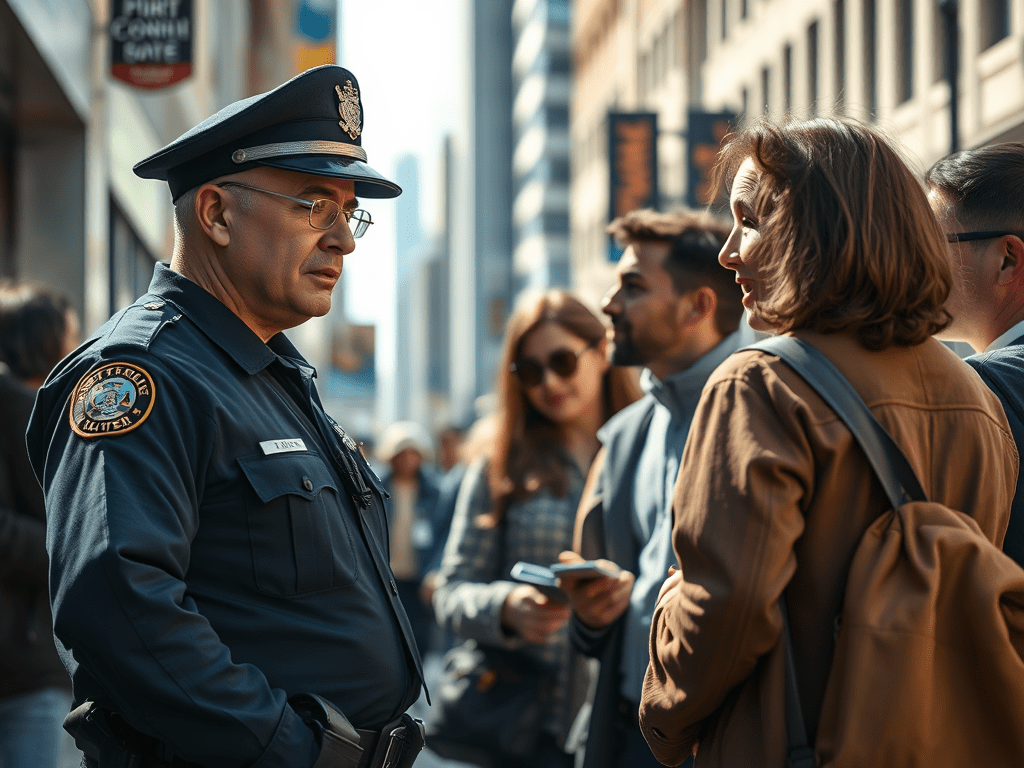
    Before I became a police officer, I used to watch reality TV shows and wonder why so many cops seemed out of shape. I’d watch a suspect vault a fence like it wasn’t there while the officer struggled to keep up.

    A few months after finishing field training, reality hit me. My partner and I located a stolen car in a housing complex, and the chase was on. After a 100-yard sprint and two 6-foot chain-link fences, I was bleeding from both palms and had sliced the back of my leg. My legs felt like rubber.

    I learned two things that day that aren’t taught in a standard gym:

    1. Gear changes everything: Running in boots, a vest, and a duty belt is a different world than “jogging” in shorts.
    2. Energy systems matter: The sprint-and-climb exertion of a pursuit taps into different systems than a steady 5K.

    I caught my guy—mostly because my “wind” lasted one second longer than his—but I didn’t “win” the fight as much as I just fell on him and got the cuffs on. My fitness goals changed that afternoon. I realized I didn’t need a beach body; I needed a stress-inoculated body.

    Beyond the Physical: Embracing the Suck

    There is a term used by soldiers to describe dealing with a nightmare situation: “Embrace the Suck.” It means the situation is bad, but you put your head down and drive on.

    As Mark Rippetoe famously said, “Strong people are harder to kill than weak people and more useful in general.” I agree 100%, but I believe the real benefit of intense exercise is mental development rather than physical results. Size and genetics have limits, but the space between your ears is a level playing field.

    Intense exercise—the type that makes your internal dialogue scream, “This sucks, just stop, just quit”—is where you sow the seeds you will reap later when you are fighting for your life. When both you and your opponent approach the “quitting point,” the one who has practiced pushing through that threshold in training is the one who goes home.

    The Standard of 2026

    Military trainers have known this forever. Basic training isn’t just about “whipping recruits into shape”; it’s about showing them they can push beyond self-imposed limitations.

    This is why I gravitate toward high-intensity protocols like CrossFit, maximal effort lifts (squats, deadlifts, presses), and the grueling 14-week Murph cycle I am currently executing. It’s why I pushed for my Adirondack 46er status. Whether it’s 100 burpees or a 4,000-foot ascent, the goal is the same: Stress Inoculation.

    If you are comfortable in your workout, you are likely coasting. To truly benefit, you have to find that “lungs burning, gonna die” moment on occasion. You have to change things up. If you hate running, run. If you hate lifting, lift.

    The Bottom Line

    Training hard isn’t about cosmetic improvements. It’s about building a mental toughness that translates directly to the street, the trail, and the challenges of leadership.

    Get out there and embrace the suck. It might be the best decision of your life. It could also be the one that saves it.


    Questions for the Practitioner

    1. The Threshold: When was the last time your internal dialogue told you to quit, and you chose to ignore it?
    2. The Gear: Do you ever train with the weight you actually carry in the field?
    3. The Comfort Trap: What part of your current fitness program have you put on “autopilot,” and how will you disrupt it this week?
  • The Narrative vs. The Reality: A 26-Year Perspective

    Note from the Author: I first drafted these thoughts in 2016 and revisited them in 2019. Looking back in 2026, as I prepare to conclude nearly 26 years of service, it is striking how little the “narrative” has changed, even as the “reality” of the street becomes more complex. I’m dusting this off because the distinction between the national headlines and the local professional remains the most critical conversation in our craft.


    This week marks the anniversary of the day I was sworn in as a police officer. I managed to work one year before the world changed in 2001, and almost fourteen years before the events in Ferguson ignited the social and media narrative that my profession still navigates today.

    In that time, I’ve seen, experienced, and done enough to have at least a small amount of insight into the law enforcement side of the current “conversation.” Unfortunately, the dominant voices usually belong to the media and politicians, while the perspective of the practitioner is often drowned out.

    The Spectrum of Service

    Let me be unequivocal: there are “bad cops” out there. There are inept cops, poorly trained cops, and those who simply don’t take their oath or their training seriously. Anyone who has served in the military or worked in any large organization knows that no profession is immune to the “screw-ups.”

    But the current trend of using universal adjectives—”The Police”—is a logical fallacy.

    In any other context, using broad-brush terms like “those people” based on race or identity would be rightfully condemned. Yet, there is a pervasive willingness to hold “The Police” universally responsible for the actions of individuals in departments thousands of miles away. It is a bizarre logic that leads people to “understand” how an officer in one city can be targeted for the actions of an agency they don’t work for, in a state they’ve never visited.

    The Myth of the Nationalized Force

    The public often speaks as if we are a uniform, nationalized force. In reality, police service is intensely local. Large metropolitan agencies operate in a different universe than a mid-size department, and both are worlds apart from an eight-person village PD.

    However, we do share a common language of experience. Taking an armed person into custody “is what it is.” Walking up to a car occupied by a suspect you believe is armed feels the same to an officer in Anchorage as it does to one in Miami.

    The “Knee-Jerk” Trap

    This shared experience is why most veteran officers won’t “knee-jerk” declare a high-profile incident as “bad” based on a ten-second viral clip. We know that what appears on a phone screen—often fueled by an initial, incomplete media narrative—is rarely the whole story.

    Practitioners can often see how a situation that appears unjustified to the uninitiated could, based on the totality of circumstances, be legally and tactically justified. We aren’t defending “bad” actions; we are defending the right to a full investigation before a verdict is rendered by the court of public opinion.


    Questions for the Field

    1. The Scale of Context: How do we balance the need for immediate transparency with the professional requirement for a complete, evidence-based investigation?
    2. Local vs. National: In an age of viral media, how can local departments better communicate their unique “local reality” to a public that is being fed a “nationalized” narrative?
    3. The Practitioner’s Burden: For those who serve, how do you maintain your dedication to the craft when it feels like the “The Police” umbrella covers the actions of people you’ve never met?

  • The Pedigree of the Protector: Defining Chivalry

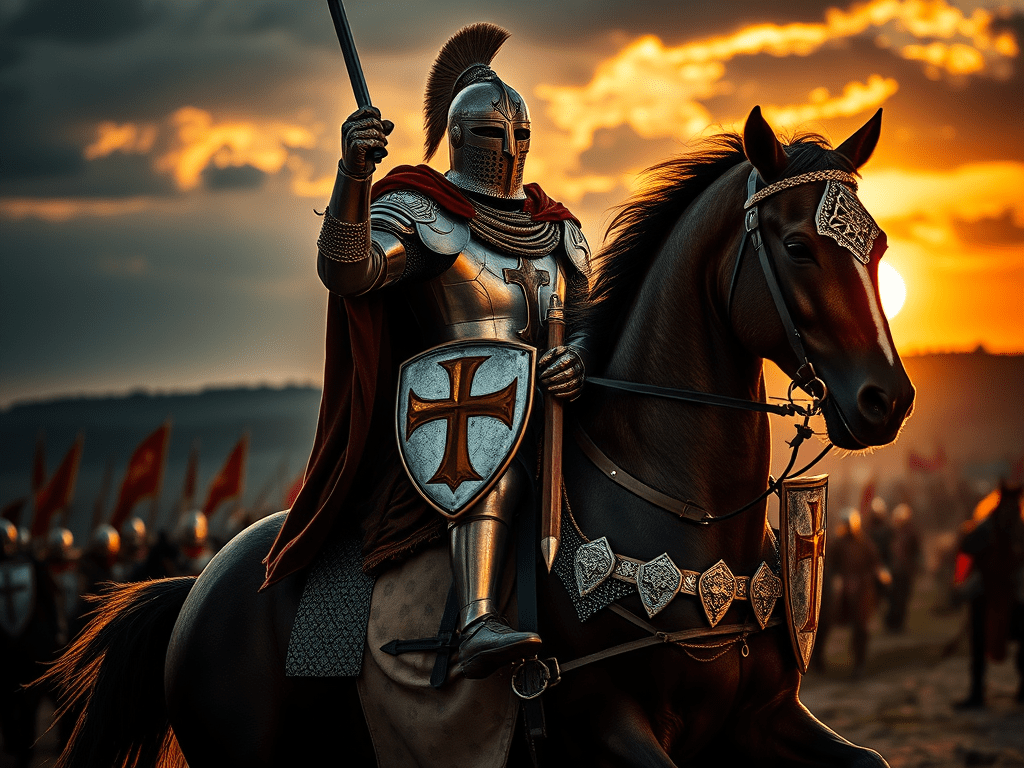
    The term “chivalry” is well-known, but its historical meaning is a moving target. It has been a company of mounted knights, a social class, a legal term for land ownership, and—in texts like The Song of Roland—a shorthand for worthy action on the battlefield.

    The Power of the Horse

    The Age of Chivalry was, fundamentally, the age of the horse. The Knight was a mounted warrior, and his power on the battlefield was derived from the speed and crushing weight of his charger. It is etymologically appropriate that the word chivalry stems from the Latin caballus (“horse”).

    This is an important distinction for the modern practitioner: Chivalry began not as a polite gesture, but as the management of superior power.

    The Evolution of the Code

    From the 12th century onward, chivalry shifted from a tactical description to a moral, religious, and social code. While the particulars varied by region, they centered on three pillars: Courage, Honor, and Service.

    In his work Chivalry, Leon Gautier identified ten “commandments” of the code. While some are products of their time, several remain the bedrock of the modern protector:

    • Thou shalt respect all weaknesses, and shalt constitute thyself the defender of them.
    • Thou shalt never lie, and shall remain faithful to thy pledged word.
    • Thou shalt be everywhere and always the champion of the Right and the Good against Injustice and Evil.

    Ideal vs. Reality

    In practice, chivalry was never free from corruption. By the late Middle Ages, courtly love often devolved into promiscuity, and pious militance into barbarous warfare. Eventually, the outward trappings of knighthood declined as wars were fought for cold victory rather than individual valor.

    The Practitioner’s Takeaway

    As I have noted before, historical failures do not invalidate the worth of the code. The value of chivalry isn’t found in a perfect historical record, but in the effort to live up to an honorable ideal. We study these ancient codes because they remind us that power without a standard is merely thuggery. We aren’t looking to play-act as medieval knights; we are looking to carry their highest aspirations into the modern world. In the end, we can only do the best we can where the rubber meets the road.

  • Tactical Translation: A Field Guide to the Language of the Street

    With the rise of “reality” police media, the public is being exposed to more “street language” than ever before. To the uninitiated, some of these interactions can seem confusing. Why does an officer look skeptical when a subject sounds perfectly reasonable?

    As a public service, I am providing this easy-to-understand translation guide. Rest assured, in most cases, both the officer and the “customer” know exactly what is being said.

    When they say…They actually mean…
    “That’s not mine!”“That’s mine.”
    “I didn’t do anything!”“I did it.”
    “I don’t have my ID on me.”“I’m going to lie about my identity.”
    “I swear to God!”“I’m about to lie.”
    “That’s not my purse.”“I have drugs in my purse.”
    “I know him as…”“I’m lying about my friend’s identity because he has a warrant.”
    “I swear on my child’s life!”“I’m about to lie.”
    “I’m just driving around.”“I just came from a drug house / a crime scene.”
    “I don’t have my license on me.”“My license is suspended or revoked.”
    “I’m not going to lie to you, Officer!”“I’m about to lie.”
    “I did what? What did you say?”“I’m trying to think up a lie.”
    “These aren’t my pants!”“That’s my dope in the pocket.”
    “As far as I know…”“I don’t know if the warrant/suspension has hit yet.”
    “I swear on my mother’s grave!”“I’m about to lie.”
    “I paid for that!”“I stole that.”
    “I won it at the casino.”“That’s my drug sales money.”
    “Why are you hasslin’ me?”“Why do I keep getting caught?”
    “This is bullshit!”“I hate getting caught.”
    “You only stopped me because…”“I know I committed a violation, but I’m deflecting.”
    “I only had 2 or 3 beers.”“I’m drunk.”
    “I was driving to the store when…”“I am a ‘verbal diarrhea’ liar.”
    “People are killing each other…”“I did it, but I want you to feel guilty for catching me.”
    “This car belongs to a friend…”“This car is a ‘crack rental’.”
    “I think I’m having a heart attack!”“I want a hospital bed instead of a cell.”
    “You didn’t read me my rights!”“I believe TV procedure is actual law.”

    The Practitioner’s Note

    While this list is meant to be humorous, it highlights a fundamental truth of the job: The Gap between Words and Reality. In the precinct, we often deal with the “Transactional Lie”—words used as a tool to avoid a consequence. On this site, we focus on the opposite: The Code, where words are an extension of internal honor. Understanding one helps you appreciate the other.

  • The Legal Edge: Navigating New York’s Knife Laws

    “Is your pocket knife a tool or a felony? In NY, the line between utility and Criminal Possession of a Weapon 4th is thinner than you think. Updated for the 2019 Gravity Knife repeal.”

    I frequently get asked about the legality of carrying a knife in New York. While the law has evolved since I first addressed this, the fundamental philosophy of “Tools vs. Weapons” remains the same. Here is the breakdown of the current Penal Law and how it impacts the practitioner.

    1. The Prohibited List (Per Se Weapons)

    Under NY Penal Law § 265.01 (Criminal Possession of a Weapon 4th), certain items are illegal to possess simply by existing. You cannot carry these, regardless of your intent:

    • Switchblades and Pilum ballistic knives
    • Metal knuckle knives
    • Cane swords
    • Shirken or “Kung Fu stars”

    Note: In 2019, New York repealed the ban on “Gravity Knives.” The common folding pocket knife is no longer a per se weapon under State law.

    2. The “Dangerous Knife” & Intent

    The law also covers items that aren’t on the “illegal” list but become illegal based on how they are used or perceived:

    (2) He possesses any dagger, dangerous knife, dirk, razor, stiletto, or any other dangerous or deadly instrument or weapon with intent to use the same unlawfully against another.

    3. What Defines a “Dangerous Knife”?

    The courts (Matter of Jamie D.) have established three ways a tool becomes a “dangerous knife”:

    1. Characteristics: Is it designed primarily as a weapon (e.g., a double-edged boot knife)?
    2. Modification: Have you ground down a kitchen utensil into a shank?
    3. Circumstances: Do the facts of the encounter reveal that the possessor considers it a weapon and not a utilitarian tool?

    4. The Presumption of Intent

    This is the thorny part. PL 265.15(4) dictates that simple possession of a dagger, dirk, stiletto, or dangerous knife is presumptive evidence of intent to use it unlawfully.

    In plain English: If you are carrying a blade designed for combat and you find yourself in a police encounter, the law allows the officer to “presume” your intent is unlawful. This is circular reasoning—the knife is only illegal if you have intent, but carrying it proves the intent.

    The Practitioner’s Takeaway

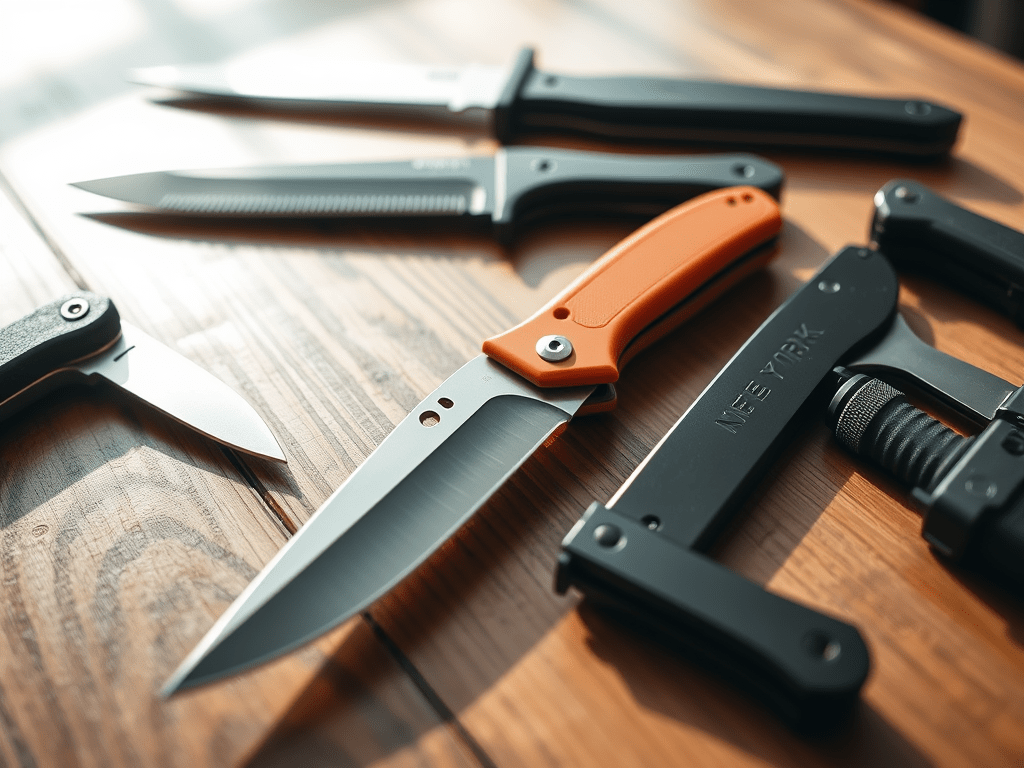
    If you carry a knife for utility, choose a tool that looks like a tool. A bright-colored folding knife used for work is viewed differently than a blacked-out tactical dagger.

    As a professional, my advice remains the same as it was a decade ago: Stay out of trouble. If you stay away from the people, places, and situations that attract police attention, your pocket tool remains exactly that—a tool. If you are looking for a fight, the law is designed to give the police the tools to stop you before it starts.

  • The Transactional Trap: Why Honor Isn’t for Sale

    Editorial Note: As we rebuild the “Way of the Pen and Sword,” we must address not just how we train, but how we think. This post deconstructs a modern sickness: the idea that virtue is only worth practicing if it’s “profitable.”

    The modern discourse surrounding masculinity, particularly within “manosphere” circles, has increasingly framed chivalry as a failed social contract. The common refrain is that chivalry is dead because it has been “killed” through ingratitude or social change. The conclusion? Treating others with traditional courtesy is now a pointless endeavor.

    This perspective reveals a profound misunderstanding of what a code of ethics actually is. By treating chivalry as a conditional favor, these critics have mistaken a foundational virtue for a transactional commodity. In doing so, they have effectively surrendered their own moral agency to the reactions of others.

    Honor is Not a Trade

    The first and most significant error in this line of thinking is the assumption that honor is a trade. When a man argues that he will only be chivalrous if he receives a specific “return on investment”—whether that be a smile, a thank you, or romantic interest—he is not practicing a code of conduct; he is practicing customer service. True masculinity is not a performance intended to elicit a reward. It is a set of internal principles that a man adheres to because he believes they are right, regardless of how they are received. To abandon one’s standards because they aren’t “profitable” is to admit that those standards were never part of one’s character to begin with; they were merely tactics used to manipulate a social outcome.

    Reactive vs. Proactive Masculinity

    This transactional view results in a reactive form of masculinity that is inherently weak. If a man’s politeness or demeanor can be shattered by a stranger’s dirty look or an uncharitable comment, then that stranger is the one in control of the interaction.

    A man with a true internal compass does not require external validation to maintain his integrity. He opens a door or offers assistance not because of who the recipient is, but because of who he is. The act is a reflection of his own identity and the type of society he wishes to uphold. By allowing the perceived “unworthiness” of others to dictate his behavior, he is allowing the world to change him, rather than being the man who changes the world through his own consistency.

    The Confession of the Brittle

    Ultimately, the “gurus” who encourage men to drop their standards of conduct are espousing a philosophy of bitterness rather than strength. They teach men to be brittle and to base their self-worth on the fluctuating whims of social approval.

    Real honor is unshakeable; it is a covenant a man makes with himself to move through the world with dignity, even when the world is indifferent or hostile. Giving up on chivalry because it isn’t “rewarded” isn’t an act of empowerment—it is a confession that one’s ethics were always for sale.

    A man’s code is only as strong as his willingness to follow it when there is nothing to be gained.

  • The Tax of the Practitioner: Murph at 58

    I have often said that being a “Warrior” comes with a hefty price tag. You don’t get to buy the title; you have to lease it every single day. As I move through my 57th year and look toward 58 in April, that lease is getting more expensive.

    Currently, I am in the middle of a 14-week conditioning cycle leading up to the “Murph” on Memorial Day. For the uninitiated, that is:

    1 Mile Run

    100 Pull-ups

    200 Push-ups

    300 Squats

    1 Mile Run

    (All performed while wearing a 20lb weighted vest)

    Leading from the Front
    In my professional life as a Captain, I spend a significant amount of time evaluating performance, analyzing data, and demanding excellence from those under my command. But there is a inherent danger in leadership: the higher you climb, the easier it is to become a “theorist.” It is easy to talk about discipline from behind a desk or a podium.

    I choose to undergo this training because I refuse to be a leader who asks for a level of output I am no longer willing to provide myself. If I am going to write about the “Way of the Warrior” and the necessity of “putting it on the line,” then I have a moral obligation to put my money where my mouth is.

    The Reality of 58
    Let’s be honest: at nearly 58, the “90-degree” pushups feel deeper, the recovery takes longer, and the weighted vest feels a little heavier than it did a decade ago. There is a temptation to scale back, to lean on my rank, or to say “I’ve done my time.”

    But the “Way” isn’t something you finish. It’s a process of maintenance.

    Training at this age isn’t about chasing the PRs of a 25-year-old; it’s about preventing the rot. It’s about ensuring that if the moment ever arises where my skills are needed in service to my community, the “instrument” (my body) isn’t the reason the mission fails.

    The 14-Week Grind
    We are currently focusing on high-volume bodyweight progressions. The goal isn’t just to finish; it’s to finish with the integrity of the movements intact.

    The Pull-ups: Strict, no kipping.

    The Push-ups: Chest to deck, elbows tucked.

    The Squats: Full depth, every rep.

    If you are following this blog, I challenge you to look at your own “tax.” What are you doing today to ensure you are capable of the service you claim to value?

    Character is forged in the repetitions no one sees. See you on the pavement.

  • Defining the Way: Warrior vs. Soldier vs. Fantasy

    In 2013, I started a blog to explore a word that had become dangerously diluted by “warrior-style” fitness programs and tactical hobbyists. Today, in 2026, the noise has only grown louder. Everyone wants the “lifestyle,” but few want the Way.

    To build a code worth following, we must first define our terms.

    The Musashi Standard: Overcoming Men

    When we look at historical “Warriors”—from the Samurai to the Vikings—virtue was often an afterthought, but Strategy was the requirement. As Miyamoto Musashi wrote in The Book of Five Rings:

    “The warrior is different in that studying the Way of strategy is based on overcoming men… we can attain power and fame for ourselves or our lord. This is the virtue of strategy.”

    A vital component of the definition is that the warrior exists and trains to overcome other people who are trying to impose their will against him or his community. If your “struggle” is purely internal—a battle for “self-excellence”—you may be a philosopher or a student of character, but you are not a warrior.

    Skills vs. Service: The Price Tag

    There is a common misconception that practicing a martial art or attending a rifle school makes you a warrior. It doesn’t. Those are warrior skills.

    • The Fantasy: Training exactly like a Tier 1 Operator in your backyard.
    • The Reality: Actually putting it on the line.

    Karate no more makes you a warrior than playing catch makes you an NFL quarterback. To be a “Warrior,” you have to go out and “put it on the line” in service to others. Anything less is merely the “Warrior Lifestyle”—a costume worn by those who enjoy the aesthetic of danger without the burden of risk.

    Virtue: The “Add-On” to the Way

    There is a popular modern sentiment that a “true warrior” must be a man of excellence and virtue. While I value the Warrior Ethic, we must be historically honest: Warriorship has never had a universal mandate for virtue.

    The Vikings sacked cities; the Mongols decimated populations; the SS were elite, highly-skilled warriors who served a reprehensible cause. They were “warriors” by any technical definition, yet they were not “virtuous” by ours.

    Virtue and self-improvement are desirable—and essential for a modern protector—but they are an “add-on.” History proves that you can be a master of the Way of the Sword while being a monster. This is why our modern code must be intentional.

    The 2026 Definition

    So, what separates the Warrior from the Soldier? In our times, it is a matter of professionalism, commitment to craft, and the honoring of a personal code. It is the difference between someone who “does something” and someone who “is something.”

    My definition remains:

    1. Preparation: Trains relentlessly to overcome other people.
    2. Mastery: Constantly seeks to perfect those tactical skills.
    3. Application: Uses those skills in actual service to others/community.
    4. Identity: Sees the honing of “craft” and “service” as a Way of Life, not just a paycheck or a term of enlistment.

    Closing Thought

    We don’t need more people living a “warrior lifestyle.” We need more people dedicated to the professionalism of the craft. Whether you are a patrol officer or a citizen-protector, the question isn’t how much gear you own—it’s what you are willing to risk for your “clan.”

  • Summiting Colden: Conquering the Trap Dike Adventure

    My 46er goal was complete, but there was still one thing left to do. I had always wanted to summit Colden via the Trap Dike.


    I had hiked past it numerous times on the Hitch-Up Matildas, watching climbers ascend its rugged path, knowing my 46er experience wouldn’t feel complete until I did the same. I didn’t take the challenge lightly. I read countless trip reports, studied rescues and fatalities on what’s often called “the most dangerous hike in the Adirondacks,” and watched YouTube videos to analyze the route. I identified the crux (depending on whose opinion you trust) and pinpointed the slab exit. The consensus was clear: if you attempt the Trap Dike for the first time, go with someone who has done it before or hire a guide. That’s solid advice, and I don’t want this article to suggest otherwise. But with my climbing background, my experience from completing the 46, and my research, I was confident in my ability.


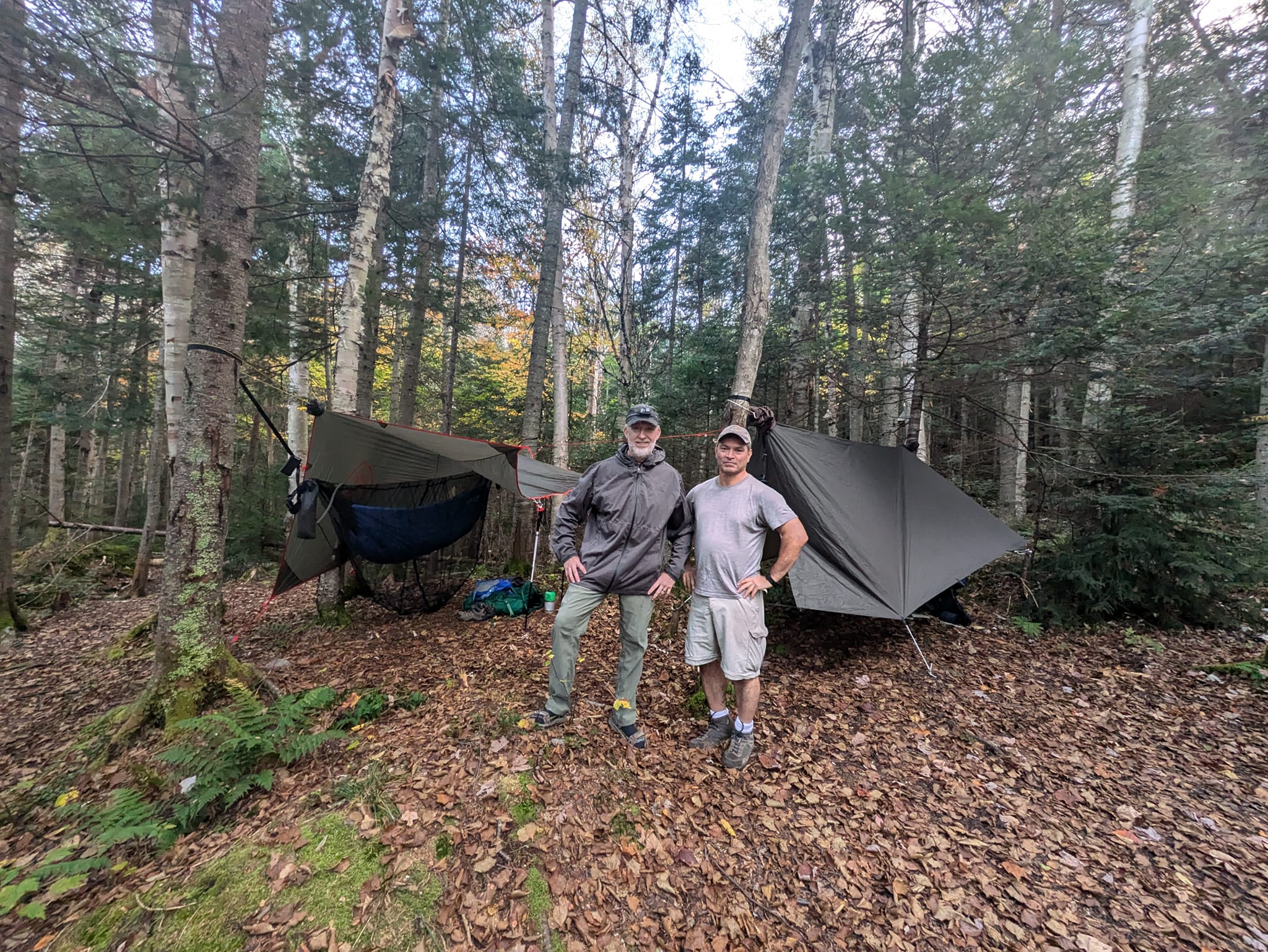
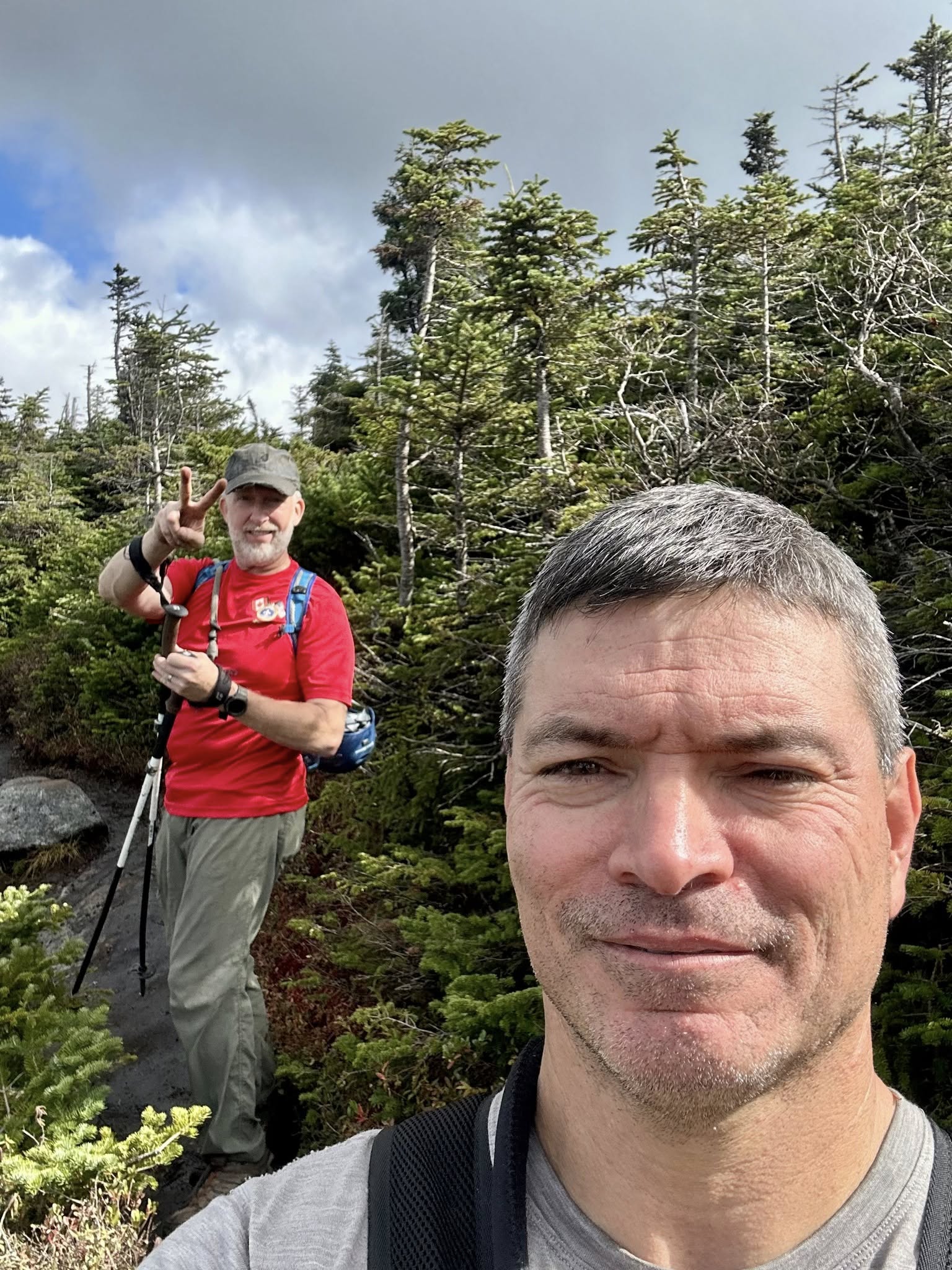
    I recruited my longtime friend Paul—one of my early climbing partners and a fellow High Peaks summiter—to join me. Our schedules aligned for the last week of September. My usual planning involved checking AccuWeather obsessively. The Trap Dike requires at least three to four consecutive dry days for ideal conditions—no waterfall cascading over the crux, no dangerously slick slabs. August and September of 2024 had been unpredictable, and I anxiously watched the forecast fluctuate. Finally, September 29th emerged as our best window. After a few days of rain, it looked like we’d have at least two, possibly three, dry days before reaching the base of the dike. We pulled the trigger.

    We parked at the Loj and hiked to the Avalanche Lean-To where we set our hammocks. The next morning we woke to a mostly sunny day, though cumulus clouds broke up the blue. After breakfast, we put on our daypacks and headed toward Avalanche Lake. Once we got onto the Hitch-Up Matildas and could see the dike, I heard what I had been most worried about—running water.
    Through my binoculars, I saw some water running down the lower section of the dike and a group of climbers making their way up. Time to make a decision.


    Our fallback plan was to summit Colden via the marked trail (Paul hadn’t done Colden yet) if we bailed on the dike attempt. We decided to continue and see how those hikers had managed. At the base, I moved ahead up the scree and talus slope. Voices and scrambling echoed above me. A group of four young men—kids to me in their twenties—were downclimbing. When they reached me, they told me the crux was a waterfall, impassable, and they were turning back.


    But I noticed something: they were all wearing full packs, and at least two were in Crocs.
    Paul was still below, waiting for my decision. I waved him up. I told him what they had said but shared my doubts. We agreed to continue up to the crux and see for ourselves. If it was truly impassable, we’d turn back.


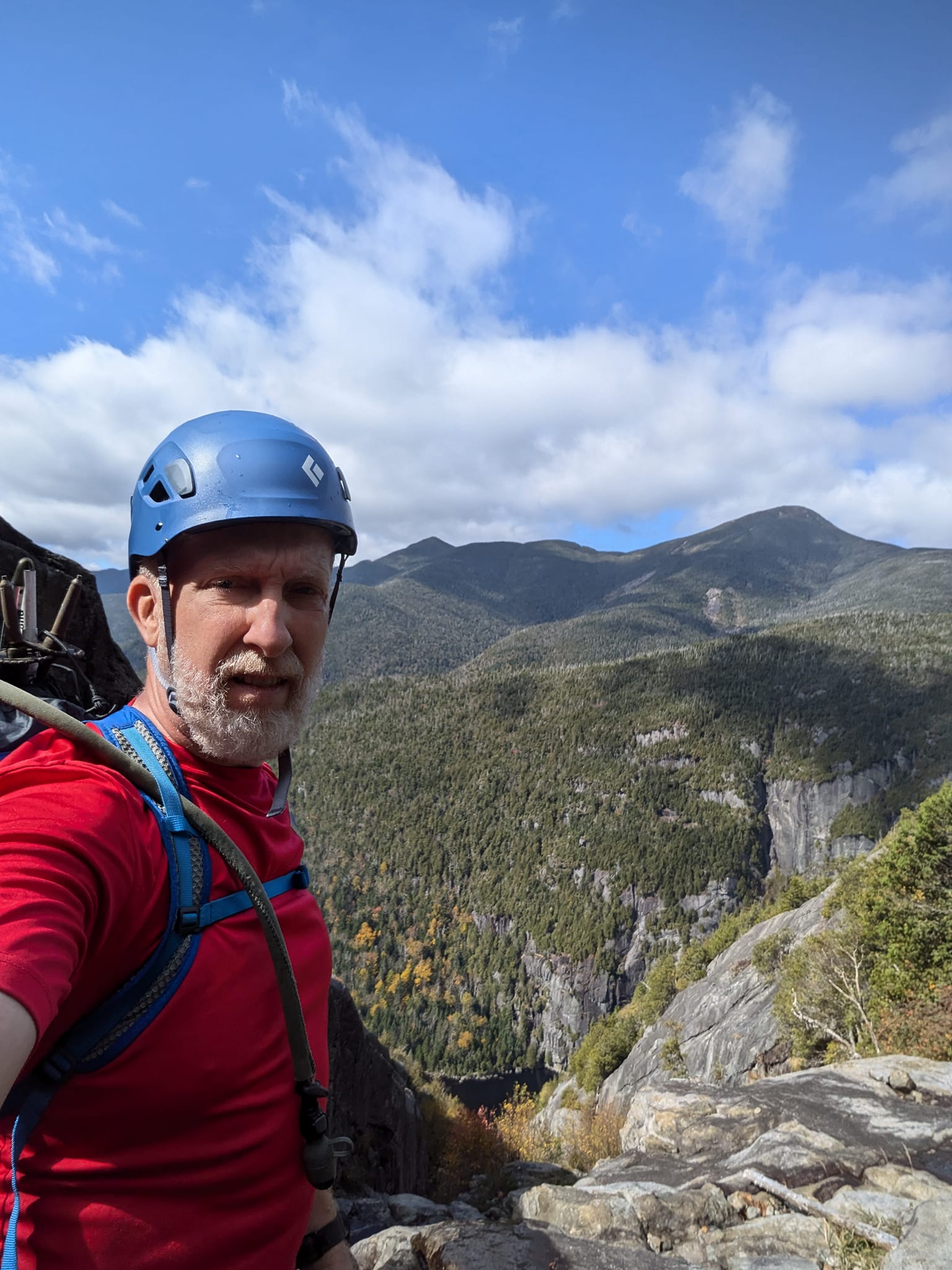
    The crux is a large boulder requiring two or three Class 5 moves to get over. A fall could be fatal—not so much from the height but from striking your head on rock. But it looked fine. The channel to the left, a dihedral, was a small waterfall. I assumed the other hikers had attempted that instead of the more exposed but proper route over the boulder. I climbed up and coached Paul on the hand and foot placements.


    Beyond the crux, we navigated damp rock and trickling water, using the “one limb at a time” rule. We exited the dike onto the Hurricane Irene slide, carefully avoiding the slick and steep Old Slide, where past hikers had needed rescues. The final climb was a long leg burner, alternating between steep hands-and-feet sections and walkable stretches.


    Finally, we reached the summit. We took a few moments to soak in the views—breathtaking as always. After a leisurely descent back to our campsite, we completed our plan with dinner and stargazing from our hammocks until sleep took us.


    For me, this climb was more than just another summit—it was the perfect conclusion to my 46er journey.

  • Mission Accomplished

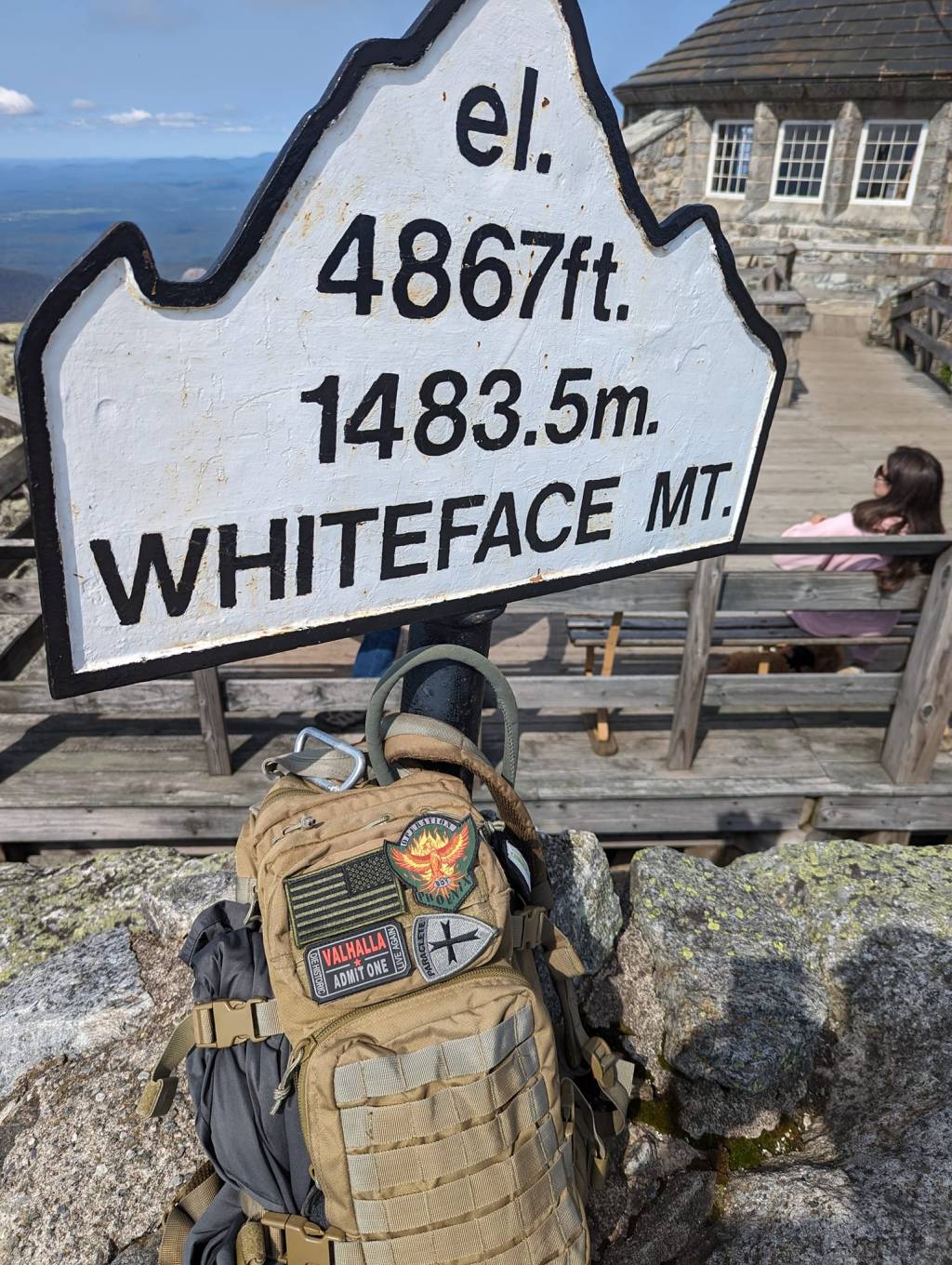
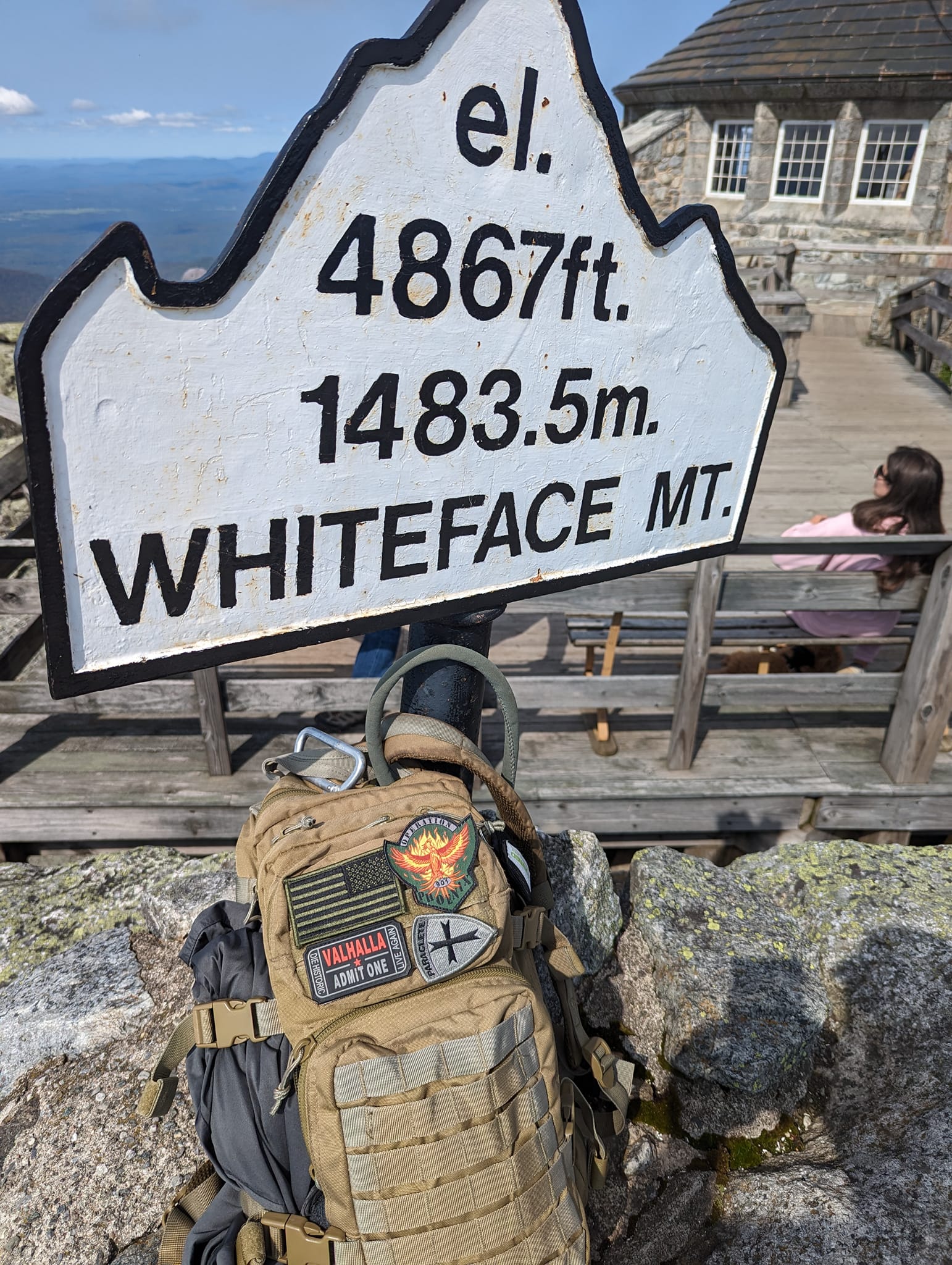
    In September of 2023 my wife and I went to Lake Placid to share in my 46er completion. She dropped me off at the trailhead and I hiked to Esther and Whiteface where I met my wife who drove up to the top. I of course, hiked back down to the trailhead where she picked me up.

    Mission Accomplished!