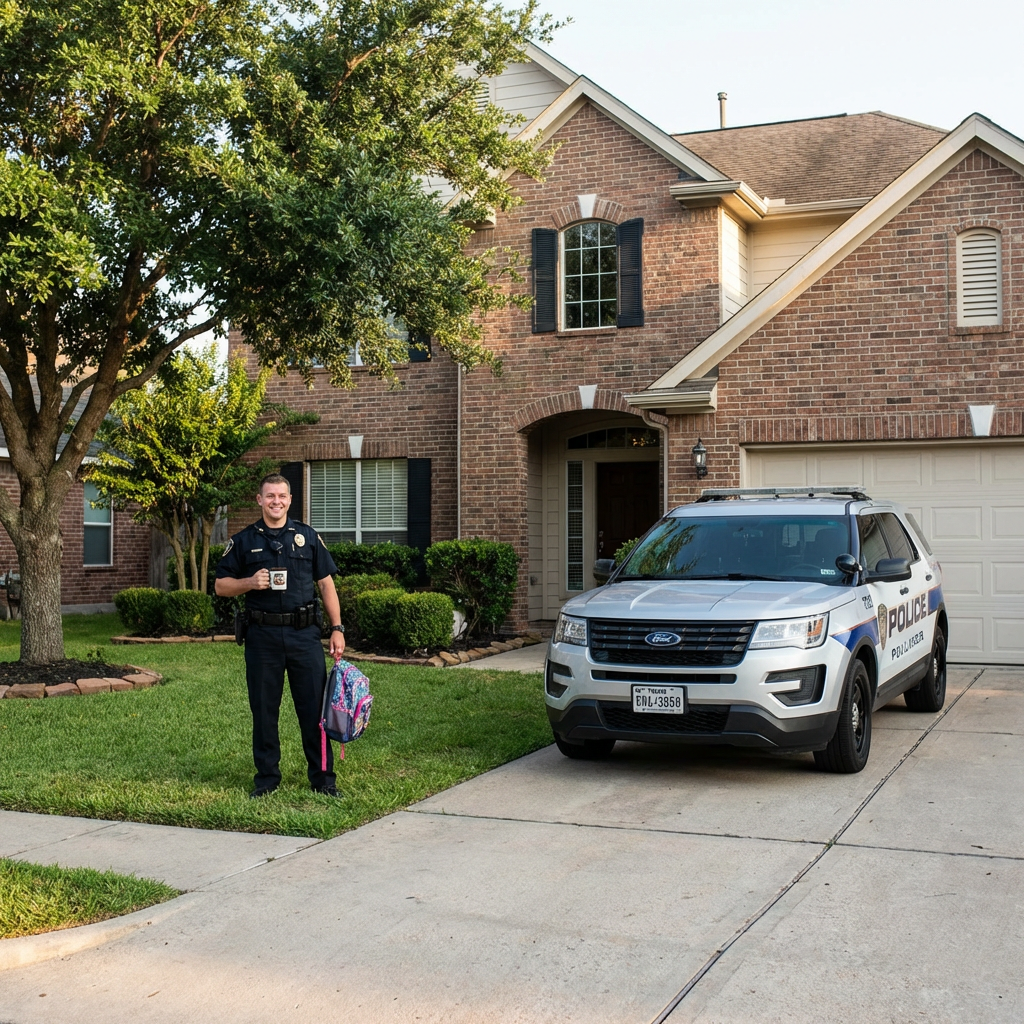
I’ve lived in this neighborhood through a lot of turnover. New faces, new cars, and inevitably, new problems. As a Captain with 26 years on the job, I’ve learned that the most difficult “beat” I’ve ever walked is my own sidewalk.
When you live where you work, you live in a glass house. There is a Silent Contract between a career practitioner and his neighbors—a social currency that is spent or saved every time you pull out of your driveway.
The Invisible Badge & The Silent Contract
In the neighborhood, your uniform is invisible, but it never really comes off. You are constantly trading the enforcement of petty violations for residential peace.
- The Risk: If you’re the guy calling in every wrong-way parker or every overgrown lawn, you become the “jerk cop” neighbor. You lose the social capital you need when a real issue arises.
- The Reward: By overlooking the small stuff, you buy the “neighborhood credit” needed to shut down a 2:00 AM rager with a single look over the fence, rather than a formal complaint that lands on your own desk Monday morning.
The Danger of “Line Drift”
However, there is a significant danger in the “Go Along to Get Along” philosophy: Encroachment. In tactics, we call this “Line Drift”—the slow, uncorrected deviation from a standard that eventually becomes the new baseline.
If you overlook the trash cans left out for three days or the dog barking at midnight too often, some neighbors will mistake your kindness for weakness. They start to believe the Invisible Badge has been turned off. They think that because you haven’t “policed” them yet, the rules simply don’t apply to their street.
The Domestic Triage
The ultimate test of this boundary is the “Domestic at the Window.” We’ve all heard it: the slammed door, the raised voices, the unmistakable cadence of a heated argument. For the practitioner, this requires a tactical and ethical triage.
- The Professional Standard: My threshold is “life and death.” If I hear the frequency of violence or the sound of a struggle—the “Real Thing”—I am in the fight.
- The Neighbor Reality: Stepping in for anything less usually results in both parties turning their resentment toward you. If you call it in for a verbal-only squabble, you’re the “snitch” neighbor; if you handle it yourself, you’re “working off the clock” without a radio or a partner.
The “Corrective Tap”
When you feel the boundary being pushed, you can’t go from “Zero to Captain” in one leap. You need the Corrective Tap. This is a light touch to re-establish the line without burning the bridge.
Catch the neighbor while you’re both getting the mail. “Hey, I noticed the car’s been over the sidewalk a few times. I don’t personally care, but the town’s been a bit of a stickler lately—just wanted to give you a heads-up so you don’t get hit with a ticket.” You are framing it as a favor, but the subtext is clear: I see everything. The Badge is still in the room.
The Burden of Example
Because of this Glass House, I cannot let my grass get too high. I can’t have a visitor’s tire on the sidewalk or a trash can left out a day late. The “he thinks he’s above the law” narrative is always simmering just below the surface in any community.
My lawn, my house, and my conduct must be as disciplined as my fitness award streak. It isn’t about vanity; it’s about removing any “evidence” that could be used against the profession I represent. If you want the moral authority to maintain the perimeter of your home, you must first be the Standard.
The Long Haul Rule: Your home must be a sanctuary, not a sub-station. Trust the officers you’ve trained to handle the sector. Keep your feathers lowered, stay alert, and pray the “Real Thing” never crosses your property line. But if it does, make sure you have a plan.

Leave a comment