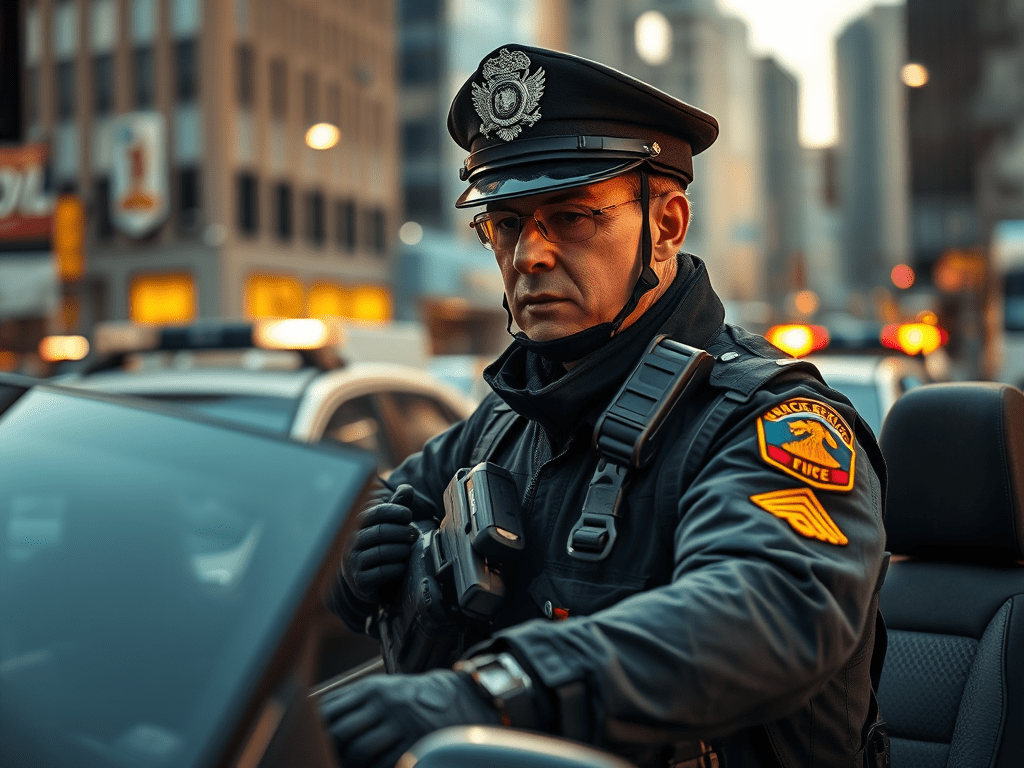
A common refrain from critics of American policing is how “poorly trained” we are. They point at European academies that last years or compare us to elite military units. They see a six-month academy and assume that’s the end of the road.
As someone who has spent 26 years in the job—and managed the logistics of those resources—I can tell you that these comparisons miss the entire landscape of operational reality.
The Military Model vs. the 24/7 Deployment
People love the Tier-1 military model as a benchmark. But they forget how the military operates: Training is the job until you are deployed. You train, you prep, you deploy for a window, and then you rotate back to the states to train again.
Law Enforcement is a deployment that never ends. We are “deployed” 24/7/365. There is no rotation back to a training base. In LE, it’s work, work, work—and then you try to squeeze in training without shattering the overtime budget or leaving the streets so thin that nobody is left to answer the radio. We are like a unit in the field trying to conduct “field training” between missions that never stop.
The Professional Double Standard
Consider the analogies people use for other high-stakes professions:
- The NFL: Do we expect football players to go through an “academy,” then play at NFL standards for the rest of their careers with no physical conditioning or practice? Of course not. They spend the vast majority of their time practicing for a sixty-minute game.
- The Military: Do soldiers have to pay for their own ammunition to stay proficient? No. The taxpayer understands that lethality requires funded repetition.
- Medical Professionals: We respect nurses for their education, but does a nurse have to know how to shoot, drive an emergency vehicle at high speeds, and wrestle a violent subject into handcuffs—all while staying current on the latest ever-changing case law—based solely on their initial schooling?
The expectation of “perfection” placed on an officer is absolute, yet the resources provided to maintain that perfection are often an afterthought.
The “Total Officer” Skill Set
The public often fixates on “unarmed combatives” or Jiu-Jitsu as the magic fix. While those are vital, they are a fraction of the requirement. An officer must be proficient in:
- Emergency Vehicle Operations: Statistically the most dangerous part of the job for us—and for you. It is also the most expensive and time-consuming to train.
- First Aid/Trauma Care: Being a first-responder often means being a medic before the ambulance arrives.
- Legal Updates: Navigating the minefield of civil rights and changing legislation in real-time.
- Firearms and Fitness: Perishable skills that degrade the moment they aren’t practiced.
The Real Solution (and the Real Bill)
If the public actually wanted “elite” policing, the solution is manpower. We should be treated like the military: officers should be training at least one-quarter of the year to maintain the standards expected of them.
But here is the hard truth: You all expect professional performance at a cut-rate tax payment. It’s easy to demand a higher caliber of officer; it’s much harder to vote for the tax bill required to pull a third of your police force off the road for constant, high-level training. Until the public is willing to fund the “Practice,” they are essentially asking us to maintain a “Storybook” standard in a “Paperback” reality.

Leave a comment